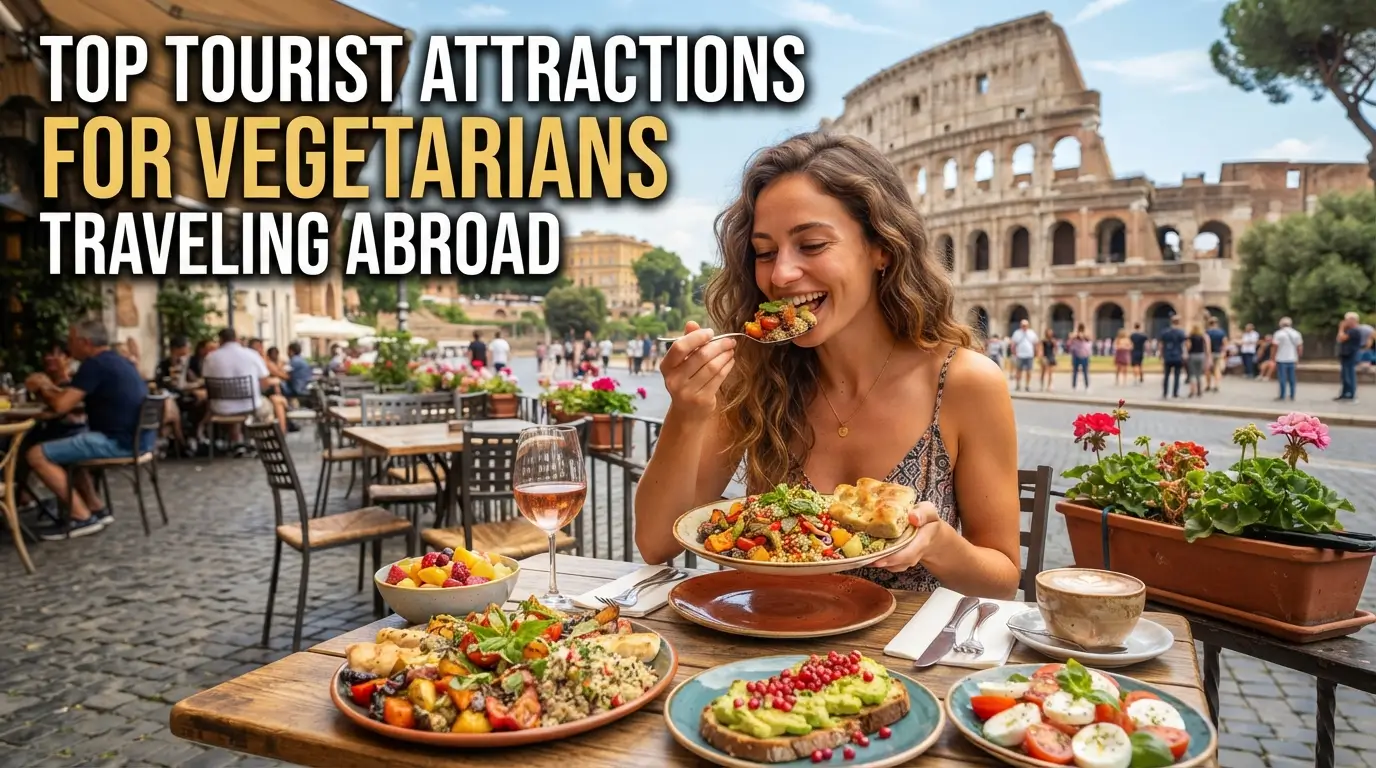
Finding the best tourist attractions for vegetarians traveling abroad used to feel like a gamble, a beautiful city on one hand and a menu full of mystery meat on the other. I’ve stood in too many restaurant doorways squinting at foreign menus, hoping something was accidentally plant-based. But after years of vegetarian travel across four continents, I can tell you the world is far more accommodating than the horror stories suggest, if you know exactly where to go.
1. Varanasi, India: Spiritual, Sacred, and Completely Plant-Based Friendly
Varanasi is one of those cities that rewires your brain a little. It’s ancient, overwhelming, and genuinely unlike anywhere else on earth. For vegetarians, it also happens to be close to paradise. The city sits along the Ganges River and holds deep Hindu significance, which means the overwhelming majority of food served here is completely vegetarian by tradition and culture, not just by menu option.
Street food stalls along the ghats serve kachori sabzi, chaat, and lassi from morning until late at night. Restaurants near Assi Ghat cater heavily to international travelers and offer enormous vegetarian menus with zero effort required on your part.
The main tourist draws here are the Ganga Aarti ceremony at sunset on Dashashwamedh Ghat, a boat ride along the river at sunrise, and the ancient lanes of the old city. All of it is accessible, deeply moving, and pairs perfectly with a bowl of aloo dum from a street cart that costs about 30 cents.
2. Kyoto, Japan: Temple Gardens and Shojin Ryori
Kyoto is a vegetarian traveler’s dream that most people don’t realize exists. Japanese cuisine often gets flagged as tricky for vegetarians because of dashi, a fish-based stock used in many broths. That’s a fair concern in Tokyo. But Kyoto is different, because Kyoto has shojin ryori.
Shojin ryori is the traditional Buddhist temple cuisine of Japan, completely plant-based, beautifully presented, and deeply rooted in the city’s monastic history. Several temples in Kyoto serve it directly on site, including Tenryuji in the Arashiyama district and Daitokuji in the north of the city. A full shojin ryori meal runs around $30 to $60 per person and is worth every yen.
Beyond the food, Kyoto’s tourist highlights are some of the most beautiful in the world. The Fushimi Inari torii gates, Arashiyama bamboo grove, Philosopher’s Path during cherry blossom season, and the golden pavilion of Kinkakuji are all free or low-cost to visit. The entire city rewards slow walking and thoughtful exploration, which happens to be exactly the pace that good vegetarian eating requires.

Where to Eat Between Temple Visits
Menami near Nishiki Market does excellent tofu kaiseki. Veg Out Kyoto is a fully plant-based spot with English menus in the Gion area. And Nishiki Market itself, called Kyoto’s Kitchen, has tofu skewers, pickled vegetables, and fresh mochi at nearly every stall.
3. Rome, Italy: Ancient History and Accidentally Vegetarian Menus
Rome surprises vegetarians constantly. Italian cuisine, at its core, is built around vegetables, legumes, pasta, cheese, and bread. Cacio e pepe, carciofi alla romana, pasta e fagioli, supplì, these are Roman staples and they happen to be meat-free. Nobody is doing you a favor here. This is just how Romans eat.
The tourist attractions are obvious and genuinely spectacular. The Colosseum, the Roman Forum, the Pantheon, Vatican City, the Trevi Fountain. All of them are within reach of excellent vegetarian food if you step even half a block away from the most tourist-clogged streets.
Trastevere neighborhood has some of the best vegetarian-friendly trattorias in the city. Da Enzo al 29 does exceptional Roman vegetable dishes. Roscioli is a legendary deli and restaurant with a beautiful vegetarian-friendly menu. And the Campo de’ Fiori market every morning is a vegetarian dream of fresh produce, cheese, and bread that you can build an entire breakfast around for about $5.
FYI, artichokes in Rome are a religious experience. Order them everywhere.
4. Chiang Mai, Thailand: Buddhist Culture and an Entire Vegetarian Festival
Chiang Mai makes this list twice in my life because it genuinely earns it. The food culture here is exceptional for vegetarians, partly because of the strong Buddhist influence on the local diet and partly because Thai cuisine uses so many naturally plant-based ingredients. Tofu, lemongrass, galangal, fresh herbs, rice, vegetables, these are the foundations of Northern Thai cooking.
The city’s main tourist draws include Doi Suthep temple on the mountain above the city, the Old City moat area with its dozens of ancient temples, and the famous Night Bazaar. All of these are completely vegetarian-accessible experiences with food around every corner.
If you visit in October, you’ll hit the annual Vegetarian Festival, a nine-day celebration tied to the Taoist lunar calendar where thousands of street stalls across the city serve exclusively plant-based food. Yellow flags mark every vegetarian stall. It’s extraordinary and one of the best food experiences I’ve had anywhere on earth.
Restaurants like Free Bird Café and Pun Pun Vegetarian are fully plant-based and excellent. The whole city makes vegetarian travel feel completely effortless.
5. Tel Aviv, Israel: The Most Vegan-Friendly City on Earth
Tel Aviv consistently ranks as one of the most vegan and vegetarian-friendly cities in the entire world, and after spending time there, I completely understand why. The combination of hummus culture, fresh Mediterranean produce, strong Jewish dietary traditions around keeping kosher, and a young, progressive food scene creates an environment where plant-based eating is simply the norm.
Hummus at Abu Hassan in Jaffa is worth a solo trip. Sabich sandwiches stuffed with fried eggplant, hard-boiled egg, and amba sauce are everywhere and incredible. The Carmel Market overflows with fresh fruit, olives, and vegetables at prices that feel almost unreasonably low.
Tourist attractions in and around Tel Aviv are rich and varied. Old Jaffa with its port, flea market, and ancient alleyways is a short walk from the modern beachfront. The Tel Aviv Museum of Art is world class. Day trips to Jerusalem, the Dead Sea, or Caesarea are all easy from here. And the beach itself, 14 kilometers of Mediterranean coastline right in the city, needs no justification.
6. Barcelona, Spain: Tapas Culture With Serious Plant-Based Range
Spain has a reputation for ham. Jamon is everywhere, and it’s celebrated loudly. But Barcelona operates on a slightly different frequency from the rest of the country, and the vegetarian food scene here has exploded over the past decade. The city has dozens of fully vegetarian and vegan restaurants, and the broader tapas culture is far more plant-friendly than most people expect.
Patatas bravas, pan con tomate, pimientos de padrón, escalivada, these are all classic Catalan dishes and all completely vegetarian. You can build an extraordinary meal from tapas alone without any compromise.
The tourist attractions are world-class by any measure. La Sagrada Família is one of the most awe-inspiring buildings on earth. Park Güell, the Gothic Quarter, La Boqueria market, Barceloneta beach, Montjuïc castle. The city rewards wandering in every direction.
Teresa Carles restaurant near Las Ramblas has been a vegetarian institution in the city for decades. Flax and Kale, run by the same group, is a brilliant health-focused spot in the El Raval neighborhood. La Boqueria itself, despite being a tourist magnet, has incredible fresh produce and cheese that makes any picnic lunch feel luxurious.
7. Marrakech, Morocco: Tagines, Souks, and Spice Markets
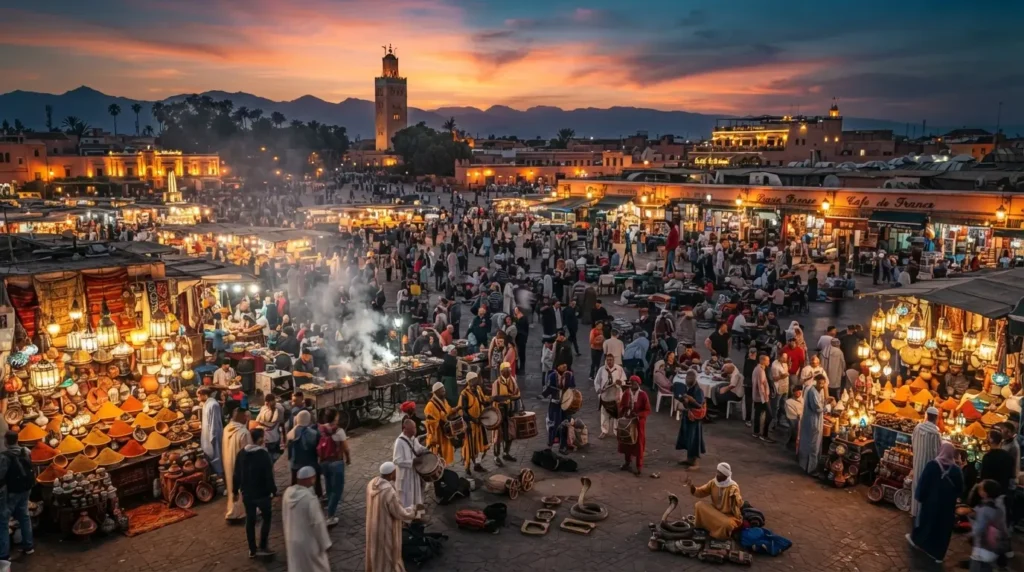
Moroccan cuisine is more vegetarian-friendly than most people assume going in. The spice-forward cooking style means vegetables carry enormous flavor without needing meat to prop them up. Vegetable tagines loaded with chickpeas, preserved lemon, olives, and root vegetables are found on nearly every menu. Harira soup, couscous with seven vegetables, and msemen flatbreads are staples that require zero substitution.
The tourist experience in Marrakech is genuinely unlike anywhere else. Jemaa el-Fnaa square transforms from a quiet morning market into a chaotic, beautiful evening carnival with food stalls, storytellers, musicians, and acrobats. The souks behind it stretch on for what feels like miles, organized by trade, leather, spices, ceramics, textiles.
The Majorelle Garden and YSL Museum next door are peaceful and stunning. The Bahia Palace gives you a real sense of the city’s historic grandeur. And a hammam experience, a traditional Moroccan bath, belongs on every itinerary regardless of diet.
For vegetarians specifically, Café des Épices above the spice market square has excellent plant-based dishes and rooftop views. Le Jardin in the medina serves in a beautiful garden courtyard with a strong vegetarian menu.
8. Amsterdam, Netherlands: Canal Culture and a Thriving Plant-Based Scene
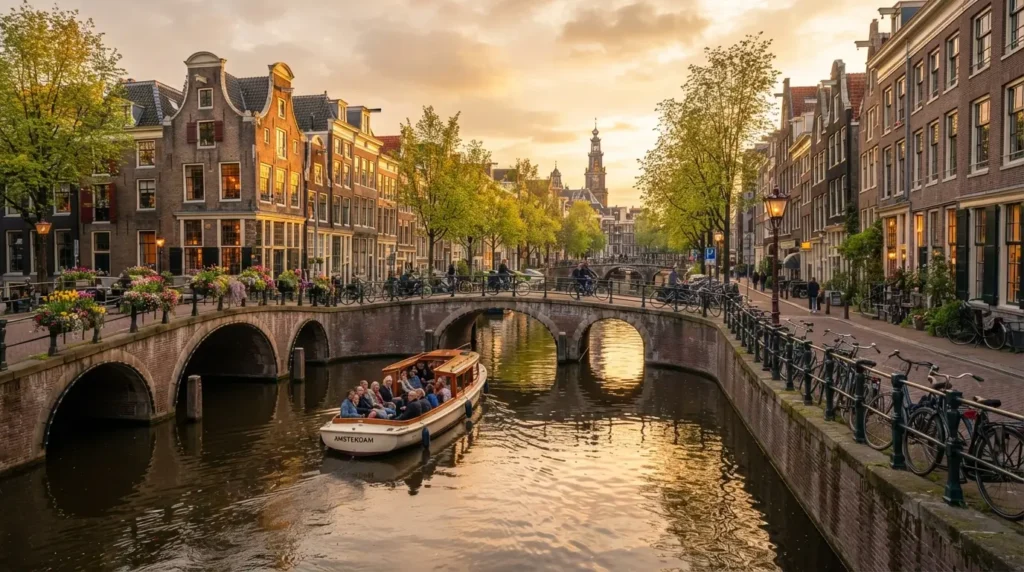
Amsterdam has quietly become one of Europe’s best cities for vegetarian and vegan travelers. The Dutch food scene has shifted dramatically in the past decade, and the city now has an impressive density of plant-based restaurants, vegetarian-friendly brown cafés, and markets full of fresh produce and artisan cheese.
Vondelpark picnics, canal boat tours, the Rijksmuseum, the Van Gogh Museum, the Anne Frank House, Amsterdam delivers culturally at every turn. And the flat, bike-friendly layout means you can cover a huge amount of ground without much effort or expense.
Meatless District in the De Pijp neighborhood is a fully plant-based restaurant worth going out of your way for. The Albert Cuyp Market runs Monday through Saturday and sells fresh stroopwafels, vegetables, falafel wraps, and Dutch cheese in abundance. Vegan Junk Food Bar near Leidseplein has lines out the door for a reason, the loaded fries alone justify the wait.
IMO, Amsterdam is the easiest European city to eat vegetarian without planning too hard in advance.
9. Tbilisi, Georgia: Ancient Wine Country With Surprisingly Rich Vegetarian Traditions
Georgian cuisine is built around bread, cheese, walnuts, and herbs in a way that naturally creates a deep vegetarian tradition. Khachapuri, the iconic cheese-filled bread, exists in several regional styles and is one of the most satisfying things you’ll eat anywhere. Pkhali, small walnut and herb vegetable bites, are served as appetizers everywhere. Badrijani nigvzit, fried eggplant rolled with walnut paste and pomegranate, is extraordinary.
Tbilisi itself is a beautiful, slightly crumbling city full of ornate wooden balconies, Soviet-era buildings, and ancient churches that date back to the fifth century. Narikala Fortress overlooks the old town and the sulfur bath district below. The Rustaveli Avenue gallery and theater strip gives you a strong sense of the city’s cultural soul.
Wine tourism is a major draw here too. Georgia is considered the birthplace of wine, with an 8,000-year-old tradition of fermenting grapes in clay qvevri vessels underground. Day trips to the Kakheti wine region pair beautifully with farm-to-table meals that happen to be almost entirely vegetarian by default.
10. Bali, Indonesia: Spiritual Tourism and the Freshest Smoothie Bowls on Earth
Bali’s food culture aligns almost perfectly with vegetarian travel. The Hindu Balinese religious tradition means temple offerings of fresh fruit, rice, and flowers are part of daily life. Warung restaurants, small local eateries, serve nasi campur rice plates that can easily be ordered vegetarian, and the fresh tropical fruit situation here is genuinely ridiculous in the best way.
Ubud is the cultural heart of Bali and easily the best base for vegetarian travelers. The Sacred Monkey Forest, Tegallalang Rice Terraces, Tirta Empul holy water temple, and the Campuhan Ridge Walk are all within easy reach and all extraordinary. The town itself is packed with fully vegetarian and vegan cafés, many with stunning jungle or rice field views.
Alchemy in Ubud is a raw vegan restaurant that sounds niche but tastes incredible. Clear Café has a massive menu covering everything from smoothie bowls to nasi goreng made fully plant-based. Kafe Ubud on the main street has been a vegetarian staple for years and remains excellent.
The spiritual atmosphere of Bali, incense, ceremonies, gamelan music drifting from temple courtyards, makes the food feel like part of something bigger. That sounds dramatic. It’s also completely true.

How to Research Vegetarian-Friendly Destinations Before You Book
The single best tool for this is HappyCow, an app and website that maps vegetarian and vegan restaurants globally. Before booking any trip, I run a quick HappyCow search on the destination city to gauge how well-served plant-based travelers are. A city with 50 plus listings is easy. A city with three requires a different kind of planning.
Beyond HappyCow, a few things worth checking before you go:
- Local food culture and religious traditions, Buddhist and Hindu regions tend to be the most vegetarian-friendly
- Availability of supermarkets or markets for self-catering backup options
- Whether key dishes have hidden meat ingredients like broths or lard, Southeast Asian fish sauce is a common one to watch
- Facebook groups and Reddit communities for vegetarian travelers in your target country often have current, honest advice
Learning five to ten words in the local language related to your diet goes a long way too. Knowing how to say “no meat, no fish, no chicken” in Thai, Japanese, or Arabic removes a significant amount of daily friction from your trip.
Frequently Asked Questions
Which countries are the easiest for vegetarians traveling abroad?
India, Japan, Israel, and Indonesia are consistently the most vegetarian-friendly countries for international travelers. India in particular has enormous regional variation in plant-based cuisine, and many cities have majority vegetarian populations. Southeast Asia broadly is also very accommodating, though fish sauce and shrimp paste are common hidden ingredients worth asking about.
Is it hard to find vegetarian food at major tourist attractions?
It depends heavily on the country and the specific site. Most major tourist destinations in Europe, Asia, and the Middle East now offer at least some vegetarian options at on-site restaurants or nearby cafés. The challenge is usually quality and variety rather than complete absence. Researching food options before visiting specific attractions saves a lot of frustration.
How do I communicate my vegetarian diet when I don’t speak the local language?
Carrying a printed or saved dietary card in the local language is one of the most practical things you can do. Apps like Google Translate let you translate and save phrases offline. The phrase you need most is usually something like “I do not eat meat, fish, or chicken” rather than just the word “vegetarian,” which means different things in different cultures.
Are tourist attractions for vegetarians different from regular tourist attractions?
Not really. The attractions themselves are the same, the difference is in choosing destinations where the surrounding food culture makes plant-based eating easy rather than stressful. A city like Varanasi or Kyoto lets you fully enjoy every tourist site without spending energy hunting for food. That ease changes the whole travel experience.
What’s the biggest vegetarian travel mistake people make?
Assuming that “vegetarian” translates cleanly across cultures. In many countries, vegetarian means no red meat but chicken and fish are still on the table. In others, lard or meat-based stocks are used in dishes that look plant-based on the menu. Always ask specifically, and don’t be embarrassed to be thorough about it. Your trip will be much better for it.
Conclusion
The world has never been more accessible for vegetarians who want to travel without compromising on food or experience. Every destination on this list proves that great culture and great plant-based eating aren’t a trade-off, they genuinely go together. Which one of these is already moving to the top of your travel list?