Easy day trip ideas for one day only travel are the travel content category I wish existed when I started taking them seriously. One day sounds limiting until you realize that some of the most memorable travel experiences I have had lasted exactly six hours from arrival to departure. The constraint forces clarity. You stop trying to see everything and start actually experiencing the one or two things that make a place worth the journey. That shift changes everything about how a short trip feels when you get home.
What Makes a Day Trip Actually Work
Most day trips fail not because of bad destination choices but because of bad time math. People underestimate transit time on both ends, overestimate how much ground they can cover in the hours remaining, and end up rushing through three things instead of genuinely experiencing one.
A day trip that works has a realistic transit calculation built in before anything else. If the journey takes 90 minutes each way, you have five hours on the ground in an eight-hour window. Plan for four. Something always takes longer than expected and that buffer is what separates a relaxed day from a stressful one.
It also has one anchor experience rather than a list. The anchor is the thing you would still feel the day was worth it even if nothing else happened. Everything else is optional enrichment. Build your day around the anchor and let the rest fill naturally.
1. Bath, England from London
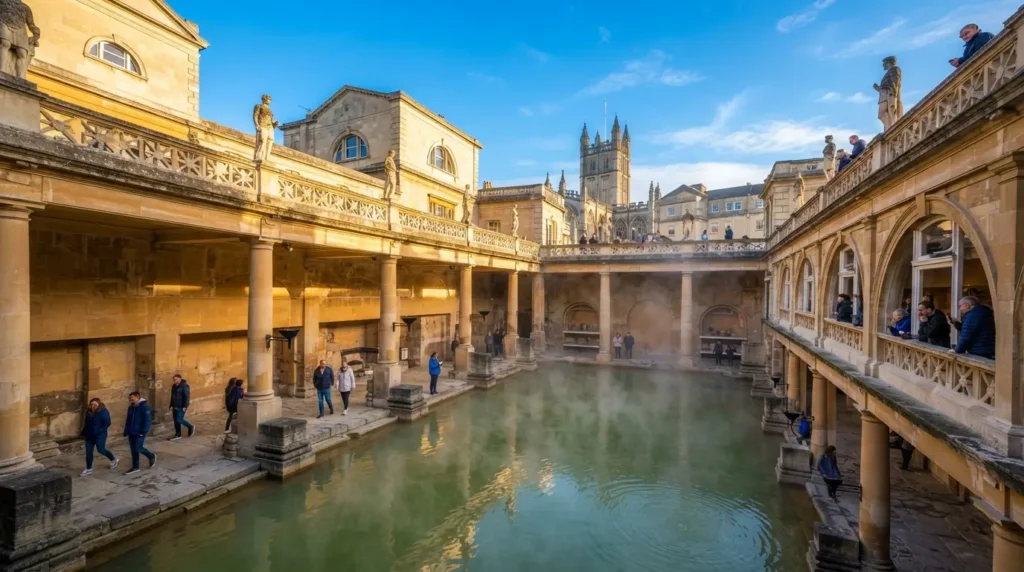
Bath is the most rewarding easy day trip from London and the math works perfectly. The Great Western Railway from London Paddington takes 75 to 90 minutes and costs $25 to $50 return booked in advance. You are in one of the most beautiful Georgian cities in the world before most people have finished their second cup of coffee.
The Roman Baths are the anchor. Book timed entry online before you go, $20 to $25, and give yourself two hours minimum inside. The preserved Roman bathing complex with its steaming green waters is one of the great archaeological experiences in Britain and completely earns the entry cost. The audio guide narrated partly by Bill Bryson is genuinely entertaining rather than dry.
After the baths, walk the Royal Crescent and The Circus, the two great sweeping Georgian architectural set pieces that make Bath look like it was designed by someone who wanted every street to be a film set. They were essentially right. Walk Pulteney Bridge over the Avon, one of only a handful of bridges in the world with shops built along both sides.
Sally Lunn’s on North Parade Passage is the oldest house in Bath and serves the original Bath bun, a brioche-style bread that has been made here since 1680. Order one with clotted cream at the end of the afternoon before your train home.
Practical note: Bath gets busy on weekends, particularly in summer. A Thursday or Friday visit gives you the same city with significantly fewer tourists competing for the same narrow lanes.
2. Versailles from Paris
The RER C train from Paris Gare d’Austerlitz to Versailles-Château-Rive Gauche costs $7 return and takes 40 minutes. This is one of the great value transit journeys in Europe given what waits at the other end.
The Palace of Versailles and its gardens represent the most extravagant royal residence ever built and it genuinely delivers on that billing. Book palace tickets in advance and arrive when the gates open at 9 a.m. to see the Hall of Mirrors before the afternoon crowd density makes it feel like a rush hour commute through history.
The gardens cover 800 hectares and most day visitors never venture more than 20 minutes from the palace. This is a mistake. Rent a bicycle from the Petite Venise rental station inside the gardens for $8 to $10 and cycle to the Grand Trianon and Petit Trianon palaces in the far gardens. These smaller royal retreats feel genuinely intimate compared to the main palace and the crowds thin dramatically once you pass the Grand Canal.
The fountain shows run on specific days from April through October with times listed on the official Versailles website. If your visit day aligns with a fountain show, the garden experience transforms entirely. Music plays across the formal gardens while the fountains run at full pressure in a spectacle that the Sun King himself would have approved.
Eat lunch on the grass near the Grand Canal with a baguette from a Paris boulangerie rather than the palace café where prices reflect the captive audience situation accurately.
3. Bruges, Belgium from Brussels or Amsterdam
Bruges is the most perfectly preserved medieval city in Northern Europe and the day trip logistics from both Brussels and Amsterdam are excellent. From Brussels Midi station, the IC train to Bruges takes 55 minutes and costs $15 to $20 return. From Amsterdam Centraal, the Thalys or IC direct takes about three hours and costs $30 to $60 depending on booking lead time.
The city is compact enough to cover completely on foot in a single day, which is rare and genuinely valuable for one-day travel. The Markt square with its 13th-century Belfry tower is the obvious anchor. Climb the 366 steps to the top for panoramic views over the chocolate-box rooflines for $15 entry.
The canal boat tours that leave from the Rozenhoedkaai area take 30 minutes, cost $12, and provide a completely different perspective on the city’s medieval water infrastructure. The tour is worth it not as a tourist tick but as a genuine reorientation of how you see the city’s layout.
Chocolate and beer are the two consumable experiences that make Bruges genuinely different from anywhere else. The Choco-Story chocolate museum tells the history of Belgian chocolate with tastings included. More rewarding is simply buying chocolate directly from The Chocolate Line or Dumon chocolatiers and eating it while walking the canal paths.
De Halve Maan brewery on Walplein brews Brugse Zot beer on site and runs tours with tastings for $16. This is the anchor experience for beer-focused day visitors and the 45-minute brewery tour is specific and genuinely interesting rather than generic.
4. Sintra from Lisbon
The train from Lisbon Rossio station to Sintra takes 40 minutes and costs $2.50 each way. For that price, you arrive in a UNESCO World Heritage town in forested hills above the Atlantic with palaces that look like a fever dream of Romanticist architecture. The value equation here is almost unfair.
Pena Palace is the anchor. The 19th-century Romanticist palace sits at the highest point of the hills above Sintra and is painted in yellow and terracotta in a way that looks cartoonish in photographs and completely magnificent in person. Entry costs $15 and includes the palace interior and surrounding terraced gardens. Go directly there from the train station by bus or tuk-tuk and walk back down to the town afterward, which takes 30 to 40 minutes through cork oak forest and gives you context for the landscape.
Quinta da Regaleira is the second priority if your timing allows. The estate includes a palace, chapel, and extraordinary mystical garden with a spiral initiation well that descends nine levels underground. Entry costs $12 and the well alone is worth the trip.
The village of Sintra at the base of the hills has excellent pastries at the old Piriquita café, good lunch spots on the main square, and a covered market for local produce. Eat here before or after the palace visits rather than at the palace café where quality drops and prices rise.
Practical note: Sintra is one of the most visited day trip destinations in Portugal and the queues for Pena Palace tickets on summer weekend afternoons are genuinely discouraging. Book online before leaving Lisbon and visit on a weekday if your schedule allows.
5. Nara from Kyoto or Osaka
Nara is one of the great easy day trip ideas for one day only travel in all of Japan. From Kyoto, the Kintetsu Railway reaches Nara in 35 to 45 minutes and costs $6 one way. From Osaka, the journey takes 30 minutes by Kintetsu from Namba station. The combination of ancient temples, giant Buddha, and genuinely wild deer that roam the park freely makes Nara one of the most distinct single-day experiences in the country.
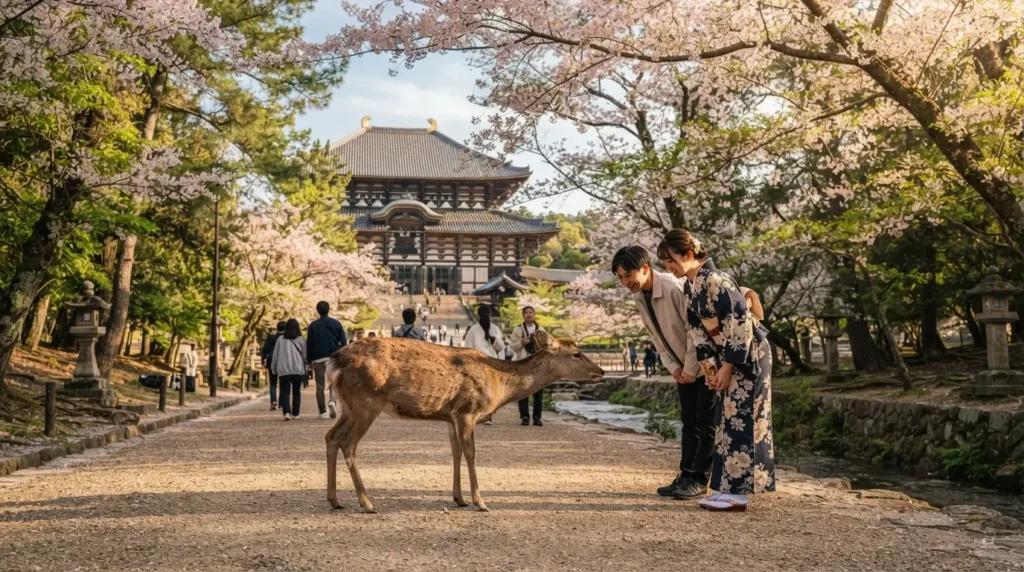
Todai-ji Temple houses the largest bronze Buddha in Japan, a 15-meter seated figure that requires you to physically look up at a different angle than your neck normally operates. The outer Nandaimon gate and its enormous wooden guardian statues are themselves extraordinary before you even enter the main hall. Entry costs $600 yen, roughly $4.
The deer of Nara Park are the unplanned experience that becomes the memory. Over 1,200 wild sika deer roam the park freely and have been designated national treasures. They have also learned that humans buy shika senbei deer crackers from vendors for $2 a packet and will politely bow to you to request them, which is either trained behavior or the deer equivalent of please and is completely disarming either way.
Kasuga Taisha shrine in the eastern section of the park is one of Japan’s most important Shinto shrines and the forest approach lined with stone lanterns, over 2,000 of them, is one of the most quietly beautiful walks in a country full of beautiful walks.
Eat lunch at a restaurant on Higashimuki Shopping Street, a covered pedestrian arcade in central Nara with good kama-meshi clay pot rice restaurants at honest local prices.
6. Aveiro from Porto or Lisbon
Aveiro is the most undervisited easy day trip destination in Portugal and the most accessible. From Porto, the CP regional train takes 70 minutes and costs $3.60 return. From Lisbon, the Alfa Pendular express takes 2.5 hours and costs $20 to $30 return but the journey is comfortable and the arrival worthwhile.
Called the Portuguese Venice for its network of canals and traditional moliceiro boats, Aveiro delivers a genuinely distinctive atmosphere that feels unlike any other Portuguese city. The moliceiro boat tours last 45 minutes, cost $15, and cover the main canal network with painted boats whose prows feature hand-painted panels depicting local scenes with varying degrees of gentle irreverence.
The Art Nouveau buildings along the central canal and around the main market area are extraordinary examples of the style, more concentrated and in better condition than most European cities that claim the Art Nouveau heritage. The Museu de Arte Nova on Rua Dr. Barbosa de Magalhães explains the architectural context if you want more than the visual experience of walking the streets.
Ovos moles are the local pastry specialty, small wafer shells shaped like fish, shells, and barrels filled with a sweet egg yolk cream. They are available at bakeries throughout the town and represent the most specifically Aveiro food experience available. Buy a small box from Confeitaria Peixinho where they have been made the same way since 1856.
7. Cesky Krumlov from Prague
The bus from Prague Florenc station to Český Krumlov takes three hours and costs $8 to $12 each way through FlixBus or RegioJet. The journey length sits at the outer edge of comfortable day trip logistics but the destination justifies the calculation for anyone visiting Prague. The medieval town in a horseshoe bend of the Vltava River is one of the most complete and unspoiled historic urban landscapes in Central Europe.
Český Krumlov Castle is the anchor. The second largest castle in the Czech Republic sits above the old town on a rock promontory and the view from the Bear Moat terrace over the red-roofed buildings below and the river curving around them is one of those views that makes you stand still longer than you planned. Castle tower entry costs $5 and the Baroque theater inside the castle complex is one of the best-preserved in the world.
The old town below the castle is almost entirely pedestrianized and walkable end to end in 15 minutes, which means a single day is genuinely sufficient rather than a compromise. The main square, the church of St. Vitus, and the river beach below the castle are the main areas. The river beach, a sandy bank along the Vltava where locals swim and kayakers pass, is one of those unexpectedly peaceful discoveries that make a day trip feel like finding something private.
Kayaking on the Vltava through the town can be arranged for two to three hours through local rental operators for $15 to $20 per person. The river view of the castle from water level is different from any pedestrian perspective and the paddling is gentle enough that no prior kayaking experience is needed.
8. Positano from Naples
The Circumvesuviana train from Naples Centrale to Sorrento takes 65 minutes and costs $4. From Sorrento, the SITA bus to Positano takes 45 minutes and costs $3. The total journey time of under two hours and the total transit cost of under $10 each way makes Positano genuinely accessible as a day trip despite feeling like the kind of place that should require more commitment.
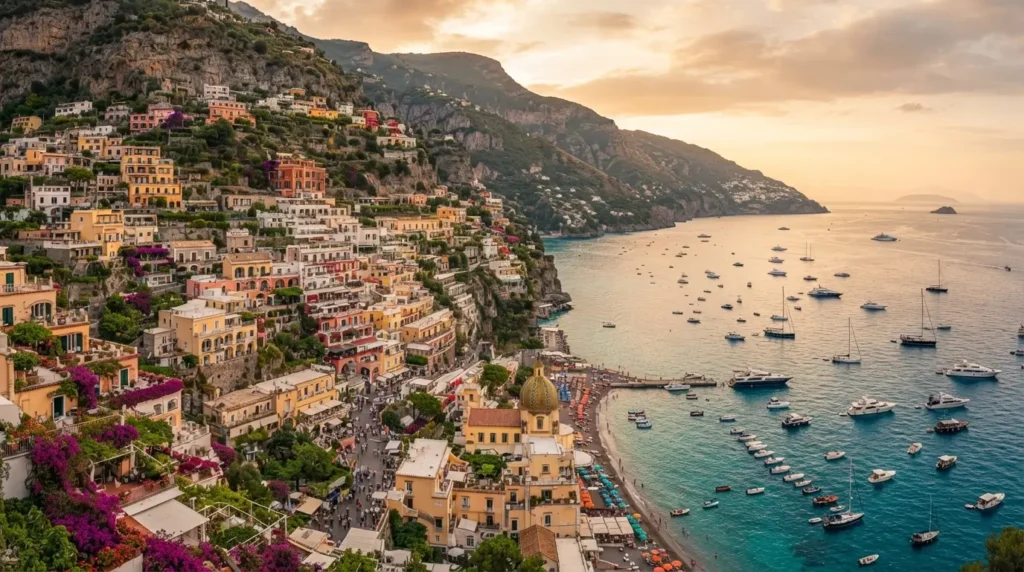
Positano has no single anchor attraction in the conventional sense. The whole town is the anchor. The cascade of pastel buildings down the cliff to the pebble beach, the ceramic staircase streets too narrow for cars, the bougainvillea spilling over white walls, the boats bobbing in the harbor. Walking Positano is the experience.
Arrive at the upper Sponda bus stop and walk down. This route gives you the full descent through the town’s layers, past boutiques selling hand-painted ceramics and lemon-embroidered linens, past cafés with views over the water, past the church of Santa Maria Assunta with its majolica-tiled dome, all the way to Spiaggia Grande beach where you can swim in the Tyrrhenian Sea.
Lunch at Da Vincenzo on Via Pasitea for genuine Amalfitana cooking at prices that are tourist-adjusted but not outrageous. The pasta with local clams and the sfogliatella pastry from any café on the walk down.
The return journey deserves planning. The last SITA bus back to Sorrento fills fast in summer. Check times before you arrive and give yourself 20 minutes to reach the Sponda stop. Missing the last bus means an expensive taxi back to Sorrento.
9. Ghent from Brussels or Bruges
Ghent is what Bruges would be if it had not decided to become a museum piece. It is a living, working Flemish city with medieval architecture, excellent food, genuine local culture, and almost none of Bruges’ overwhelming tourist density. From Brussels, IC trains run frequently and take 30 to 35 minutes for $10 to $15 return. From Bruges, the journey takes 25 minutes.
Gravensteen Castle sitting in the middle of the city with its medieval moat and battlements is the anchor. Entry costs $14 and the self-guided audio tour is genuinely funny, written with unusual self-awareness about what a medieval castle actually involved. The rooftop views over Ghent’s canal district from the battlements are excellent.
The Graslei and Korenlei medieval guild house waterfront is one of the great riverside views in Europe and completely free. The buildings that line both banks of the Leie River represent 800 years of Ghent’s commercial history and their reflections in the water in late afternoon light are extraordinary.
The Ghent Altarpiece by Jan and Hubert van Eyck, housed in the Cathedral of Saint Bavo, is one of the most important paintings in Western art history. The recently restored panels are displayed in a dedicated climate-controlled viewing room that gives you access to a work considered the foundation of Northern European realist painting. Entry costs $7 and is worth every cent for anyone with even passing interest in art history.
Eat a waterzooi, the local Ghent stew made with chicken or fish in a cream and vegetable broth, at one of the restaurants on Graslei. It is the most specifically Ghent food experience available and costs $15 to $20 at a sit-down restaurant.
10. Hakone from Tokyo
Hakone is a volcanic mountain resort town 90 minutes from Tokyo by the Romancecar limited express from Shinjuku station and represents one of the most complete single-day experiences available from any major city in the world. The Hakone Free Pass sold at Odakyu stations covers the Romancecar fare, the ropeways, the lake cruise, the mountain railway, and local bus routes for $45 to $55 and is one of the genuinely excellent all-in-one day trip products available anywhere.
Mount Fuji views from Hakone are weather dependent and genuinely extraordinary when they cooperate. The ropeway from Sounzan to Togendai crosses the volcanic ridge above Owakudani, the active volcanic area where sulfurous steam vents from the ground and black eggs boiled in the sulfuric hot springs are sold for $5 per pack of five. Eating a black egg is said to extend your life by seven years, which is either mythology or excellent value depending on your worldview.
Lake Ashi at the base of the ropeway has a scenic cruise across to Moto-Hakone pier with Mount Fuji framed behind the iconic red torii gate of Hakone Shrine when the weather allows. The Hakone Open Air Museum along the mountain railway route is one of Japan’s best sculpture parks with over 120 outdoor works including a Picasso pavilion, all included in a separate $16 entry.
Onsen experience: Hakone has dozens of hot spring bathhouses and several ryokan that offer day-use onsen access. Tenzan Tohji-kyo in Yumoto offers indoor and outdoor baths in a traditional setting for $12 to $15 and provides the most authentically Japanese single-day experience available on any day trip from Tokyo.
11. Lake Como from Milan
The Trenord regional train from Milano Centrale to Varenna-Esino on Lake Como’s eastern shore takes 70 minutes and costs $8 to $10 return. Alternatively, the train to Como San Giovanni on the western shore takes 40 minutes and costs $5 return. Both arrive at genuinely beautiful lake villages that the photographs have not overpromised.
Varenna is the better day trip choice for first-timers because it is smaller, less crowded than the main Como town, and has the most direct access to the ferry network that connects the lake’s villages. The Varenna ferry to Bellagio, the famous triangular promontory town at the center of the lake, takes 15 minutes and costs $5. Bellagio’s steep staircase lanes, Grand Hotel Villa Serbelloni gardens, and the view from its point across both arms of the Y-shaped lake constitute one of the most classically beautiful single experiences in Northern Italy.
Villa del Balbianello on the western shore of the lake requires a ferry from Lenno and a $10 entry fee. The terraced gardens above the water, used as a filming location for Casino Royale and Star Wars Episode II, are extraordinary and the boat approach alone is worth the logistics.
Eat lunch at a lakeside restaurant in Varenna or Bellagio. Risotto with lake perch, a regional specialty using freshwater fish from Como, costs $15 to $20 at a proper restaurant and represents the most specifically local food experience available on the lake.
Practical note: Lake Como in summer is seriously crowded. May, early June, September, and October offer the same landscape beauty with a fraction of the tourist density and more reliable restaurant availability without queuing.
12. Essaouira from Marrakech
The Supratours bus from Marrakech to Essaouira takes 2.5 hours and costs $8 to $10 each way. This sits at the furthest end of comfortable day trip transit but the destination makes the journey worthwhile in a way that shorter trips to closer places sometimes do not.
Essaouira is a whitewashed Atlantic coast walled city with blue boats, seagulls, and a wind that arrives directly from the ocean without any land to slow it. After Marrakech’s heat and intensity, the sea air and the quiet of Essaouira’s medina is a genuinely physical relief.
The ramparts along the ocean are the anchor. Walking the Skala de la Ville sea bastions with their old cannons aimed at the Atlantic while the waves break on the rocks below is one of the most atmospheric walks available in Morocco. Free, windswept, and with views that extend to nothing but water.
The fishing port below the ramparts is working and genuine. Blue wooden boats, seagulls in coordinated formation, fishermen sorting catch on the dock. The harbor-front restaurants grill fresh catch to order for $5 to $12 per plate in circumstances that feel more like stumbling upon a secret than visiting a tourist attraction.
The medina of Essaouira is significantly more relaxed than Marrakech’s souks. The narrow streets are navigable, the hassle is minimal, and the craft tradition here centers on thuya wood, a local aromatic wood worked into intricate boxes, frames, and decorative objects by craftsmen whose workshops are open to passersby.
Timing note: The Supratours bus schedule means leaving Marrakech by 8 a.m. and returning by the 6 p.m. departure gives you approximately six hours in Essaouira. Efficient but workable if the itinerary is kept to the ramparts, port, and medina without adding side trips.
How to Plan a Day Trip That Does Not Disappoint
The logistics that separate a genuinely good day trip from a frustrating one are consistent across every destination on this list.
Book return transit before you go. Day trips to popular destinations fill up on weekend mornings and afternoon returns sell out earlier than you expect. Booking both legs before departure removes the anxiety of stranded arrival.
Eat your main meal on site. Packing lunch saves money but eating the local food is part of the experience. Budget for one proper sit-down meal at the destination rather than surviving on snacks. The food memory often outlasts the visual memory of the attractions.
Leave one thing for next time. The day trip that tries to see everything usually experiences nothing properly. Accept that Bruges has more than one afternoon in it and let the knowledge that you will return make the day feel more relaxed rather than more pressured.
Check opening times before departure day. Some attractions close on Mondays. Some have seasonal hours that change dramatically between summer and winter. Some have timed entry that sells out weeks in advance. A five-minute check before you commit to a departure time prevents arriving to find the main thing closed.
Weather contingency: Know the indoor alternative before the forecast looks uncertain. Every good day trip destination has a café, a museum, or a covered market that becomes the anchor if the weather redirects the day.
Frequently Asked Questions
What are the easiest day trip ideas for one day only travel from major European cities?
Bath from London, Versailles from Paris, and Bruges from Brussels or Amsterdam are the three most logistically seamless day trips in Europe. Each takes under 90 minutes transit each way, has a single clear anchor experience, and delivers enough content for a full day without requiring advance planning beyond transit and a single attraction ticket. All three are genuinely extraordinary.
How far is too far for a one-day trip?
Three hours transit each way is the practical limit for most day trippers because six hours of travel in a single day leaves limited energy for the destination itself. Two hours each way is the sweet spot that gives you five to six hours on the ground with energy intact. If a destination takes longer than three hours to reach, consider whether a one-night stay changes the experience enough to justify the extra commitment.
How do I make a day trip feel less rushed?
Pick one anchor experience and treat everything else as optional. Allow 30 minutes of buffer into every transit calculation. Eat a proper sit-down meal rather than snacking on the move. Leave by an earlier return transit than you think you need. The day trip that feels most rushed is almost always the one where the return journey was too tight.
Are day trips worth it compared to overnight stays?
For nearby destinations under 90 minutes away, day trips are often the better choice because they eliminate accommodation logistics and give you a natural rhythm of departure and return that overnight stays disrupt. For destinations over two hours away, an overnight stay usually delivers a meaningfully better experience because you see the place at different times of day, in different light, and with lower daily pressure.
What should I bring on a day trip to make it more comfortable?
A small daypack with a reusable water bottle, a portable charger, a light layer for temperature changes, your downloaded offline maps, and transit tickets either printed or saved to your phone covers most situations. For day trips involving significant walking, comfortable broken-in shoes matter more than any other single piece of equipment. Carrying snacks reduces the urgency around mealtime in places where restaurant queues are long.
Which day trips on this list are best for families with children?
Nara in Japan for the deer, Versailles for the gardens and bicycle riding, Hakone for the ropeway and volcanic landscape, and Bath for the Roman Baths interactive exhibits are all particularly strong family day trip options. Each has a genuinely engaging anchor experience that works across age ranges without requiring significant background knowledge or long periods of sustained attention.
Conclusion
One day is genuinely enough when you choose the right destination and stop trying to make it into something it cannot be. The trips on this list work because they each deliver one extraordinary thing completely rather than five things partially. Pick the one closest to wherever you are reading this from, book the transit, and go before the week fills up with everything else. Which one is going on your calendar first?