Finding genuinely good vacation spots for freelancers working remotely requires solving a problem that most travel content treats as simple and most remote workers discover is anything but. You are not on vacation. You are not at work. You are doing both simultaneously in an environment that was designed for neither, and the destinations that actually work for this specific combination share qualities that have almost nothing to do with how beautiful the Instagram photos look. I have worked remotely as a freelancer from twelve countries over four years, and the places that made both the work and the life genuinely good were rarely the ones I expected before I got there. Here is what I actually learned.
1. Understand What You Actually Need Before You Choose a Destination
The freelancer who arrives in Bali because it looks beautiful on social media and discovers that their client calls happen at 11 PM local time, that the villa’s Wi-Fi drops out during every video call, and that the co-working space they planned to use is a forty minute scooter ride away has not chosen a vacation spot. They have chosen a lesson in what to research before booking.
Before any destination makes sense for a remote freelancer, four questions need honest answers. What time zone are your primary clients in, and does your destination’s local time make your working hours livable or miserable? What is the realistic internet speed at your accommodation, confirmed by direct communication with the host rather than the listing description? Is there a coworking space within reasonable distance for days when accommodation Wi-Fi fails? And what is the realistic daily cost including the things that don’t appear in budget travel lists, faster accommodation for reliable Wi-Fi, coworking day passes, and the higher restaurant prices that come with staying in neighborhoods where internet infrastructure is reliable? Every destination on this list has been evaluated against these four questions specifically.
2. Lisbon, Portugal
Lisbon is the destination that freelancers return from talking about most, and the reason is not the pastéis de nata, although those are genuinely extraordinary. It is the specific combination of excellent internet infrastructure, a café culture that was designed for people who work from cafés, reasonable time zone alignment with both U.S. East Coast and European clients, and a quality of daily life that makes the non-working hours feel genuinely restorative rather than merely different from home.
The NOS and MEO fiber internet networks cover Lisbon comprehensively, which means that accommodation with good internet is available across most neighborhoods rather than only in specific infrastructure-developed areas. Cowork Lisboa and Second Home both operate well-reviewed coworking spaces with day passes at $15 to $25. The café culture in neighborhoods like Mouraria, Intendente, and Mouraria genuinely welcomes people who stay for three hours with a laptop and one coffee, which is not universal in Europe. Daily costs of $60 to $90 cover a private room, meals, and transport. Portugal’s Digital Nomad Visa allows stays longer than 90 days for freelancers who meet income requirements. Lisbon rewards freelancers who stay long enough to develop a neighborhood routine, which is exactly the condition that makes remote work genuinely sustainable rather than merely exciting.
3. Chiang Mai, Thailand
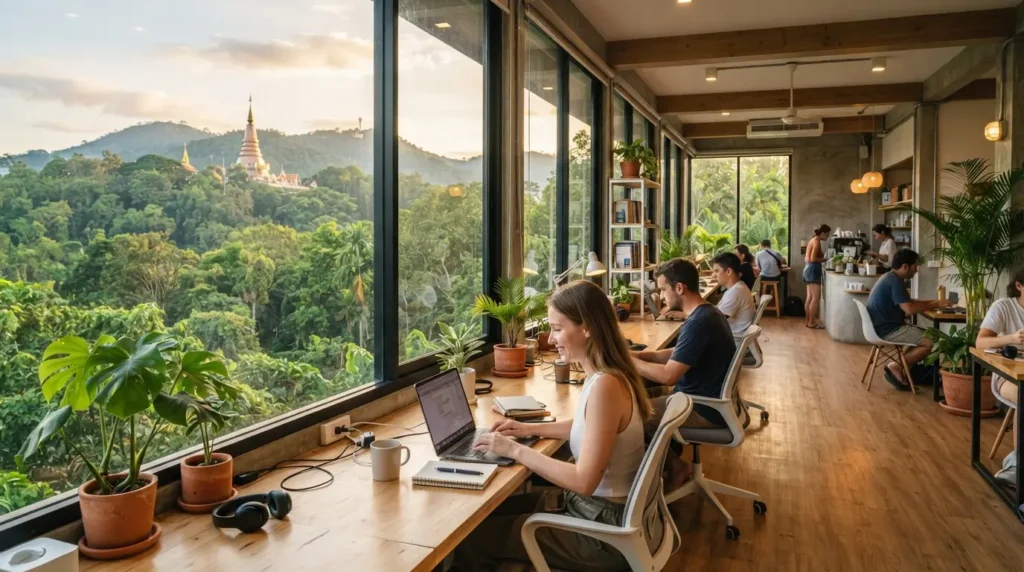
Chiang Mai built its reputation as a remote work destination before the phrase digital nomad became a marketing category, and it earned that reputation through specific qualities that have nothing to do with trend cycles. The city has more coworking spaces per capita than most European capitals. The internet infrastructure in the central neighborhoods is reliable at speeds that support video calls without drama. The cost of living is low enough that a freelancer earning a modest income from U.S. or European clients lives extremely well. And the overall pace and culture of the city creates an environment where productive work and genuine enjoyment of the destination can coexist without either compromising the other.
CAMP at Maya Mall is the legendary free coworking space that runs on coffee purchase honesty and has reliable, fast Wi-Fi that has supported remote workers for over a decade. Punspace and MANA both operate proper coworking spaces with day passes at $8 to $12 and month passes at $80 to $120. A private room in a well-reviewed guesthouse near Nimmanhaemin Road runs $20 to $35 a night. Street food costs $1 to $2 a meal. The Sunday Walking Street and Saturday Walking Street markets provide the kind of cultural engagement that makes non-working hours feel worthwhile without requiring significant physical or financial investment. Doi Suthep temple above the city offers a half-day trip that resets perspective in ways that a third consecutive day of working from the same café cannot. Chiang Mai is what sustainable remote work abroad actually looks like in practice.
4. Medellín, Colombia
Medellín has completed one of the most dramatic destination transformations of any city in the world over the past two decades, and the remote freelance community has recognized it faster than mainstream travel media. The city’s combination of eternal spring climate at 5,000 feet elevation that keeps temperatures around 72°F year-round, a rapidly developing tech and startup ecosystem that has brought serious coworking infrastructure, and daily costs that make a freelancer’s modest income feel generous creates a specific appeal that is difficult to replicate elsewhere in the Western Hemisphere.
El Poblado is where most remote workers initially land, with excellent café infrastructure, safe streets for walking at night, and the highest concentration of English-speaking locals. Laureles is the neighborhood that experienced remote workers move to for the more authentic local pace and slightly lower prices. Selina Medellín operates a coworking and coliving property that puts freelancers in immediate community with other remote workers, which solves the isolation problem that solo remote work in a new city creates. Day passes run $15 to $20. Private rooms at Selina run $40 to $60 a night. Independent apartments in Laureles rent for $500 to $700 a month for comfortable one-bedroom properties. Flights from Miami run below $180 round trip regularly. Medellín is the destination that freelancers book for two weeks and extend to two months.
5. Tbilisi, Georgia
Tbilisi is the open secret of the remote freelance world, and it will not stay a secret much longer. The country of Georgia introduced a Remotely from Georgia visa program during the pandemic that allows remote workers from most countries to live and work legally for up to a year with minimal bureaucratic requirements. Daily costs are extraordinary even by Eastern European standards, with full meals at excellent Georgian restaurants running $6 to $10 and private rooms in boutique guesthouses running $20 to $35 a night.
The old town of Abanotubani and the neighborhoods of Vera and Vake have seen significant coworking development in the past three years. Impact Hub Tbilisi and Fabrika, a repurposed Soviet factory now housing coworking spaces, cafés, and independent shops, both offer day passes at $10 to $15. The internet infrastructure in central Tbilisi is reliable and fast enough for video calls and large file transfers. The sulfur bathhouses in the old town cost $8 to $15 for a private room and provide the kind of mid-week recovery experience that makes working abroad feel like the specific privilege it actually is. Georgian wine, which is some of the most interesting and historically significant in the world, costs $5 to $8 a bottle at restaurants. Tbilisi is the destination that freelancers who found it early consistently describe as the best kept secret in remote work travel.
6. Bali, Indonesia
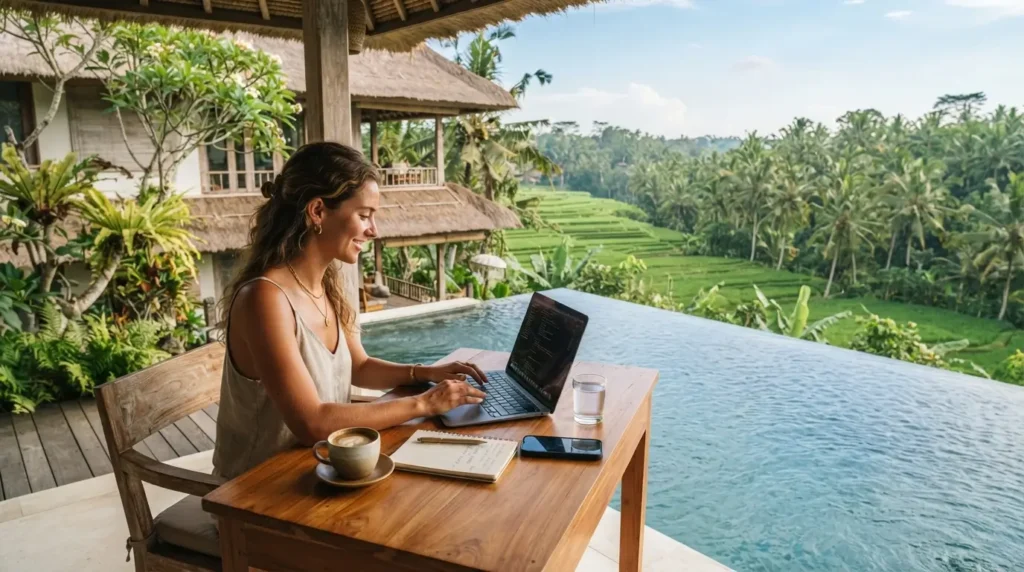
Bali belongs on this list with specific caveats that most Bali remote work content conveniently omits. The internet infrastructure in Canggu and Seminyak is genuinely reliable enough for most remote work requirements. The coworking scene, anchored by Dojo Bali in Canggu and Outpost in both Canggu and Ubud, is mature and professional. The daily cost can be kept very low. But the time zone alignment with U.S. clients is brutal, requiring work hours that run from 9 PM to 5 AM for East Coast alignment, and the infrastructure outside the main digital nomad neighborhoods degrades rapidly. Going in knowing this makes the destination work. Going in expecting what the Instagram posts show makes it a source of frustration.
For freelancers with European clients or Asian clients, the time zone problem disappears entirely. For freelancers with U.S. clients who are willing to work on an inverted schedule in exchange for extraordinary daily quality of life during their daylight hours, Bali remains one of the most beautiful and affordable remote work destinations in the world. A private villa with a pool in Canggu runs $60 to $100 a night. A Dojo Bali monthly coworking membership costs $150. Street food and warung restaurants cost $2 to $4 a meal. Surf lessons, spa treatments, and temple ceremonies fill the non-working hours with the specific quality of experience that makes the time zone sacrifice feel worthwhile.
7. Prague, Czech Republic
Prague suits a specific freelance traveler profile so precisely that it is worth identifying it clearly. You work primarily with European or U.S. East Coast clients. You want a culturally rich, historically extraordinary city with a functioning European infrastructure and a cost of living dramatically lower than Western European alternatives. You appreciate good beer at $2 a pint, excellent coffee culture, and a city whose beauty provides constant ambient reward for the days when remote work is tedious and the destination needs to carry more of the motivational weight.
Impact Hub Prague operates one of the best coworking spaces in Central Europe at day passes of $15 to $20 and monthly memberships of $150 to $200. The neighborhood of Žižkov has excellent independent café infrastructure where extended working sessions are welcome. Vinohrady offers beautiful Art Nouveau architecture, excellent restaurants, and a local residential pace that makes Prague feel like a city you’re living in rather than visiting. A private room in a well-reviewed guesthouse in either neighborhood runs $35 to $50 a night. The Czech Republic does not currently have a digital nomad visa, but EU citizens can stay indefinitely and non-EU citizens have 90 days within the Schengen area. Prague rewards freelancers who treat it as a proper base rather than a quick stopover.
8. Oaxaca, Mexico
Oaxaca has emerged as one of the most compelling remote work destinations in the Western Hemisphere for freelancers who prioritize food, culture, and quality of daily life alongside reliable work infrastructure. The city’s burgeoning tech and creative community has driven coworking development that was genuinely absent five years ago and is now sophisticated enough to support serious remote work requirements. Time zone alignment with U.S. clients is excellent, sitting in Central Time regardless of which U.S. client you’re working with.
Selina Oaxaca offers coworking day passes at $15 and provides reliable internet, a work-friendly café, and immediate community with other remote workers. Espacio Maquila is the independent coworking option preferred by freelancers who want a more local working environment. A private room in a well-reviewed guesthouse in the historic center runs $35 to $55 a night. The food alone justifies the destination. Oaxaca has one of the most celebrated regional cuisines in Mexico, with mole negro, tlayudas, and mezcal that reward genuine exploration rather than tourist approximations. Monte Albán ruins, the Tule Tree, and the craft villages surrounding the city fill weekends with experiences that feel genuinely enriching rather than just timefillers between work sessions.
9. Tallinn, Estonia
Estonia built the world’s first digital residency program and the most comprehensive e-government infrastructure of any nation, which means that freelancers who establish Estonian business entities can operate with genuinely lower administrative friction than in most countries. The Estonian Digital Nomad Visa allows non-EU remote workers to live and work legally in Estonia for up to a year. But beyond the bureaucratic advantages, Tallinn is simply a very good city for remote freelancers in ways that have nothing to do with e-residency.
The medieval old town is genuinely one of the most beautiful urban environments in Europe, and working from a café in a 14th century building while earning 21st century freelance income creates a quality of daily experience that most home office setups cannot approach. Lift99 is one of the most respected startup and coworking communities in the Baltic states with day passes at $15 to $20. Internet infrastructure throughout Tallinn is excellent, reflecting Estonia’s long-standing national commitment to digital infrastructure development. Daily costs run $60 to $80 covering accommodation, meals, and coworking access. The Telliskivi Creative City neighborhood has excellent independent cafés and restaurants that suit the extended working sessions that freelancers require.
10. Cape Town, South Africa
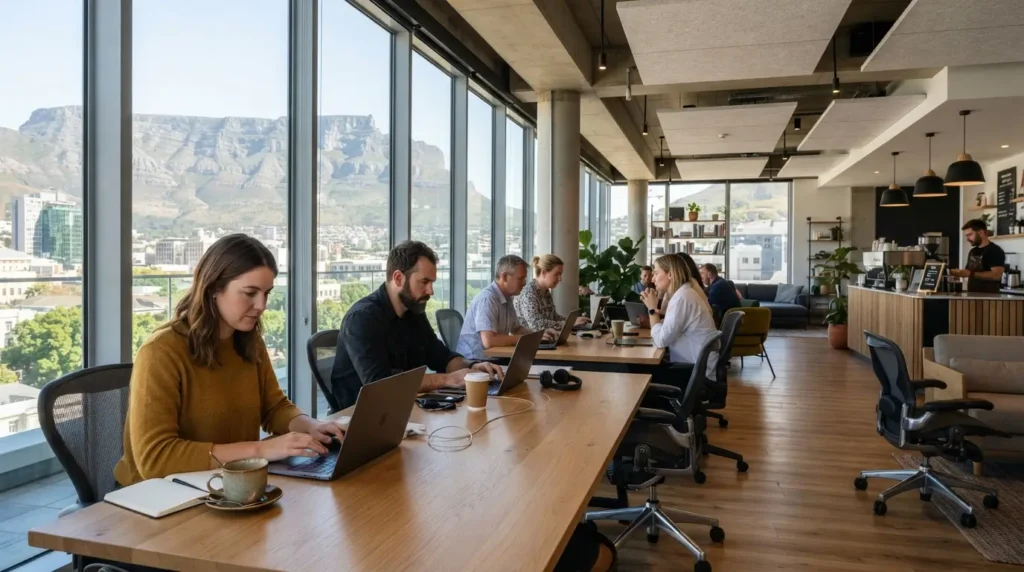
Cape Town is the remote work destination that freelancers with adventurous instincts and some flexibility on time zones have been quietly building a community in for several years. The city offers Table Mountain as a backdrop, extraordinary wine country within an hour’s drive, one of the best restaurant scenes in the Southern Hemisphere, and a startup and tech community that has driven serious coworking infrastructure development in neighborhoods like Woodstock and De Waterkant.
The Bureaux and Workshop17 both operate professional coworking spaces with day passes at $10 to $15 and excellent internet speeds that support demanding remote work requirements. Daily costs for freelancers run $50 to $80 covering accommodation in a well-reviewed guesthouse in the Gardens or Observatory neighborhoods, meals, and coworking access. The South African Rand’s favorable exchange rate against major Western currencies means that U.S. and European freelancers live significantly better in Cape Town than their income would suggest at home. South Africa’s Digital Nomad Visa launched in 2024, providing legal work from South Africa status for remote workers meeting income requirements. The time zone aligns well with European clients and requires discipline but not impossibility for U.S. East Coast clients.
Building a Sustainable Remote Work Travel Routine
Choosing the right destination is half the equation. Building a daily routine that makes work productive and life genuinely enjoyable is the other half that most remote work travel content skips entirely.
Establish a Physical Work Anchor at Every Destination
The freelancer who works from their bed, the hotel lobby, a café with inconsistent Wi-Fi, and their balcony on rotating days is not working sustainably. They are performing the aesthetic of remote work without the functional infrastructure that makes it viable long-term. Identify your primary work location within the first 24 hours of arriving at any new destination. It might be a coworking space. It might be a specific café with reliable internet and seating that supports long working sessions. It might be a desk in your accommodation that genuinely functions as a workspace. Whatever it is, make it consistent. Consistency of work location trains your brain to shift into work mode in that space, which is the cognitive infrastructure that location independence quietly destroys when it’s not deliberately rebuilt.
Protect Your Non-Working Hours as Aggressively as Your Working Hours
Freelancers traveling to interesting destinations consistently report the same failure mode: they work during the hours they planned to work, then they work a few more hours because they’re anxious about a deadline, then it’s 9 PM and they’ve spent the entire day in a coworking space in one of the most interesting cities in the world and have seen nothing of it beyond the commute to the desk. Set a specific end-of-work time. Hold to it the same way you’d hold to a client deadline. The destination is part of why you’re there. Protect access to it with the same seriousness you bring to your professional commitments.
Build Community Intentionally at Every Destination
Remote freelance work is isolating in ways that only become fully apparent after six to eight weeks of working alone in rotating accommodations without genuine community. The loneliness compounds slowly rather than arriving obviously, which makes it easy to miss until it is affecting work quality and daily wellbeing simultaneously. Build community deliberately. Nomad List’s meetup feature surfaces other remote workers in your current city. Coworking spaces generate natural conversation with other professionals. Meetup.com events in most major remote work destinations connect people with shared professional or personal interests. Couchsurfing’s Hangouts feature connects travelers and locals for casual social contact. None of these require significant social energy. All of them prevent the specific loneliness that remote work travel generates when community is left to chance.
Frequently Asked Questions
What are the most important factors when choosing vacation spots for freelancers working remotely?
Time zone alignment with primary clients, internet reliability at accommodation confirmed directly rather than from listing descriptions, availability of coworking space backup for accommodation Wi-Fi failures, and daily cost relative to your income are the four factors that determine whether a destination actually works for remote freelance work. Beautiful beaches and cultural richness matter for quality of life but have no bearing on whether you can deliver client work reliably from a given location.
How do freelancers find reliable accommodation with good internet abroad?
Message hosts directly before booking and ask specifically for a speed test screenshot taken in the room you will be staying in. A speed test result above 25 Mbps download and 10 Mbps upload supports most remote work including video calls. Read recent guest reviews specifically for mentions of Wi-Fi reliability rather than general quality. Book initial accommodation with free cancellation so you can move if the internet does not match what was described. Never assume that “high speed internet” in a listing description means anything specific.
How do freelancers handle taxes when working from multiple countries?
U.S. freelancers owe federal taxes on worldwide income regardless of where it is earned. The Foreign Earned Income Exclusion applies to qualifying situations but requires meeting specific physical presence or bona fide residence tests. State tax obligations vary by state, with some states releasing you upon establishing non-residency and others like California maintaining obligations for residents who leave temporarily. Consulting a CPA who specifically works with location-independent freelancers before extended travel is worth the cost. Bright Tax and Greenback Tax Services both specialize in this area.
What is the best region of the world for freelancers working with U.S. clients?
Central America and South America offer the best time zone alignment with U.S. clients, particularly Mexico, Colombia, and Argentina which sit in Central, Eastern, and Argentina Standard Time respectively. Within Europe, Portugal’s Western European Time creates manageable overlap with U.S. East Coast mornings. Southeast Asia requires either very early or very late working hours for U.S. client alignment, which some freelancers find sustainable but many do not in practice beyond the initial excitement of the destination.
How long should freelancers stay in each destination to get genuine value from it?
Three to four weeks is the minimum stay that allows a freelancer to develop a genuine working routine, find the best cafés and coworking options, and explore the destination with enough depth to feel like a resident rather than a tourist. Moves more frequent than every three weeks generate constant setup costs, constant adjustment periods, and constant logistical overhead that consumes the mental energy and time that should go into either the work or the destination. Most experienced remote freelancers converge on one to three month stays as the window that maximizes both work sustainability and destination depth.
Conclusion
The best vacation spots for freelancers working remotely are not the ones with the best Instagram potential or the lowest daily costs. They are the ones where work is genuinely viable, life outside work is genuinely rewarding, and the combination of both feels like something worth sustaining rather than something to survive until you can afford to stop. Every city on this list has delivered that combination for real freelancers working real jobs from real laptops. Which one fits your clients, your budget, and your honest relationship with time zones?