Finding genuinely useful easy sightseeing spots for travelers with chronic pain requires a level of honesty that most travel content never delivers. Chronic pain is not a uniform experience. Fibromyalgia feels nothing like degenerative disc disease. Rheumatoid arthritis flares on a different schedule than endometriosis. What all chronic pain conditions share in travel terms is this: the difference between a good trip and a miserable one is almost entirely determined before you leave home, not by how much willpower you bring to the destination. I have planned travel around my own chronic pain condition for eight years and helped several close friends do the same. Here is what the good trips have in common.
1. Understand Your Pain Before You Plan Your Trip
Every useful piece of advice in this guide flows from one foundational requirement: knowing your condition specifically enough to translate it into travel decisions. Generic chronic pain travel advice fails because it treats all pain as identical when the practical implications of different conditions are completely different.
Someone with fibromyalgia needs to prioritize sleep quality, minimize sensory overwhelm, and build rest time into every single day without guilt. Someone with inflammatory arthritis needs to time activities around medication schedules and avoid extended periods of sitting still that cause stiffening. Someone with degenerative disc disease needs seating with proper lumbar support, limits on standing time, and access to flat terrain. Someone with CRPS needs temperature-controlled environments and minimal physical contact situations. Before choosing any destination or booking any tour, write down the three to five specific physical requirements your condition creates in a travel context. Then evaluate every destination and every activity against those specific requirements rather than against general accessibility standards.
2. Kyoto, Japan
Kyoto is one of the most genuinely manageable destinations for chronic pain travelers in the world, which surprises people who assume Japan’s famous walkability translates into mandatory long walking days. The city’s temple and garden culture specifically rewards slow, stationary engagement that chronic pain travelers can participate in fully regardless of how much standing or walking their condition permits on any given day.
Ryoanji’s rock garden is experienced from a covered wooden veranda where you sit and look. The garden does not require you to walk through it. Kinkaku-ji, the Golden Pavilion, involves a short circular path of less than 800 meters on level ground that most chronic pain travelers manage comfortably with pacing. Nijo Castle has indoor exhibition areas with seating throughout. The Arashiyama Bamboo Grove main path is flat and short. For days when pain is genuinely high, Philosopher’s Path has frequent benches and covers only two kilometers between optional entry and exit points. Taxis and rideshares are inexpensive, safe, and available throughout the city for the moments when transit becomes too much. Ryokan accommodation means dinner comes to your room, which on a high pain day is not a small comfort.
3. Amsterdam, Netherlands
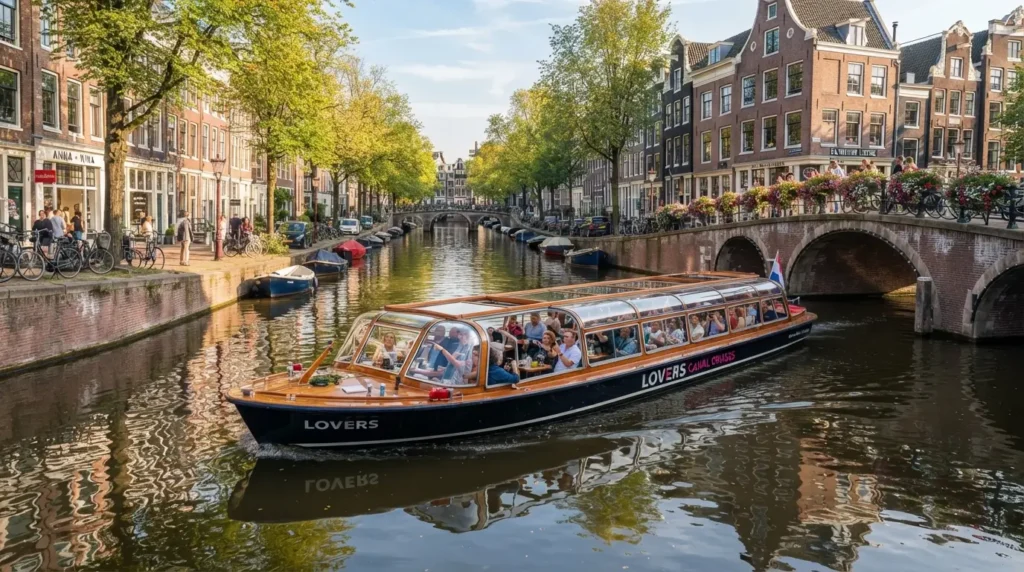
Amsterdam’s canal boat culture was essentially created for travelers who cannot or prefer not to walk long distances, and chronic pain travelers benefit from this historical accident more directly than almost any other visitor demographic. A canal boat tour lets you see the Anne Frank House exterior, the Rijksmuseum, the Westerkerk, and dozens of other significant sites while sitting in a covered, temperature-controlled boat that requires you to board once and disembark once.
The city’s tram network covers virtually every neighborhood with level boarding in most modern vehicles that doesn’t require climbing steps. Vondelpark has long, flat paths with frequent benches that make it navigable on most pain days. The Rijksmuseum itself has seating throughout its galleries, is fully accessible, and has a café that chronic pain travelers consistently use as a mid-visit rest point without needing to exit and requeue. The flat terrain of Amsterdam, genuinely flat in a way that few major European cities are, means that a day of navigating the city on foot produces significantly less pain load than an equivalent day in cities built on hills. Daily costs of $80 to $120 keep financial stress from adding to physical stress.
4. Victoria, British Columbia, Canada
Victoria is one of the most thoughtfully accessible cities in North America for chronic pain travelers, with a combination of flat terrain, excellent healthcare nearby, and an activity profile built around gardens, whale watching boats, and afternoon tea that happens to align almost perfectly with what many chronic pain conditions actually permit on a daily basis.
Butchart Gardens is the destination within Victoria that chronic pain travelers return from talking about most. The gardens cover 22 hectares of extraordinary floral displays on paths that are paved, flat, and interrupted by benches every hundred meters or so. Electric cart tours are available for visitors who cannot walk the full circuit. The gardens are beautiful enough that sitting in one spot for an hour watching the same section change in different light is a completely legitimate way to spend time there. Whale watching boat tours from Victoria’s Inner Harbour use stable, modern catamarans with enclosed seating areas and accessible boarding that don’t require physical capability beyond the ability to board a boat at a dock. The Royal BC Museum has seating throughout and one of the best North American natural history collections in the country.
5. Washington DC
Washington DC is the chronic pain traveler’s domestic destination that delivers more accessible world-class cultural experiences per square mile than anywhere else in the United States. The Smithsonian Institution’s nineteen museums are all free, all fully accessible, and all have seating distributed throughout their galleries rather than concentrated only at the entrance and café. A chronic pain traveler can spend five days moving between Smithsonian museums at whatever pace their condition permits and never pay an entrance fee or encounter a genuine accessibility barrier.
The National Mall connecting the museums is flat and long, with benches throughout, making it manageable for travelers whose condition permits moderate walking with frequent rest stops. The DC Metro has elevators at every station, which matters specifically for chronic pain travelers because escalators and stairs represent exactly the kind of physical demand that turns a manageable day into a painful one. Tourmobile and Old Town Trolley operate narrated tours with frequent boarding points throughout the Mall that allow chronic pain travelers to participate in sightseeing from a seated vehicle on days when walking is genuinely not possible. Everything about Washington DC as a destination seems designed around the principle that access to extraordinary culture should not be physically gatekept.
6. Bordeaux, France
Bordeaux underwent one of the most comprehensive urban accessibility renovations of any European city in the past two decades, and the result is a city center that chronic pain travelers navigate with a ease that most French cities don’t offer. The tramway system uses low-floor vehicles with level boarding throughout the central city, covering all major cultural sites without requiring stair climbing or significant walking between stops.
The Place de la Bourse waterfront promenade is flat and beautiful, with the famous Miroir d’Eau reflecting pool creating one of the most photographed urban landscapes in France from a standing or seated position with equal impact. The Cité du Vin wine museum is fully accessible with elevators throughout and an extraordinary rooftop tasting room that requires no physical capability beyond reaching the elevator button. Wine tourism by river boat to Bordeaux’s surrounding châteaux means experiencing the extraordinary wine landscape of the region without navigating uneven vineyard terrain. Médoc Marathon season aside, Bordeaux moves at a pace that chronic pain travelers consistently describe as gentle enough to actually enjoy rather than just endure.
7. Hawaii, Maui Specifically
Maui delivers tropical beauty at an accessibility level that most beach destinations don’t attempt, with a combination of flat beach parks, accessible ocean viewing platforms, narrated boat tours, and a climate that many chronic pain conditions respond to positively. Warm, consistent temperatures without the humidity extremes that worsen inflammatory conditions for many people, combined with the particular psychological lift of extraordinary natural beauty, make Maui one of the destinations that chronic pain travelers describe as worth every logistical challenge the journey to get there involves.
Ka’anapali Beach has a flat beachfront walking path called the Beachwalk that runs along the oceanfront with seating throughout and access to one of Hawaii’s most beautiful stretches of sand from a paved surface. Molokini snorkeling boat tours use stable catamarans with hydraulic boarding assists for travelers who cannot easily climb ladders, and several operators offer viewing options for non-swimmers that let you see the extraordinary coral and marine life through glass-bottom viewing panels without entering the water. The Road to Hana is a driving experience in its entirety, with short optional walks at specific viewpoints, meaning that travelers whose pain prevents significant hiking can experience Maui’s extraordinary landscape from a vehicle without missing its essential character.

8. Barcelona, Spain
Barcelona’s chronic pain accessibility profile is more nuanced than its reputation as a walkable city suggests, because the quality of terrain varies dramatically between neighborhoods in ways that matter significantly for chronic pain travelers. The Gothic Quarter’s beautiful medieval streets are also genuinely uneven cobblestone that makes walking with joint pain, foot pain, or balance issues genuinely difficult. The Eixample district’s wide, flat, grid-pattern streets are one of the most chronic-pain-friendly urban environments in Spain. Knowing which neighborhoods align with your specific physical requirements before you arrive changes the experience completely.
Hop-on hop-off bus tours in Barcelona solve the terrain problem elegantly by delivering you to accessible entrances of major attractions from a seated vehicle. Park Güell’s main terrace area is reachable by escalator from the lower park entrance, which most tourist information misses but which changes the accessibility profile of one of Barcelona’s most famous sites entirely. The Sagrada Família interior is fully accessible with elevators to the tower viewing levels, and the building’s interior is so extraordinary that chronic pain travelers who can only manage the interior before needing to rest still experience one of the most remarkable architectural spaces in the world. The Barceloneta beachfront promenade is flat, long, and has seating throughout for watching the Mediterranean without requiring any beach navigation on foot.
9. River Cruising in Europe
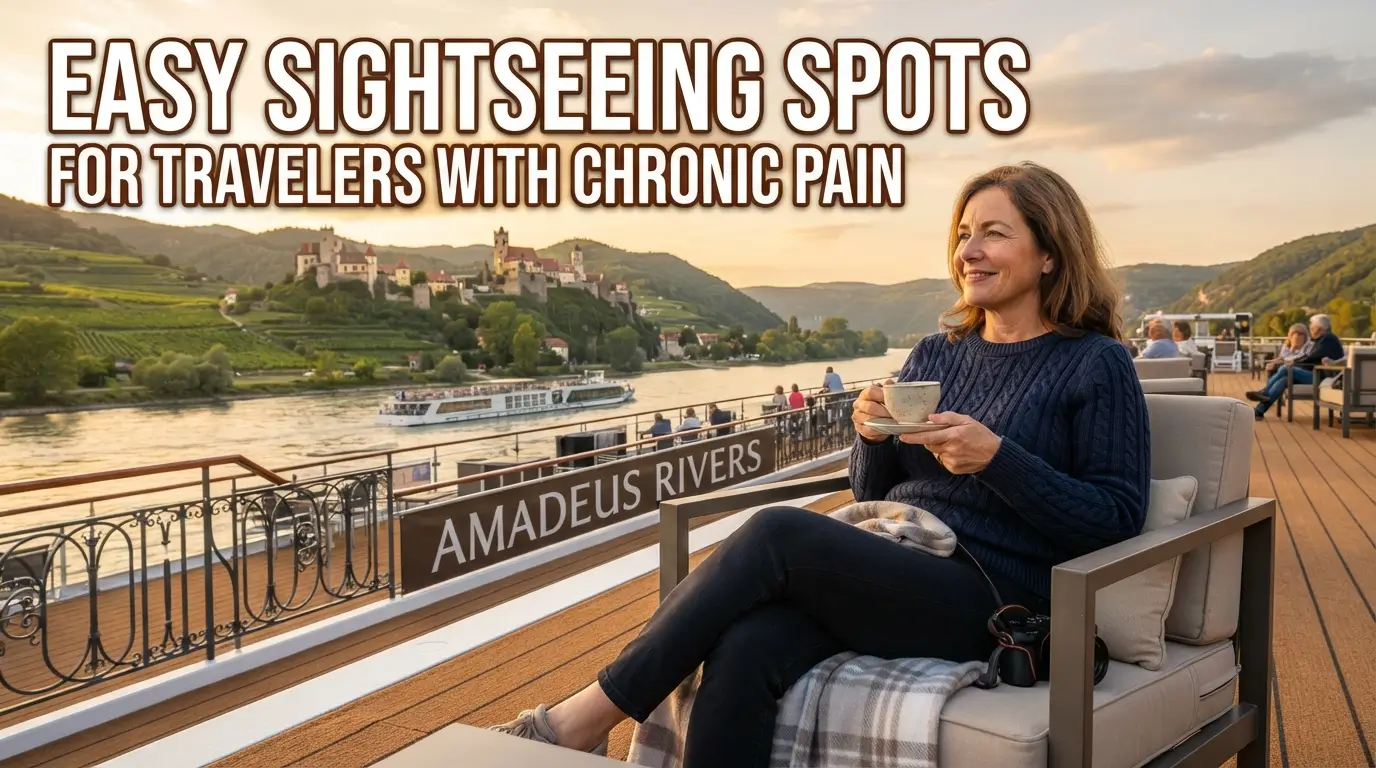
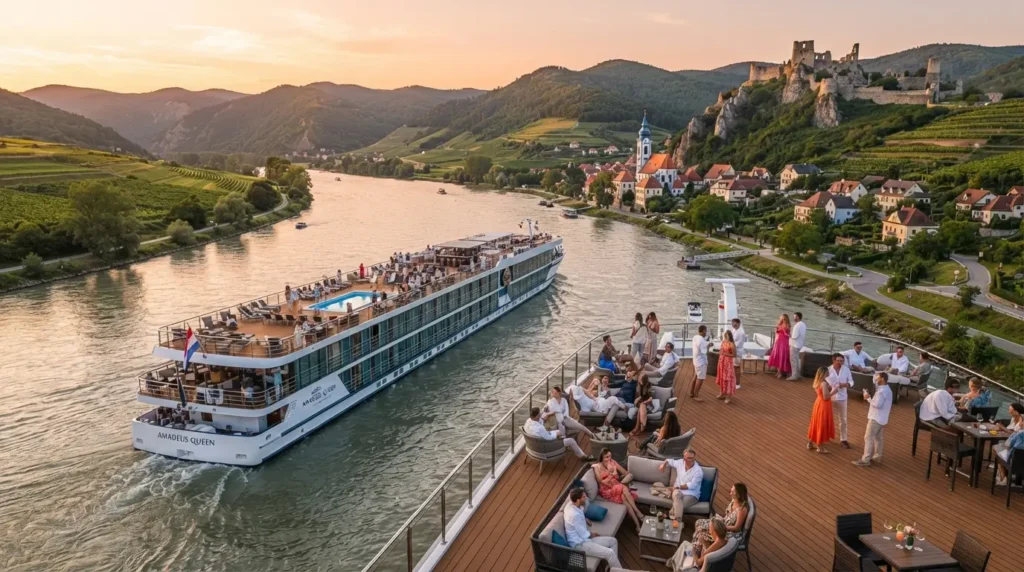
River cruising deserves a dedicated entry in any guide about easy sightseeing for chronic pain travelers because it solves more simultaneous chronic pain travel problems than any other format. You unpack once. You sleep in the same bed every night. Your accommodation moves to the destination rather than you navigating to new accommodation. Shore excursions are rated by physical demand and you choose only those that match your capacity on any given day. Meals are included and available at regular, predictable times that support medication schedules. Medical staff are available onboard most major river cruise vessels.
Viking River Cruises and AmaWaterways both offer shore excursion options rated for different mobility levels, with gentle walking tours specifically designed for travelers who cannot manage the standard pace. Ships dock in city centers rather than distant ports, minimizing transfer logistics. The social environment on river cruise ships, typically 100 to 200 passengers on intimate vessels, creates easy, low-energy social connection that chronic pain travelers who find high-energy social situations depleting appreciate. The Danube route between Vienna, Budapest, and Bratislava covers some of Europe’s most beautiful cities with the gentlest possible logistical burden for chronic pain travelers whose condition makes constant logistics management exhausting.
10. San Antonio, Texas
San Antonio is the domestic chronic pain destination that consistently surprises visitors with how much it delivers within what is genuinely one of the most accessible urban environments in the United States. The River Walk, a network of pedestrian paths along the San Antonio River running through the heart of the city, is flat, beautiful, and lined with restaurants, bars, and cultural sites accessible directly from the path. Boat tours of the River Walk operate from multiple boarding points, letting chronic pain travelers who cannot walk the full length still experience its most beautiful sections from a seated position.
The Alamo is a short walk from the River Walk through entirely flat terrain with accessible interior spaces. The San Antonio Museum of Art has seating throughout and an exceptional collection that rewards unhurried engagement. Go Rio boat tours provide narrated River Walk cruises with accessible boarding and cover the essential character of the city from a comfortable seated position in about 35 minutes. The consistent warmth of San Antonio’s climate provides the temperature stability that many chronic pain conditions respond better to than the temperature variability of destinations with more dramatic seasonal swings. Daily costs of $60 to $90 including accommodation, food, and activities keep the financial dimension manageable.
Pacing Strategies for Chronic Pain Travelers
The single biggest predictor of a successful chronic pain travel experience is pacing, specifically the willingness to pace more conservatively than your best day would suggest is necessary.
Plan for Your Worst Recent Day, Not Your Best
Chronic pain travel planning that is built around your best recent days consistently produces trips that start well and deteriorate as the physical reality of travel, disrupted sleep, different beds, more walking than usual, irregular meal timing, catches up with optimistic planning. Plan your daily activity load against your worst recent pain day rather than your best. Activities that fit within that limit will feel comfortable on your average days and entirely manageable on your harder ones. The trip that finishes well is almost always more satisfying than the one that starts ambitiously and ends with a flare that consumes the final days.
Build Rest Into the Architecture of the Day, Not Just the End of It
Resting at the end of an activity-filled day is not the same as building rest into the structure of the day itself. A chronic pain traveler who visits one museum in the morning, returns to accommodation for a genuine two-hour rest including lying down rather than sitting in a café, and then does one gentle evening activity has a fundamentally different physical experience than one who visits three museums consecutively and then collapses in the evening. The midday rest is not a failure of travel ambition. It is the strategy that makes the second half of every day available rather than written off.
Communicate Your Needs Without Apologizing for Them
Museums have wheelchairs and mobility aids available at no charge for visitors who need them regardless of whether you use a mobility aid at home. Tour operators have slow-paced options that don’t appear on their standard menus until someone asks. Restaurants accommodate meal timing requests more readily than most chronic pain travelers expect. Hotels assign rooms near elevators, on lower floors, or with particular bed types when asked specifically rather than generally. None of these accommodations require explanation, justification, or apology. They require a direct, specific request made in advance rather than on arrival. Chronic pain travelers who advocate clearly for their specific needs consistently report better travel experiences than those who hope circumstances will work out without speaking up.
Frequently Asked Questions
What are the most important things chronic pain travelers should research before booking?
The terrain profile of the destination, specifically whether major sites involve cobblestones, significant stairs, or long distances between accessible points. The availability and quality of medical care near your accommodation in case of a significant flare. The bed quality at your chosen accommodation, which directly affects pain levels every morning of the trip. The availability of seating at major attractions, which many chronic pain travelers confirm by emailing the attraction directly before visiting rather than discovering on arrival.
How do chronic pain travelers handle flare days while traveling?
Having a specifically planned flare day protocol before you leave home is what separates a flare from a crisis. Identify one or two low-demand activities at your destination that are genuinely enjoyable and require almost no physical output, a specific café, a beautiful view accessible by taxi, a museum section with seating, a hotel spa. When a flare day arrives, you activate the protocol rather than making decisions while in pain. Having your flare medications accessible in your day bag rather than in room luggage means you can manage a flare wherever you are rather than needing to return to accommodation immediately.
Can chronic pain travelers manage long-haul flights?
Yes, with specific preparation. An aisle seat allows movement without disturbing others, which matters for conditions where extended sitting without movement causes significant stiffening. Compression socks reduce the circulatory discomfort that many inflammatory conditions amplify during long flights. A travel pillow that supports your specific pain point, lumbar for back pain sufferers, neck support for cervical conditions, reduces the accumulated strain of long seated hours. Moving through the cabin for five minutes every hour addresses the stiffening that causes the worst post-flight pain for most musculoskeletal chronic pain conditions.
What accommodation types work best for chronic pain travelers?
Ground floor or elevator-accessible rooms reduce the physical demand of getting to and from your room multiple times daily. Beds that can be confirmed as firm or soft based on your specific preference before booking, rather than discovered on arrival, prevent the accumulated sleep disruption that worsens pain over a multi-day trip. Accommodation with an in-room bathtub or walk-in shower rather than just a bathtub matters for travelers whose condition affects mobility in ways that make step-over tub edges difficult. Kitchen or kitchenette access lets you manage meal timing around medication schedules without depending on restaurant hours.
Are there travel insurance policies that specifically cover chronic pain conditions?
Standard travel insurance often excludes pre-existing conditions unless purchased within a specific window of the initial trip deposit, typically 14 to 21 days. World Nomads and Battleface both cover many pre-existing conditions with upfront disclosure and appropriate premium adjustment. When comparing policies, specifically check whether flare-related trip interruption is covered, whether medical evacuation is included, and whether the policy covers the specific treatments your condition requires rather than generic emergency medical coverage that may not apply to your situation.
Conclusion
Chronic pain changes how you travel. It does not have to change whether you travel. Every destination on this list was chosen because it delivers genuine beauty, culture, and experience within parameters that chronic pain travelers can actually access rather than merely admire from a distance. The world is still out there, and it has more room for you in it than the hard days sometimes make it feel like. Where have you been wanting to go?