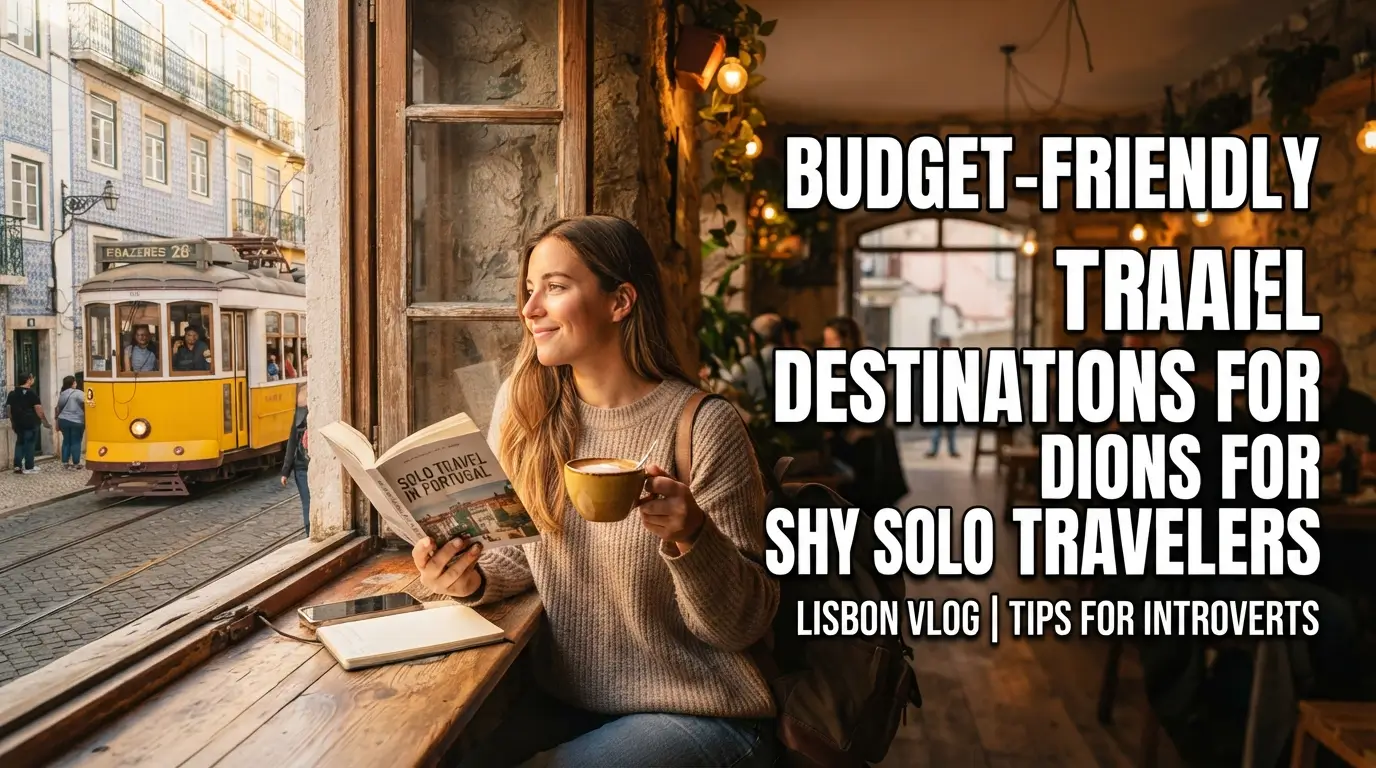
Budget-friendly travel destinations for shy solo travelers rarely get written about honestly, because most solo travel content assumes you are the kind of person who makes friends in airport lounges and confidently walks into crowded bars alone on your first night somewhere new. I am not that person. I spent my first solo trip eating dinner at 5 p.m. to avoid the crowded dinner rush, reading a book at a corner table in restaurants so I looked purposefully alone rather than accidentally alone, and feeling simultaneously free and completely terrified. That experience taught me more about what actually makes a destination work for introverted solo travelers than any travel guide ever did.
What Makes a Destination Work for Shy Solo Travelers
Before getting into specific destinations, it is worth being honest about what shy solo travelers actually need from a place. It is not necessarily the most social destination or the one with the best hostel party scene. It is usually the opposite.
Safe, walkable neighborhoods where you can spend hours exploring independently without needing to interact with anyone removes the social pressure that makes travel exhausting for introverted people. A city you can read spatially and navigate confidently produces a completely different emotional experience than one where you need to ask for help constantly.
A strong café culture gives shy solo travelers a natural, socially acceptable reason to sit somewhere comfortable for extended periods without feeling conspicuous. A book and a coffee in a good café is one of the most genuinely pleasant solo travel experiences available anywhere, and destinations where this is culturally normal make it feel like participation rather than hiding.
Clear transit systems that do not require verbal negotiation remove another common anxiety trigger. Tapping a card or following clear signage is significantly less stressful than haggling with a taxi driver or decoding a bus system with no English signage.
Enough solo-friendly activities like museums, galleries, temples, gardens, and walking routes mean your days fill naturally without needing to organize group experiences or talk to strangers to have a good time.
These are the filters every destination on this list has been chosen through.
1. Kyoto, Japan: The Perfect City for Introverted Solo Travelers
Kyoto is the single best destination I have ever encountered for shy solo travelers, and I say that having recommended it to dozens of introverted friends who came back transformed by how right it felt. The city’s cultural norms around quiet public behavior, personal space, and understated interaction align almost perfectly with what introverted travelers need to feel comfortable and free.
Nobody in Kyoto will approach you aggressively, invite you to a bar, comment on the fact that you are eating alone, or make your solitude feel like a problem requiring a social solution. Dining alone in Japan carries none of the awkward social freight it does in many Western countries. Counter seating at ramen shops and soba restaurants is designed explicitly for solo diners. Ordering by vending machine ticket at many restaurants removes even the verbal interaction with waitstaff entirely.
Daily cost: $35 to $55 covering accommodation in a guesthouse or budget ryokan, three meals, and local transit.
Where to stay: Guesthouses in the Higashiyama or Fushimi areas offer private rooms from $25 to $40 per night. Many are small, family-run operations with minimal social pressure and genuinely warm but unobtrusive hospitality.
What to do alone: Fushimi Inari at dawn when the torii gate tunnels are nearly empty is one of the most genuinely meditative experiences available to any solo traveler anywhere. The Philosopher’s Path in early morning light. Temple gardens at Ryoanji and Ginkakuji where sitting quietly is not just acceptable but culturally appropriate. The Nishiki Market for slow solo food exploration.
The social option that does not feel forced: Free walking tours in Kyoto attract other solo travelers and provide a structured social context that feels optional rather than mandatory. You can participate as much or as little as you want and nobody notices either way.
Budget reality: A week in Kyoto costs $250 to $380 all in excluding flights. Convenience store meals from Lawson and 7-Eleven are genuinely good and cost $3 to $6 per meal, making budget management remarkably easy without sacrificing food quality.
2. Lisbon, Portugal: Solo Friendliness Built Into the Culture
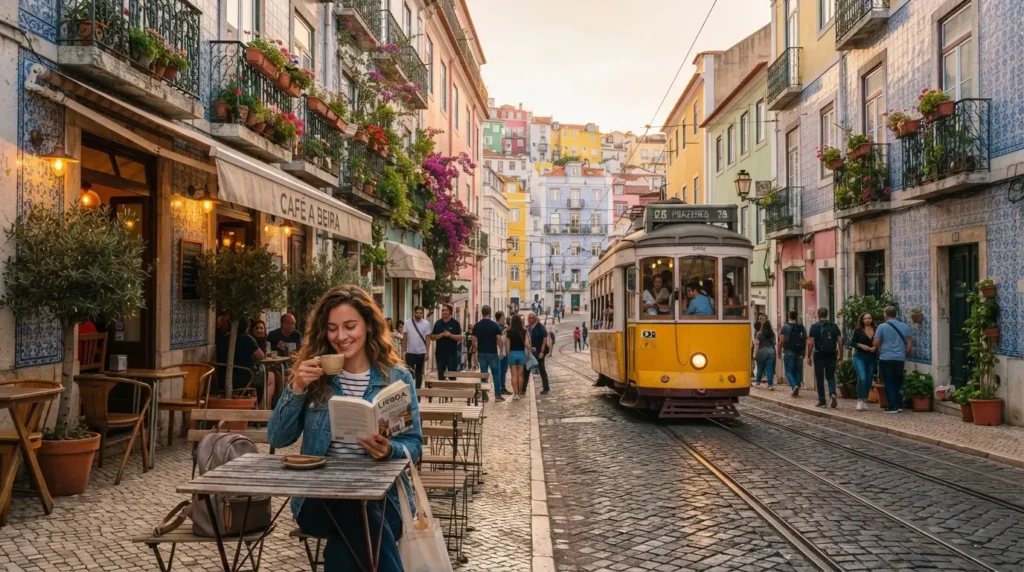
Lisbon has a quality that shy solo travelers respond to almost immediately: the city does not perform at you. It exists at its own pace, beautiful and slightly melancholic in the way that Portuguese fado music captures perfectly, and it welcomes solo presence without making a production of it.
The café culture here is extraordinary for introverted travelers. Sitting alone with an espresso and a pastel de nata at a small table in a Baixa café for an hour is not unusual. It is what people do. The cultural norm around leisurely solo café sitting removes the self-consciousness that makes the same experience feel awkward in louder, more socially performative cities.
Daily cost: $40 to $60 covering a private room in a guesthouse, meals at local tascas, and transit.
Where to stay: The Príncipe Real neighborhood has a quieter, more residential character than the tourist-heavy Alfama or Baixa areas. Guesthouses here run $35 to $55 for private rooms and the surrounding streets have excellent independent cafés, bookshops, and wine bars where solo presence feels entirely natural.
What to do alone: The Museu Nacional do Azulejo is one of the most peaceful and beautiful museum environments in Europe, quiet rooms filled with extraordinary blue tile panels and an interior courtyard café that feels like a genuine secret. Miradouro da Graça viewpoint in the early evening. Long slow walks through Belém with no agenda.
The fado experience: Attending a fado show alone in a small venue in Mouraria is one of the most intensely moving solo travel experiences I can recommend. The music is about longing and solitude. Being alone there feels exactly right rather than conspicuously sad.
Budget reality: A week in Lisbon costs $280 to $420 excluding flights. The Lisboa Card covering transit and museum entry costs $20 for 24 hours and removes daily decision fatigue about fares.
3. Chiang Mai, Thailand: Structure Without Social Pressure
Chiang Mai has developed one of the world’s most sophisticated infrastructures for solo travelers, and a significant portion of that infrastructure serves introverted visitors particularly well. The city has enough organized activities, cafés, and temple experiences to fill days completely without requiring spontaneous social interaction.
The Buddhist temple culture that gives Chiang Mai its distinctive atmosphere also creates permission for quiet solitary presence in beautiful spaces. Sitting in a temple courtyard alone is not just acceptable but actively appropriate. Nobody will try to draw you into conversation or make your solitude feel like a problem.
Daily cost: $25 to $40 covering a private room in a guesthouse, excellent street food meals, and transport.
Where to stay: The Old City moat area has dozens of small guesthouses and boutique hotels with private rooms starting at $12 to $20 per night. Choose accommodation with a small garden or terrace where morning coffee alone feels pleasant rather than isolated.
What to do alone: Cooking classes provide structured social interaction with a defined beginning and end, which works well for shy travelers who want occasional human connection without open-ended social commitment. Mama Noi’s and Thai Farm Cooking School both run half-day classes where you cook alongside others but the activity itself carries the interaction. The Sunday Walking Street market is busy enough that you move through it anonymously, sampling food and watching the world without anyone requiring conversation from you.
Doi Suthep temple: The mountain temple above the city is reached by songthaew shared truck from the Old City for $1.50. Arriving at 7 a.m. means sharing the space with monks and a handful of other early visitors in an atmosphere of genuine quiet that the midday tourist crowds completely displace.
Budget reality: Two weeks in Chiang Mai costs $350 to $560 excluding flights. The low daily cost makes a longer stay genuinely affordable, and staying longer in one place consistently reduces the social anxiety of constant reorientation.
4. Porto, Portugal: Small Scale and Genuinely Manageable
Porto works for shy solo travelers partly because it is smaller than Lisbon and smaller means less overwhelming. The city is compact enough to understand spatially within the first day, which removes the ongoing anxiety of not knowing where you are or where things are relative to each other. Once a city makes spatial sense, the cognitive load drops and the experience becomes genuinely enjoyable rather than exhausting.
The waterfront Ribeira district provides a natural anchor point that shy travelers can return to whenever the city starts feeling like too much. Sitting on the steps along the Douro watching the wine boats is one of those simple, completely solo-compatible pleasures that Porto offers in abundance.
Daily cost: $35 to $55 covering private room accommodation, local restaurant meals, and transit.
Where to stay: Small guesthouses in the Bonfim or Cedofeita neighborhoods run $30 to $45 for private rooms and sit in quieter residential streets away from the most tourist-saturated areas. The neighborhood feel of these areas makes solo walking feel safe and comfortable rather than conspicuous.
What to do alone: São Bento railway station interior is one of the great free experiences in Europe, an extraordinary tiled hall that rewards slow, solitary looking. The Livraria Lello bookshop is best visited alone at opening time before queues build, wandering the famous neo-Gothic interior at your own pace. The riverside walk from Ribeira toward the Arrábida Bridge in the late afternoon.
The day trip to Aveiro: 70 minutes by train and about $3.60 each way, Aveiro is small enough to understand in an afternoon and calm enough that solo wandering through its canal streets feels completely natural. The Art Nouveau architecture and the ovos moles egg yolk pastries make it one of the most rewarding easy solo day trips in Portugal.
Budget reality: A week in Porto costs $245 to $385 excluding flights. Lower than Lisbon and with fewer tourist crowds, which benefits shy travelers significantly.
5. Ljubljana, Slovenia: Europe’s Most Underrated Solo Travel City
Ljubljana is not on most people’s radar, and that oversight is one of the best things about it for shy solo travelers. The city is small, pedestrianized in its historic center, clean, safe, and operating at a pace that never makes you feel rushed or socially obligated. It is the kind of place where sitting on a riverside café terrace alone for three hours feels like exactly the right way to spend an afternoon.
The city’s size is its greatest asset for introverted travelers. You understand Ljubljana within hours of arriving. The castle above, the river below, the old town in the middle. Everything is within walking distance of everything else, which means getting lost leads to something interesting rather than somewhere stressful.
Daily cost: $40 to $60 covering a private room, good local restaurant meals, and occasional transit.
Where to stay: Small boutique guesthouses along the river run $35 to $55 for private rooms. The Stari trg old town area is beautiful and walkable from everything. Hostel Tresor offers private rooms in a genuinely social but never pressuring environment.
What to do alone: Tivoli Park for morning walks through one of the most peaceful urban green spaces in Central Europe. The National Gallery of Slovenia for Baroque and Impressionist art in quiet, unhurried rooms. The castle funicular for views over the terracotta rooflines without needing to earn the view through a steep climb.
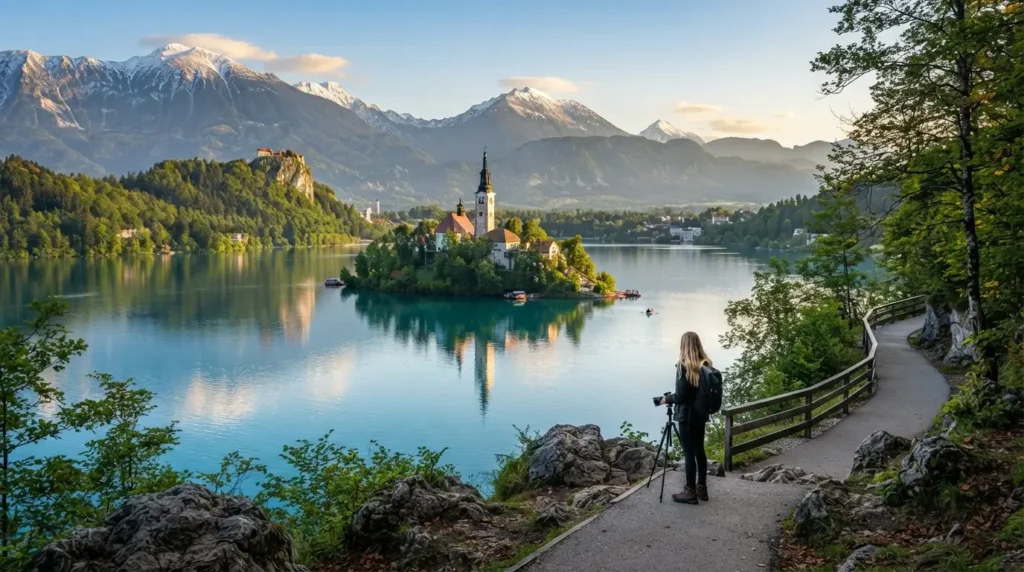
Day trip to Lake Bled: The bus from Ljubljana takes 55 minutes and costs about $6 return. Lake Bled is one of those places that genuinely looks like every photograph, and walking the circular path around the lake alone, at your own pace, stopping when something catches your attention, is one of the most quietly satisfying solo travel experiences available in Central Europe.
Budget reality: A week in Ljubljana costs $280 to $420 excluding flights. One of the most affordable capitals in Europe with accommodation and food costs that consistently undercut Western European equivalents.
6. Tbilisi, Georgia: Warm Without Being Overwhelming
Georgia has a hospitality culture that is warm and genuine in a way that is different from socially performative friendliness. Georgians are genuinely welcoming without requiring reciprocal social performance from visitors, which creates an environment where shy solo travelers can receive kindness without feeling pressure to match an energy they do not naturally have.
The city itself is visually extraordinary in an unconventional way. Not polished or curated like a Western European capital but beautiful in its slightly crumbling, ornate, unexpected way. Carved wooden balconies, Soviet-era buildings next to medieval churches, sulfur bath domes in the valley below the old fortress. Walking here alone is never boring and never intimidating.
Daily cost: $25 to $40 covering a private room in a guesthouse or small hotel, excellent local restaurant meals, and cheap metro transit.
Where to stay: Guesthouses in the old town Abanotubani district run $20 to $35 for private rooms. The area sits in the historic bath district with narrow streets, carved balconies, and a pace that feels centuries removed from modern life. Fabrika hostel in the Chugureti district offers private rooms in a creative community environment where solitude and social interaction coexist naturally.
What to do alone: The National Museum of Georgia has excellent collections covering Georgian history from prehistoric times through the Soviet era, and the halls are quiet enough to spend hours alone without feeling rushed. Narikala Fortress ruins above the old city for panoramic views. The Botanical Garden in the valley below the fortress for genuinely peaceful solo wandering.
The natural wine culture: Georgia is considered the birthplace of wine and the tradition of drinking natural wine from ancient clay qvevri vessels is still practiced across the country. Sitting alone in a wine bar in the old town with a glass of amber wine and a plate of pkhali vegetable bites is one of the most specifically Georgian solo experiences available and requires absolutely no social performance to enjoy.
Budget reality: A week in Tbilisi costs $175 to $280 excluding flights, making it one of the most affordable European capital experiences available to budget solo travelers.
7. Tallinn, Estonia: Medieval Beauty and Easy Solo Navigation
Tallinn is one of the most spatially logical cities in Europe for solo travelers, which matters more for shy travelers than any number of listed attractions. The medieval Old Town is small enough to understand completely within a single afternoon. Once you have that spatial understanding, the city opens up in a way that feels genuinely freeing rather than constantly disorienting.
The city operates at a quiet northern European pace that never makes solitary presence feel conspicuous. Sitting alone in a café on Town Hall Square feels completely normal. Walking the city walls alone is a solo pleasure rather than an activity that requires company to be worthwhile.
Daily cost: $40 to $55 covering a private room, local café meals, and walking-based exploration that requires almost no transit budget.
Where to stay: Small guesthouses and boutique hotels inside the Old Town walls run $35 to $55 for private rooms. The Old Town Alley and similar small properties offer private rooms in beautiful medieval buildings without the social pressure of large hostel environments.
What to do alone: The KUMU Art Museum on the edge of Kadriorg Park houses one of the best art collections in the Baltic states in a building that is itself architecturally extraordinary. Quiet floors, excellent contemporary and historical Estonian art, and a café on the upper level with park views. The bog walk at Viru Raba in Lahemaa National Park, accessible by organized day tour, involves putting on rubber boots and walking across a raised wooden boardwalk through a moss and birch landscape of extraordinary peaceful strangeness.
Telliskivi Creative City: A converted factory district with independent cafés, vintage shops, and weekend markets that provide a social atmosphere you can participate in at exactly the level you choose. Browse, eat, sit, leave. Nobody expects more than your presence.
Budget reality: A week in Tallinn costs $280 to $385 excluding flights. One of the most beautiful and affordable capital cities in Europe with a safety record that makes solo walking at any hour feel comfortable.
8. Medellín, Colombia: Warm Climate and a Solo-Friendly Infrastructure
Medellín makes this list because the city has built an infrastructure for independent travelers, including introverted ones, that functions exceptionally well. The Metro system is clean, logical, and easy to navigate. The El Poblado neighborhood has enough cafés, co-working spaces, and restaurants with counter seating that solo presence feels designed for rather than accommodated.
The city’s transformation over the past two decades has produced a young, progressive, internationally oriented food and café scene in El Poblado and the Laureles neighborhood. Both areas have the kind of independent café culture where sitting alone with a laptop or a book for several hours is not just acceptable but standard.
Daily cost: $25 to $40 covering a private room in El Poblado, local restaurant meals, and the excellent Metro system.
Where to stay: Small boutique guesthouses in El Poblado run $20 to $35 for private rooms. Selina Medellín offers private rooms in a co-working environment that is social without being pressuring, you can participate in organized events or not without anyone making it an issue.
What to do alone: The Museo de Antioquia on Botero Plaza houses Fernando Botero’s donation of his own work and international pieces, a genuinely world-class collection in a manageable, unhurried building. The Metro Cable rides up through the hillside comunas to Parque Arví provide some of the most dramatic urban views in South America from the privacy of your own cable car cabin. Jardin Botánico, the botanical garden, has a beautiful butterfly house and quiet green spaces that reward solo afternoon wandering.
The day trip to Guatapé: A two-hour organized shuttle from Medellín costs about $15 return. The climb up the Peñón rock, 740 steps painted in alternating colors, rewards you with reservoir views that look like a screensaver became real. You climb alone at your own pace and nobody at the top expects you to share the view with anyone.
Budget reality: Two weeks in Medellín costs $350 to $560 excluding flights. The low daily cost and excellent infrastructure make it one of the best value solo travel destinations in the Americas.
9. Hội An, Vietnam: Ancient Town Pace and Easy Solo Days
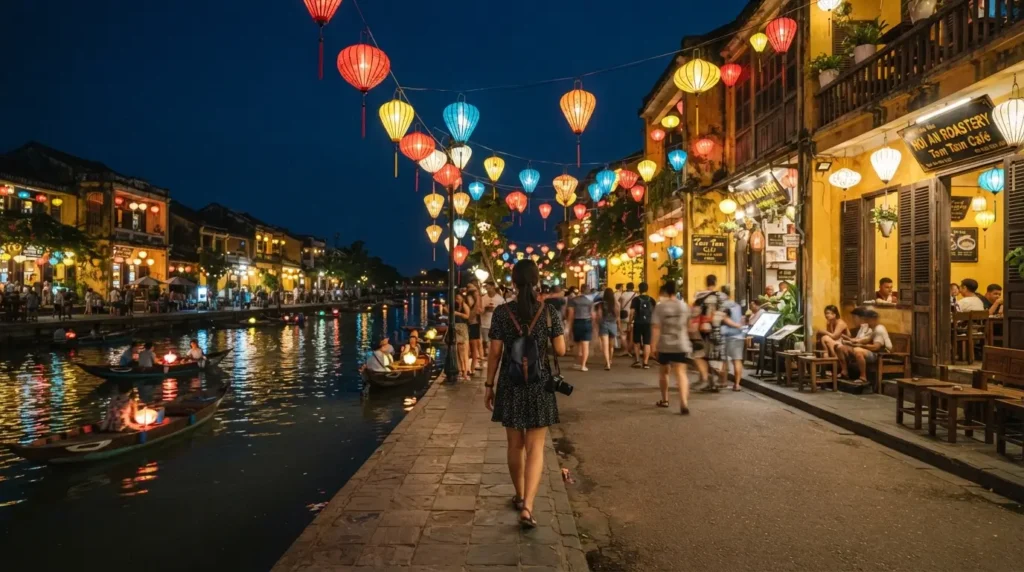
Hội An operates at a pace that feels deliberately designed for people who want to move slowly, look carefully, and not be rushed through experiences by a crowd or a schedule. The ancient town’s UNESCO-protected trading port architecture rewards the kind of solo wandering that involves stopping in the middle of a lane to look at a roof detail for five minutes without feeling like you are holding anyone up.
The town is small enough that you understand it within a day and navigable enough that getting slightly lost leads somewhere photogenic rather than somewhere stressful. The surrounding rice paddy cycling routes provide hours of solo outdoor time at almost no cost.
Daily cost: $15 to $30 covering a private room in a guesthouse, excellent local food, and bicycle rental.
Where to stay: Small family-run guesthouses throughout the ancient town and the An Hội peninsula across the river run $10 to $18 for private rooms with breakfast included. The An Hội peninsula area is slightly quieter than the main ancient town streets and a short walk across the footbridge from everything worth seeing.
What to do alone: Renting a bicycle for $2 to $3 per day and cycling the surrounding rice paddy routes alone is one of the great cheap solo travel experiences available anywhere. The Tra Que herb village three kilometers from town is accessible by bicycle and offers a genuinely local agricultural atmosphere away from the tourist circuit.
Tailoring experience: Hội An’s famous tailor shops produce custom clothing in 24 to 48 hours at prices that seem almost implausibly low. The fitting process is a structured, purposeful interaction that shy travelers generally find comfortable because it has a clear transactional framework and a defined outcome. Having something beautiful made specifically for you is a solo travel experience that lands differently than any group activity.
Budget reality: Two weeks in Hội An costs $210 to $420 excluding flights, making it one of the most affordable quality solo travel destinations in the world.
10. Edinburgh, Scotland: Solo Culture and an Introverted City Soul
Edinburgh has the soul of an introverted city. The weather keeps people moving purposefully. The literary culture, Robert Louis Stevenson, Arthur Conan Doyle, and Muriel Spark all walked these streets, rewards solitary bookshop browsing and quiet museum afternoons. The café culture in Stockbridge and Bruntsfield provides excellent solo sitting environments with no social pressure attached.
The city is also one of the safest in Europe for solo travelers walking independently, which removes a background anxiety that affects how freely shy solo travelers move through unfamiliar places.
Daily cost: $50 to $75 covering a private room in a guesthouse or small hotel, café meals, and walking-based exploration.
Where to stay: Stockbridge neighborhood guesthouses run $45 to $65 for private rooms in a quiet, residential area with excellent independent cafés and a Saturday market. The Old Town area has more tourist traffic but puts you within walking distance of the castle, the Royal Mile, and Holyrood Park.
What to do alone: The Scottish National Museum on Chambers Street is one of the great free museums in Europe and genuinely rewards a full solo day across its natural history, science, and Scottish cultural collections. Blackwell’s bookshop on South Bridge has a basement level that feels designed specifically for shy solo travelers who want to spend two hours in comfortable, purposeful solitude. Holyrood Park for the lower accessible walks around Dunsapine Loch when Arthur’s Seat feels like too much.
The Edinburgh Festival Fringe in August: This is the largest arts festival in the world and it transforms Edinburgh into the most accidentally social city in Europe for three weeks. For shy solo travelers, Fringe shows provide a built-in social context where you sit beside strangers for an hour, potentially talk briefly in the interval, and then part ways with no further obligation. Many shows cost $5 to $15. The atmosphere is electric and entirely compatible with solo attendance.
Budget reality: A week in Edinburgh costs $350 to $525 excluding flights. Higher than some destinations on this list but offset by the zero cost of most major museums and the quality of the solo cultural experience available.
How to Make Solo Travel Comfortable as a Shy Traveler
The practical strategies that consistently make shy solo travel more comfortable are rarely about conquering introversion or pushing past comfort zones in dramatic ways. They are about designing a trip that works with your natural temperament rather than against it.
A few things that genuinely help:
- Book private rooms rather than dorms for at least the first few nights of any trip. The ability to retreat to a genuinely private space recharges shy travelers in a way that shared dorms simply cannot provide regardless of how friendly the people in them are.
- Choose accommodation with a small common area that you can use or ignore depending on your energy. The option of social interaction without its obligation is the sweet spot for introverted travelers.
- Plan one structured activity per day that has a natural beginning, middle, and end. Cooking classes, museum audio guide tours, organized day trips, and walking tours all provide this structure. Unstructured days work better for extroverts than introverts in unfamiliar environments.
- Eat at the counter or bar when solo dining feels conspicuous at a table. Counter seating in restaurants and cafés is designed for solo diners in most cultures and removes the exposed feeling of a table for one in the middle of a restaurant.
- Carry a book everywhere. Not for reading necessarily, though that is a genuine pleasure, but because a book signals purposeful solitude rather than accidental aloneness. It changes how both you and others read your solo presence.
- Give yourself permission to have entirely solitary days. The idea that every day of solo travel should involve meeting new people and having memorable social interactions is an extrovert’s travel template. A day spent moving through a beautiful city alone, eating well, seeing things that interest you, and returning to your room genuinely satisfied is a successful travel day. It does not need to produce a story for other people.
The Find Me app for solo-friendly cafés and the iOverlander community for solo traveler safety information both provide practical resources that reduce the decision load of solo travel planning.
Frequently Asked Questions
What are the safest budget-friendly travel destinations for shy solo travelers?
Japan, Portugal, Slovenia, and Estonia consistently rank as both the safest and most introvert-friendly destinations for solo travelers. Each combines low crime rates, easy navigation, strong café culture for solo sitting, and cultural norms around quiet public behavior that make shy solo travelers feel comfortable rather than conspicuous. All four are also genuinely affordable relative to their quality of experience.
How do shy solo travelers meet people without forcing it?
The best social connections for shy solo travelers happen through structured shared activities rather than open-ended social environments. Cooking classes, free walking tours, day trip organized groups, and language exchange meetups all provide natural conversation frameworks with defined endpoints. You connect around a shared activity rather than needing to generate social energy from nothing. The people you meet this way are often more interesting than those you meet in hostel common rooms.
Is solo travel harder as a shy person or does it get easier?
It gets easier, but not through becoming less shy. It gets easier through building a toolkit of strategies that work with your temperament and through the accumulating evidence that you can navigate unfamiliar places successfully and come home genuinely enriched by the experience. The shyness does not disappear. The fear of it being a problem gradually does.
What should shy solo travelers do when they feel overwhelmed?
Have a planned retreat strategy before you need it. Know which café near your accommodation is quiet and comfortable. Know which park or green space offers peaceful solo time. Know what your room feels like as a genuine sanctuary rather than a failure to be social. Overwhelm is a normal part of solo travel for introverted people. Having a planned response to it prevents it from derailing the trip.
Are hostels a good choice for shy solo travelers on a budget?
Hostels with private rooms are often the best budget choice for shy solo travelers because they combine the lower cost of hostel infrastructure with the privacy that introverted travelers need. Avoid party hostels regardless of price. Look for smaller boutique hostels with common areas that feel calm rather than social obligation zones. Hostelworld filters by atmosphere rating, which helps identify quieter, more relaxed properties.
How do I handle eating alone in restaurants as a shy solo traveler?
Choose restaurants with counter seating, open kitchen viewing bars, or small tables set for one near windows. Arrive slightly early before peak dining time when restaurants are quieter and staff have more time for relaxed service. Bring a book or use your phone purposefully. Order confidently by pointing at the menu if language is a barrier. The discomfort of solo restaurant dining almost universally decreases after the first two or three times and eventually becomes one of the genuine pleasures of solo travel.
Conclusion
Shyness is not a travel deficit. It is a different travel style, one that produces slower, more attentive, more genuinely personal experiences than the social whirlwind approach that most travel content celebrates. Every destination on this list was chosen because it makes that style feel like an asset rather than a limitation. Which one feels most like the place your quieter, more curious self has been waiting to explore?