
The best travel itineraries for first-time travelers abroad share one quality that most travel content ignores completely: they account for the fact that everything takes longer than you think when a city is genuinely new to you. Reading a map, figuring out which train platform you need, standing in front of a menu in a language you do not speak, these things eat time in ways that experienced travelers have stopped noticing. Your first international trip deserves an itinerary built around that reality rather than one that assumes you already know how everything works.
What Makes a First International Itinerary Actually Work
Most first-time travelers abroad make the same mistake. They pack twelve attractions into a five-day trip because every single thing looks essential from home, and then they spend the actual trip rushing between places too tired and too stressed to genuinely experience any of them.
A first international itinerary works when it has three qualities. It has breathing room built into every day rather than treating free time as wasted time. It has a geographic anchor, one neighborhood or area you return to and gradually understand, so the city starts feeling navigable rather than perpetually foreign. And it has one genuinely memorable experience per day rather than six forgettable ones.
Everything else is logistics. Logistics are important but they are not the trip.
1. London, UK: 5 Days for the True First-Timer
London is the single most recommended first international destination for English-speaking travelers, and that consensus exists for good reasons. The language removes one entire layer of uncertainty. The Tube is logical once you spend twenty minutes with the map. The city rewards walking in a way that makes getting slightly lost productive rather than stressful.
Day 1: Arrival and One Neighborhood
Land at Heathrow, take the Elizabeth Line directly to central London, check in, and do absolutely nothing ambitious. Walk your immediate neighborhood for an hour. Find a pub, order something straightforward, sit down. The temptation to immediately visit Buckingham Palace is real and should be resisted. Your nervous system needs one easy day to adjust.
Day 2: South Bank and the City
Cross the Millennium Bridge from the Tate Modern to St. Paul’s Cathedral. This walk covers the Thames, the skyline, two of London’s great landmarks, and costs nothing except Tube fare. Borough Market nearby for lunch, get there before 1 p.m. when it gets genuinely hectic. Shakespeare’s Globe Theatre exterior. Tower Bridge in the late afternoon.
Day 3: Westminster and Green Park
Westminster Abbey, the Houses of Parliament, and Big Ben from the bridge. Walk through St. James’s Park to Buckingham Palace. Up the Mall to Trafalgar Square and the National Gallery, which is free and extraordinary. This route covers a remarkable amount of iconic London on foot without requiring complicated transit.
Day 4: British Museum and Covent Garden
The British Museum needs three to four hours minimum. Go early when the main hall is quieter. The Rosetta Stone, the Elgin Marbles, the Egyptian mummies. All free, all genuinely extraordinary. Covent Garden in the afternoon for street performers and the covered market. Soho for dinner from one of the dozens of independent restaurants.
Day 5: Day Trip to Bath
The train from Paddington takes about 90 minutes and costs $30 to $50 return booked in advance through National Rail. Bath delivers Roman baths, Georgian architecture, and a completely different pace from London. The Roman Baths museum is genuinely world-class. Sally Lunn’s for a Georgian bun before the train back.
Accommodation: Hotels in the Southwark, Shoreditch, or Kings Cross areas offer better value than central West End locations. Budget $100 to $160 per night for a solid mid-range option. Premier Inn and Travelodge both deliver reliable quality at the lower end.
Budget reality: Five days in London costs $700 to $1,100 all in excluding flights if you eat at pubs and market stalls rather than tourist restaurants and use free museum access consistently.
2. Tokyo, Japan: 7 Days of Extraordinary Precision
Tokyo is counterintuitively excellent for first-time international travelers despite being one of the most complex cities on earth. The reason is simple: everything works exactly as it should, every time. Trains run to the second. Signs are in English and Japanese at every major station. Convenience stores are extraordinary and open 24 hours. The city has solved most of the logistical problems that make first international trips stressful.
Day 1: Arrival and Shinjuku
Land at Narita or Haneda and buy a Suica or Pasmo IC card immediately. This single card covers all Tokyo transit and removes the need to buy individual tickets for every journey. Check in to your Shinjuku hotel and walk the neighborhood in the evening. Shinjuku at night, with its neon towers, department store food halls, and Golden Gai alley bars, is one of the great arrival experiences in global travel.
Day 2: Asakusa and the Old City
Senso-ji temple at 7 a.m. before the crowds arrive. The Nakamise shopping approach to the temple is beautiful in morning light and empty of the midday tourist density. Explore Yanaka neighborhood afterward, Tokyo’s best-preserved old merchant district, for an hour of quiet streets and local shops that feel genuinely unlike anything in a Western city.
Day 3: Harajuku, Shibuya, and the Famous Crossing
Meiji Shrine in the morning through its forested approach, extraordinary for its calm inside one of the world’s busiest cities. Harajuku’s Takeshita Street for the extreme fashion and crepe shops. Shibuya crossing in the late afternoon when the light starts to fall and the scramble reaches peak theater. Find a coffee shop with a second-floor window seat overlooking the crossing and watch it for twenty minutes.
Day 4: TeamLab and Modern Tokyo
TeamLab Borderless digital art museum in Odaiba requires advance booking and delivers one of the most extraordinary sensory experiences available in any museum anywhere. The Odaiba waterfront afterward with views back to Rainbow Bridge and the city skyline. Toyosu Market fish market in the morning if you book the early viewing gallery slot.
Day 5: Day Trip to Nikko
Two hours from Shinjuku by Tobu Nikko Line limited express, about $30 return. Nikko’s ornate Toshogu shrine complex set in cedar forest is one of the most elaborate and beautiful architectural sites in Japan. The contrast with Tokyo’s modernity makes the day trip feel like visiting a completely different country.
Day 6: Kyoto Day Trip or Slow Tokyo Day
If your itinerary allows, a bullet train to Kyoto for the day costs $80 to $100 return and gets you to Fushimi Inari gates and the Gion district in 2.5 hours. Alternatively, use day six for the neighborhoods you did not reach, Shimokitazawa for vintage shops and live music venues, Koenji for a more local residential Tokyo experience.
Day 7: Departure Preparation
Airport transfer from central Tokyo takes 60 to 90 minutes. Give yourself time. A final conveyor belt sushi breakfast somewhere in the city. Duty-free shopping for Japanese whisky and Kit Kat flavors that do not exist outside Japan. Depart wondering why you did not book a longer trip.
Accommodation: Business hotels in Shinjuku, Asakusa, or Shibuya offer the best combination of location, reliability, and price. Dormy Inn, APA Hotel, and Toyoko Inn chains deliver consistent quality at $50 to $80 per night for a private room.
Budget reality: Seven days in Tokyo costs $800 to $1,200 all in excluding flights. Convenience store meals keep daily food costs to $15 to $25 if needed. Restaurant meals average $10 to $20 per person at local spots.

3. Lisbon, Portugal: 6 Days of Gentle Introduction to Europe
Lisbon is the best first European destination for travelers who want genuine European atmosphere without the crowds and prices of Paris or Amsterdam. The city is compact, the people are warm, the food is extraordinary and affordable, and the pace of life makes a first international trip feel like arriving somewhere genuinely welcoming rather than somewhere that tolerates tourists.
Day 1: Arrival and Baixa
Most international flights into Lisbon land at a manageable airport connected to the city center by Metro in 25 minutes. Check in to accommodation in Baixa or Chiado. Walk to Praça do Comércio on the river. Sit there with an espresso and a pastel de nata from the first café you see. This is your introduction to the city and it requires nothing more than presence.
Day 2: Alfama and the Castle
Alfama is best visited in the morning before noon when the cruise ship day visitors arrive. Walk the steep lanes from the waterfront up toward the Castelo de São Jorge. The castle itself costs $15 to enter and delivers panoramic views over the city and river. The Museu Nacional do Azulejo in the afternoon, a tile art museum in a former convent that is genuinely one of the most beautiful and peaceful museum environments in Europe.
Day 3: Belém
Take tram 15E from Praça do Comércio to Belém. The Jerónimos Monastery is one of the great Gothic buildings in the world and costs $10 to enter. The Monument to the Discoveries. Torre de Belém at the water’s edge. Pastéis de Belém café, the original home of the pastel de nata recipe, for the afternoon. Return to Lisbon by tram in the evening.
Day 4: Sintra Day Trip
Train from Rossio station takes 40 minutes and costs $2.50 each way. Sintra is a UNESCO World Heritage town in the hills above the Tagus with extraordinary palaces, cork forest walks, and an atmosphere unlike anything in central Lisbon. Pena Palace is the main attraction and worth the uphill walk. The village itself has good lunch options and the train ride home through the hills is beautiful.
Day 5: LX Factory and Príncipe Real
LX Factory on the riverfront is a converted industrial complex with independent restaurants, vintage shops, bookstores, and a Sunday market. Príncipe Real neighborhood in the afternoon for the best independent cafés in the city and a garden square with a parasol-shaped tree. The Embaixada shopping gallery in a former palace for design and local products.
Day 6: Free Day and Departure
Leave the last day completely open. Every first-time traveler uses this day differently. Some go back to the place they liked most. Some finally visit the thing they kept skipping. Some sit in a café for three hours reading. All of these are correct. Flight home from Lisbon International Airport, which is small and manageable compared to most European hub airports.
Accommodation: Guesthouses and boutique hotels in Baixa, Chiado, or Príncipe Real neighborhoods run $60 to $100 per night. Lisbon Story Guesthouse and similar small properties consistently deliver excellent service and local knowledge that large hotels cannot match.
Budget reality: Six days in Lisbon costs $600 to $900 all in excluding flights. One of the best value first European trip destinations available.
4. Barcelona, Spain: 6 Days of Architecture, Beaches, and Easy Living
Barcelona earns its place on every first-timer list because it delivers a complete package that rarely disappoints regardless of what you prioritize. Architecture. Beach. Food. Nightlife. Culture. History. The city does all of it well and the Metro system makes navigating between them straightforward enough that first-time travelers feel competent within the first day.
Day 1: Arrival and Gothic Quarter
Barcelona’s El Prat airport connects to the city by the Aerobús express service or the R2 Nord train, both straightforward with clear signage. Check in and walk the Gothic Quarter in the afternoon. The narrow medieval streets are best experienced without a specific agenda, just turning and looking and getting slightly lost in the best possible way. Dinner at a tapas bar on a side street rather than on Las Ramblas where prices double and quality halves.
Day 2: Sagrada Família and Gaudí
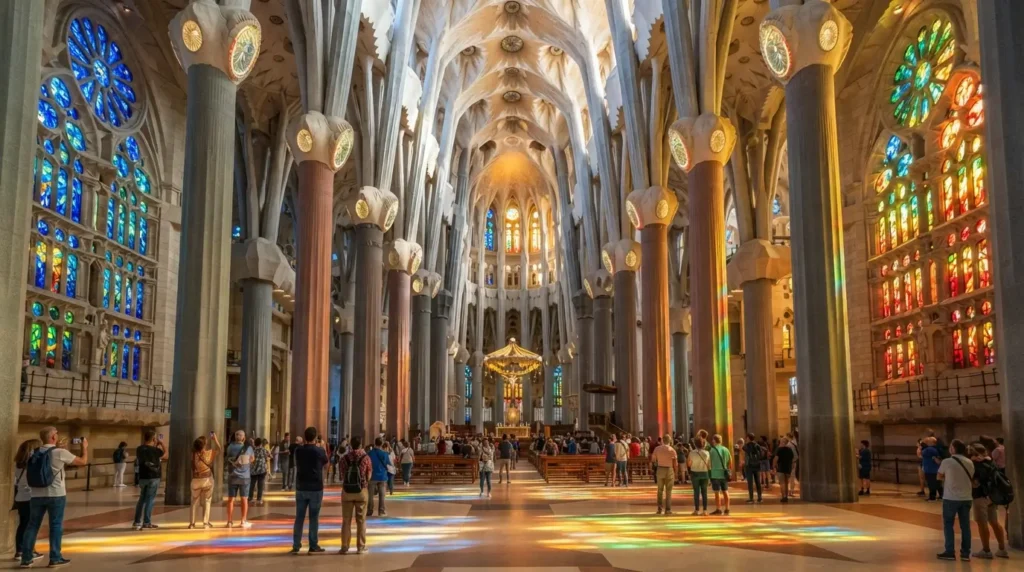
Book Sagrada Família timed entry tickets at least two weeks in advance through the official website. Arriving at your allocated time means no queue. The interior is genuinely one of the most extraordinary architectural spaces in Europe, the colored light through the stained glass columns in the morning is the visual highlight of Barcelona for most first-time visitors. Park Güell in the afternoon, also requiring advance booking for the monumental zone. The surrounding free public park provides similar views without the ticket cost.
Day 3: Barceloneta Beach and Waterfront
Morning at the beach. Barceloneta is a proper urban beach, busy and social, with clear water and a long boardwalk. Rent a bicycle from Bicing or a private rental shop and cycle the coastal path north toward Forum. Paella lunch at a beachside restaurant, accept that tourist area paella costs more than interior city equivalents and budget accordingly. El Born neighborhood in the afternoon for the Picasso Museum and independent shops.
Day 4: Montjuïc and the Views
Cable car from Barceloneta to Montjuïc Castle, or funicular from Paral·lel Metro station. The castle and surrounding gardens provide the best panoramic views of the city and harbor. The Fundació Joan Miró on Montjuïc is one of the great modern art museums in Europe and rarely as crowded as the Picasso Museum. Poble Sec neighborhood at the base of Montjuïc for dinner at genuinely local prices.
Day 5: Day Trip to Montserrat
The mountain monastery of Montserrat sits 50 kilometers from Barcelona and is accessible by FGC train from Plaça Espanya in about 90 minutes total including the rack railway or cable car from the base. The views from the monastery are extraordinary. Walking trails above the monastery provide even better vistas and the opportunity to separate from the main tourist crowd. Return to Barcelona in the evening.
Day 6: Gràcia Neighborhood and Departure
Gràcia is the most local-feeling neighborhood in central Barcelona, a village absorbed by the city that still operates on its own community rhythm. The morning market at Mercat de l’Abaceria. Plaça del Sol and Plaça de la Vila de Gràcia for café sitting. A final vermouth at a traditional bar before the airport.
Accommodation: The Eixample district provides the best balance of central location, Metro access, and accommodation quality at mid-range prices. Hotels run $80 to $140 per night. Avoid accommodation directly on Las Ramblas where noise and tourist density make the stay less pleasant than the location suggests.
Budget reality: Six days in Barcelona costs $700 to $1,000 all in excluding flights. Tapas eating culture naturally portions spending across multiple small dishes, which suits budget management well if you order strategically rather than ordering everything.
5. Dublin and Ireland: 6 Days of Easy First International Travel
Dublin is the most practically easy first international destination for English-speaking travelers, and the ease is not a compromise on experience. The city is genuinely interesting, the surrounding countryside is extraordinary, and the pub culture provides one of the most naturally social travel environments available anywhere without requiring you to speak a word of anything other than your own language.
Day 1: Dublin City Center
The airport is 30 minutes from the city center by Aircoach or Dublin Bus. Check in and walk from Trinity College through Temple Bar to the waterfront. Trinity College grounds are open to the public and the Long Room library with the Book of Kells requires advance ticket booking but is one of the genuinely extraordinary document experiences in the world.
Day 2: Guinness and Georgian Dublin
The Guinness Storehouse is the most visited attraction in Ireland and for first-time travelers the experience is genuinely well-produced, seven floors of brand history culminating in a rooftop bar with panoramic city views. Book online for a lower price. Georgian Dublin around Merrion Square and Fitzwilliam Square in the afternoon for the beautifully preserved 18th-century architecture and the small park where Oscar Wilde’s family home sits.
Day 3: Howth Coastal Village
The DART coastal train from Connolly Station reaches Howth in 30 minutes and costs about $5 return. Howth is a small fishing village with cliff path walks, seafood restaurants, and views over Dublin Bay that make the whole trip feel worth the 30-minute journey. The cliff walk takes two to three hours at a comfortable pace and is one of the great easy day hikes accessible from any European capital.
Day 4: Day Trip to Glendalough
St. Kevin’s Bus from Dublin city center reaches the monastic valley of Glendalough in about 90 minutes. The 6th-century monastic settlement beside two glacial lakes in the Wicklow Mountains is one of the most atmospheric historical sites in Ireland. Walk the green road along the upper lake, visit the round tower and ruined cathedral, and eat a packed lunch from a Dublin supermarket beside the water.
Day 5: Kilkenny Day Trip
The train from Heuston Station reaches Kilkenny in 90 minutes and costs $20 to $30 return booked through Irish Rail. Kilkenny is a medieval city with a castle, a cathedral, and a compact, walkable center that can be covered comfortably in a half-day. The Kilkenny Design Centre in the castle yard for Irish craft and design. Medieval Mile Museum for context on the city’s 800 years of history.
Day 6: Free Day and Departure
Dublin Airport is manageable and connects well for onward European travel. If your flight is in the afternoon, a final morning walk through the Docklands district for Dublin’s most contemporary architecture and the Silicon Docks technology quarter gives a different perspective on the city from the historic center.
Accommodation: Hotels around St. Stephen’s Green, the Docklands, or Smithfield offer good value compared to Temple Bar where noise levels make the central location less appealing at night. Budget $90 to $140 per night for solid mid-range quality.
Budget reality: Six days in Dublin costs $700 to $1,000 all in excluding flights. Pub food is genuinely good value at $10 to $16 per main course. Supermarket lunches from Tesco or Dunnes Stores keep midday costs minimal.
6. Cancún and the Yucatán, Mexico: 8 Days of Culture and Coast
Mexico’s Yucatán Peninsula is an underrated first international destination for North American travelers because it combines genuine ancient cultural depth with coastline that competes with the Caribbean’s best, at prices significantly lower than comparable European destinations. The all-inclusive resort model of Cancún’s Hotel Zone makes it easy for true first-timers, but the real Yucatán experience begins when you leave the resort area.
Days 1 to 2: Cancún Hotel Zone
Land, check in, decompress. The Hotel Zone’s beach is genuinely beautiful and the resort infrastructure removes every logistical decision for the first two days. Use this time to adjust to the time zone, the heat, and the rhythm of a genuinely different country before venturing further.
Day 3: Chichén Itzá
The organized day trip from Cancún to Chichén Itzá is approximately three hours each way and costs $50 to $80 including transport and guide through a reputable operator. The Mayan pyramid of El Castillo is a genuine wonder of the ancient world and the site deserves more time than most day trip itineraries allocate. Arrive with the group when the site opens, separate from the crowd, and spend time in the less-visited southern sections of the archaeological zone.
Day 4: Tulum
Two hours south of Cancún by ADO bus, Tulum has the only Mayan ruins site positioned directly above a Caribbean cliff with the turquoise sea below. The Tulum Archaeological Zone is smaller than Chichén Itzá but the setting is unmatched. The town of Tulum itself has excellent restaurants, cenote swimming within short driving distance, and a beach strip that has been heavily developed but remains genuinely beautiful.
Day 5: Cenote Day
The Yucatán Peninsula sits on a limestone shelf honeycombed with cenotes, natural freshwater swimming holes that were sacred to the Maya and are extraordinary to swim in. Gran Cenote near Tulum, Dos Ojos cave cenote, and Ik Kil near Chichén Itzá are all well-organized for visitor access. Swimming in a cavern cenote with prehistoric rock formations above and crystal clear water below is unlike any swimming experience available anywhere else.
Day 6: Valladolid
An hour from Cancún by ADO bus, Valladolid is a colonial city that most Yucatán visitors skip entirely. Colorful colonial architecture, the extraordinary Cenote Zaci in the middle of the city, and restaurant prices that reflect local rather than tourist economics make it one of the most genuinely authentic days available on this itinerary.
Day 7: Isla Mujeres
A passenger ferry from Cancún’s Puerto Juárez reaches Isla Mujeres in 15 minutes. The island is small enough to circumnavigate by golf cart rental in an hour. The western beaches are calmer than Cancún’s open-ocean beaches. The eastern cliff path provides dramatic views. The snorkeling off MUSA underwater museum site is accessible through organized half-day tours.
Day 8: Departure
Cancún International Airport is large and well-organized. Allow extra time on departure day and spend the morning at a final cenote swim or a slow breakfast at a proper Mexican café rather than a resort restaurant.
Accommodation: Base in Cancún Hotel Zone for days one and two, then consider moving to Tulum or Playa del Carmen for better value and more authentic atmosphere for the remaining nights. Selina and similar boutique properties in Tulum run $40 to $70 for private rooms.
Budget reality: Eight days on the Yucatán Peninsula costs $900 to $1,400 all in excluding flights if you split time between resort and independent accommodation. The ADO bus network between cities is excellent, affordable, and air-conditioned.
7. Singapore and Bali: 10 Days Across Two Countries
Combining Singapore and Bali in a single first international trip gives you two completely different Southeast Asian experiences in a logical geographic sequence. Singapore is polished, organized, and genuinely one of the easiest cities in the world to navigate. Bali is lush, spiritual, and sensory in ways that Singapore deliberately is not. Together they form one of the most complete first international trip experiences available.
Days 1 to 4: Singapore
Direct flights from most major cities land at Changi Airport, consistently rated the world’s best airport, which sets an immediate tone of organized excellence. The MRT connects the airport to the city center in 30 minutes.
Day one in Chinatown and the Colonial District. The Buddha Tooth Relic Temple in Chinatown is free and extraordinary. The National Museum of Singapore covers the city-state’s remarkable history in a beautifully curated building. Day two at Gardens by the Bay with the Supertree Grove light show at 7:45 p.m. and 8:45 p.m., free from the outside and genuinely spectacular. Day three at Little India, the hawker centers of Maxwell Food Centre and Lau Pa Sat, and Sentosa Island’s Universal Studios or beach area. Day four as a slow morning before the afternoon flight to Bali.
Days 5 to 10: Bali
Land at Ngurah Rai International Airport, arrange a pre-booked driver through your accommodation to avoid the aggressive taxi situation outside arrivals. Base the first three Bali nights in Ubud for rice terraces, temples, and the genuine cultural heart of the island.
Day five slow arrival and a walk through Ubud’s central market and Monkey Forest. Day six Tirta Empul water temple for a Balinese water blessing ceremony at a site of genuine religious significance. Day seven cooking class and an afternoon at Tegallalang Rice Terraces.
Move to Seminyak or Canggu for the final three nights. Day eight beach club day at Potato Head or Ku De Ta. Day nine sunset at Tanah Lot sea temple and dinner at Merah Putih. Day ten slow morning, spa treatment at a fraction of comparable Western prices, afternoon departure.
Accommodation: Mid-range hotels in Singapore’s Tanjong Pagar or Bugis neighborhoods run $80 to $120 per night. Private villa in Ubud with a rice field view runs $60 to $100 per night. Seminyak boutique hotels run $50 to $80.
Budget reality: Ten days covering Singapore and Bali costs $1,200 to $1,800 all in excluding international flights. The internal flight from Singapore to Bali with AirAsia or Scoot costs $50 to $100 booked in advance.

8. Paris, France: 6 Days of Classic First-Timer Magic
Paris is the most visited city on earth for good reason, and despite being heavily touristed it delivers on its reputation for first-time international travelers in a way that few cities can match. The question is not whether Paris is worth visiting. The question is how to visit it without spending the entire trip in queues, tourist traps, and restaurants designed for people who will never return.
Day 1: Arrival and Left Bank
RER B train from Charles de Gaulle Airport to Saint-Michel Notre-Dame station takes 35 minutes and costs $12. Check in to accommodation in the 6th or 7th arrondissement. Walk the Left Bank in the evening. Luxembourg Gardens if the timing is right. A simple dinner at a neighborhood bistro where the prix-fixe menu costs $18 to $25 and includes wine.
Day 2: The Eiffel Tower and Trocadéro
Book Eiffel Tower summit tickets at least three weeks in advance through the official website. Arrive at your allocated time and take the lift to the summit in the morning before haze builds. The view over Paris from the summit is everything the photographs suggest. Trocadéro square across the river for the classic Eiffel Tower photograph in the afternoon. Walk along the Seine toward Pont de l’Alma.
Day 3: The Louvre and Palais Royal
The Louvre is enormous and trying to see everything is a mistake that produces exhaustion rather than appreciation. Pick three things before you arrive, the Mona Lisa, the Venus de Milo, and the Winged Victory of Samothrace, and everything else you encounter is a bonus. Book tickets in advance and enter through the Richelieu wing entrance rather than the main pyramid to avoid the worst queues. Palais Royal gardens for a picnic lunch. Rue de Rivoli and the covered Galerie Vivienne passage in the afternoon.
Day 4: Montmartre and Sacré-Cœur
Montmartre is best explored in the morning before the tourist density peaks. Sacré-Cœur basilica at the summit is free and the views from the steps over Paris are extraordinary. The Place du Tertre artist square immediately behind is touristy but charming in the early hours. Walk down through the vineyard steps and the Village Saint-Pierre to the covered markets of Marché Saint-Pierre for fabric and craft supplies at local prices.
Day 5: Day Trip to Versailles
RER C train from Gare d’Austerlitz to Versailles-Château-Rive Gauche takes 40 minutes and costs $7 return. Book palace tickets in advance. The Hall of Mirrors, the royal apartments, and the formal gardens covering 800 hectares are a full day with comfortable pacing. Rent a bicycle from the palace gardens rental point to cover the more distant sections of the park. Return to Paris in the early evening.
Day 6: Marais, Île de la Cité, and Notre-Dame
Notre-Dame Cathedral is in reconstruction following the 2019 fire and the exterior remains viewable from the surrounding square. The Île de la Cité riverbanks are beautiful for a morning walk. The Marais district for the Picasso Museum and the Place des Vosges, the most beautiful square in Paris and entirely free to sit in. Final dinner in the Marais at one of the independent restaurants on Rue de Bretagne.
Accommodation: Hotels in the 6th, 7th, or 11th arrondissements provide the best combination of central access and value. Avoid the 1st and 8th arrondissements where tourist pricing applies to almost everything. Budget $100 to $160 per night for reliable mid-range quality.
Budget reality: Six days in Paris costs $900 to $1,300 all in excluding flights. Picnics from supermarkets like Monoprix with baguette, cheese, charcuterie, and wine cost $8 to $12 and eaten in Luxembourg Gardens or along the Seine are one of the great Paris pleasures regardless of budget.
How to Prepare for Your First International Trip
Preparation for a first international trip is less about what you pack and more about what you understand before you leave. The travelers who struggle most on first trips are almost never struggling because of the destination. They are struggling because they did not prepare for the systems that make getting around a foreign city possible.
A preparation checklist that genuinely matters:
- Passport validity: Many countries require six months of validity beyond your travel dates. Check before you book anything.
- Visa requirements: Look up entry requirements for your nationality at your destination country’s official government website. Not a travel blog. The official government website.
- Travel insurance: Book comprehensive coverage including medical emergency, trip cancellation, and baggage loss. World Nomads and Allianz Travel both offer solid first-timer policies. Read what is excluded as carefully as what is included.
- Notify your bank and credit card companies before departure. International transactions trigger fraud alerts that freeze cards at the worst possible moments. A five-minute phone call before you leave prevents this.
- Download Google Maps offline for every destination city before you leave your home Wi-Fi. Offline maps work without data and are the single most useful navigation tool available to first-time international travelers.
- Airalo or Holafly eSIM for international data without a physical SIM swap. Most modern phones support eSIM and the plans are significantly cheaper than international roaming charges from home carriers.
- XE Currency app for real-time exchange rate reference. Know roughly what things cost in your home currency before you start spending.
- PhotoCopy your passport and email a scan to yourself and to someone at home. Physical copy in your bag, digital copy accessible from any device.
Packing for a First International Trip
The universal mistake of first-time international travelers is packing too much. Every experienced traveler has learned this the hard way and every first-timer ignores the advice until they have dragged an oversized suitcase up four flights of stairs in a Lisbon guesthouse at midnight.
One carry-on sized bag handles a week of travel in any destination on this list. Osprey Farpoint 40 or Away Carry-On both fit overhead bins on most carriers. Pack for the weather, one pair of versatile shoes that work for walking and evening, layers rather than single-purpose heavy items, and whatever medication you need in quantities exceeding your trip length in case of delays.
Laundry facilities exist in every destination on this list. Using them once during a week-long trip removes the need for half the clothes most first-timers pack.
Frequently Asked Questions
What are the best travel itineraries for first-time travelers abroad on a tight budget?
Lisbon, Dublin, and the Yucatán Peninsula in Mexico consistently offer the best combination of genuine first-timer experience and affordable daily costs. Lisbon and Dublin both run $80 to $120 per day all in excluding flights. The Yucatán runs $60 to $100 per day. Tokyo is more expensive but the infrastructure makes it so logistically smooth that many budget-conscious first-timers find the higher cost justified by the reduced stress.
How many countries should a first-time international traveler visit in one trip?
One, possibly two if they share a logical geographic connection like Singapore and Bali or London and Paris by Eurostar. More than two countries on a first international trip almost always produces a rushed, surface-level experience of multiple places rather than a genuine experience of any of them. Depth beats breadth on a first trip without exception.
How do I handle jet lag on my first international trip?
Arrive on a morning or early afternoon flight if your routing allows and stay awake until local bedtime regardless of how tired you feel. Exposure to natural daylight in the afternoon of arrival accelerates circadian adjustment faster than any supplement or sleep aid. Avoid napping on the first afternoon. Alcohol dehydrates and worsens jet lag recovery. One glass of wine with dinner is fine. Three glasses is not.
Is it safe to travel internationally alone for the first time?
Yes, with appropriate preparation and destination choice. The destinations on this list are all considered safe for solo international travelers. London, Tokyo, Singapore, and Dublin specifically have excellent solo traveler safety records. The most common safety issues for first-time solo international travelers are pickpocketing in crowded tourist areas, which a money belt and zip-close bag pockets address effectively, and transportation scams targeting people who look visibly disoriented. Both are avoidable with basic awareness.
Should I book everything in advance or leave room for flexibility on my first international trip?
Book flights, accommodation for every night, and timed entry tickets for major attractions like the Eiffel Tower, Sagrada Família, and the Louvre well in advance. Leave daily activity planning flexible within the framework of those bookings. The accommodation and flight structure removes the most anxiety-producing uncertainty. The daily flexibility gives you room to follow what actually interests you rather than executing a rigid plan that no longer fits how the trip is actually feeling.
What should I do if something goes wrong on my first international trip?
Contact your travel insurance emergency assistance line as the first step for any significant problem including medical issues, lost documents, or serious disruptions. For lost or stolen passports, go directly to your country’s nearest embassy or consulate. For minor problems like a missed train or a booking that does not match the description, document everything in writing and contact the provider directly. Most problems that feel catastrophic in the moment have practical solutions that become obvious once you stop panicking and start making one decision at a time.
Conclusion
Your first international trip does not need to be perfect to be life-changing. Every person on this list who has traveled the world started with one trip that felt exactly as uncertain as yours feels right now, and almost universally they came back wishing they had booked it sooner. Pick one itinerary, give yourself permission to not see everything, and go. Which destination from this list feels most like the one that is been quietly calling your name?