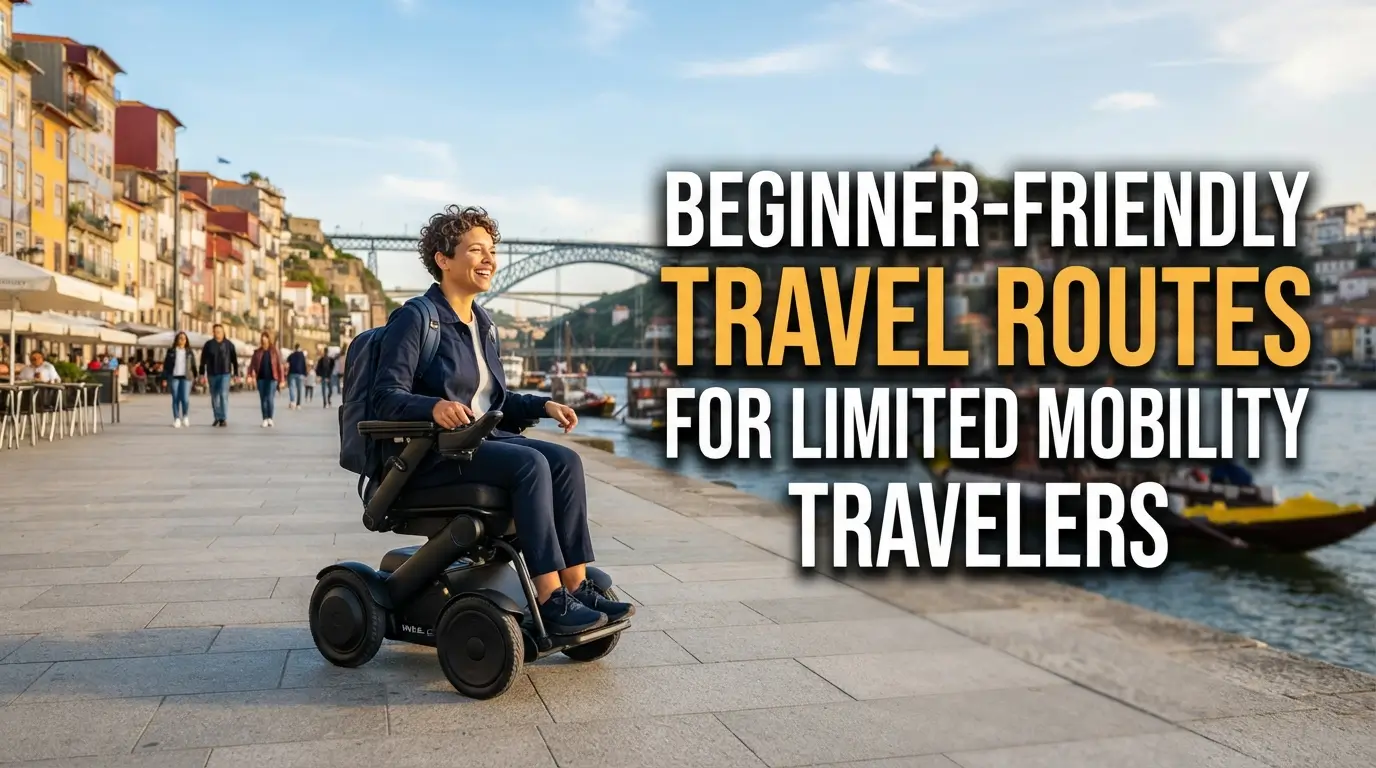
Beginner-friendly travel routes for limited mobility travelers are not the sanitized, vague suggestions you usually find buried at the bottom of a standard travel article. They are specific, honest, and built around the reality that accessibility information found online is frequently outdated, occasionally wrong, and almost never written by someone who actually needed it. I have traveled with a family member who uses a wheelchair for over a decade. I know what cobblestones feel like as a travel companion. I know what it costs emotionally to arrive somewhere and discover the “accessible room” is on the third floor of a building with a broken lift.
What Accessibility Actually Means for Travel Planning
Accessibility in travel is not binary. It does not simply exist or not exist at a destination. It exists on a spectrum that varies by mobility aid type, physical stamina, travel pace, and the specific combination of what you want to do versus what the destination actually enables.
A manual wheelchair user navigating independently has different requirements from someone using a power chair. A traveler with limited stamina who walks short distances has different needs from someone with complete lower limb paralysis. A person with one arm has different requirements from someone managing chronic pain flares. Accessibility planning works when it starts from your specific reality, not from a generic category.
Before planning any route, write down honestly:
- What mobility aid you use or whether you walk with difficulty
- Your comfortable walking or rolling distance per day
- Whether you need accessible bathrooms at regular intervals
- Whether you can manage steps with assistance or need zero steps
- Whether you need a hoist or roll-in shower in accommodation
- How fatigue affects your day and when it typically peaks
These answers shape every destination decision that follows. They are not limitations. They are the specifications that make the trip actually work.
1. Lisbon, Portugal: Beautiful but Honest About Its Challenges
Lisbon earns its place on this list with a significant caveat that most travel content glosses over entirely: the city is hilly. The historic neighborhoods of Alfama and Mouraria involve steep, narrow cobblestone streets that are genuinely difficult for wheelchair users and anyone with limited lower limb stability. I want to be honest about this before anything else.
The accessible version of Lisbon is real and genuinely beautiful, but it requires choosing the right neighborhoods and routes rather than following standard tourist recommendations.
Where to base yourself: The Belém neighborhood is flat, wide, and exceptionally accessible. The waterfront promenade from Belém toward Alcântara is smooth, wide, and manageable for all mobility aid types. The Jerónimos Monastery has full wheelchair access including accessible bathrooms. The Monument to the Discoveries and the Tower of Belém are accessible at ground level with viewing areas that do not require steps.
Baixa and Chiado: The flat grid of Baixa, the downtown district, is accessible and manageable. Praça do Comércio is a large, smooth square with river views. The funiculars and Santa Justa Lift are not reliably accessible, but the flat areas around them are worth visiting regardless.
The accessible tram: Tram 15E from Praça do Comércio to Belém is a modern low-floor tram with wheelchair access and ramp deployment. It is not the famous Tram 28, which is historic and completely inaccessible, but it covers the most scenically worthwhile route for accessibility-focused visitors.
Accommodation: Hotels in the Belém, Baixa, and Chiado areas are newer builds with better lift and accessible room infrastructure than historic properties in Alfama. Book directly and call to confirm roll-in shower availability before relying on website descriptions. Turismo de Portugal maintains an accessibility database for certified accommodations worth checking before booking.
Day trip to Sintra: The palaces of Sintra involve significant uneven terrain and steps. Pena Palace has partial accessibility with some sections unreachable without step navigation. The grounds of Monserrate Palace are more accessible and less visited. The train from Rossio station has step-free boarding assistance available through advance request to CP Portugal.

2. Barcelona, Spain: One of Europe’s Best Accessible Cities
Barcelona has invested seriously in urban accessibility over the past two decades, and that investment shows in ways that make a genuine practical difference rather than just looking good in a municipal report. The city’s grid layout in the Eixample district, the wide pavements of Las Ramblas, and the extensive accessible metro network create an urban environment that works well for a wide range of mobility needs.
The metro system: Barcelona’s metro is approximately 90 percent accessible with lifts at most stations. The TMB Barcelona accessibility guide available on their website maps every accessible station, entrance, and platform. Download it before you go. The T-Casual travel card works across accessible routes and is purchased at step-free ticket machines in accessible stations.
La Sagrada Família: One of the most impressive examples of accessibility at a major tourist attraction anywhere in Europe. The entrance on the Nativity façade side has full step-free access, accessible toilets, and lift access to some tower viewpoints. Book timed tickets in advance through the official website and select the accessibility assistance option, which provides additional staff support and priority entry.
Park Güell: The main monumental zone requires advance booking and has partial wheelchair access. The free public park surrounding it is largely accessible on paved paths. The mosaic terrace, one of the most photographed features, is accessible from the main entrance. The panoramic views from the viaducts involve steps and are not fully accessible.
Barceloneta beach: Barcelona’s main beach has amphibious wheelchairs available for free loan from the beach access points during summer months. The boardwalk is smooth and wide. Accessible beach showers and changing facilities are available at multiple points along the waterfront.
Gothic Quarter reality check: The historic Gothic Quarter involves narrow, uneven stone streets that are challenging for wheelchair users. The main cathedral square is accessible but the surrounding lanes are not. Schedule Gothic Quarter visits for energy peaks and plan an accessible exit route before entering the narrow streets.
Accommodation: The Eixample district has the best concentration of accessible hotels with modern infrastructure. Confirm specific accessibility details including bathroom configuration, bed height, and turning radius availability when booking. Spanish law requires accessible rooms in hotels above a certain size, but compliance quality varies.
3. Amsterdam, Netherlands: Flat, Logical, and Genuinely Accessible
Amsterdam’s flat geography is the single most important accessibility feature of any city on this list, and its importance cannot be overstated. No hills. No steep ramps. No unexpected elevation changes between neighborhoods. For travelers with limited mobility, that flatness transforms the entire experience from exhausting navigation to genuine enjoyment.
The city’s famous canal ring does create some challenges. Canal bridges vary in gradient, and some older narrow bridges are steep enough to require assistance for manual wheelchair users. The GVB accessible journey planner identifies routes using the gentler bridges and accessible tram and bus stops.
Trams and buses: Amsterdam’s modern low-floor trams are wheelchair accessible with ramp deployment. Older tram models still operating on some routes are not accessible. The GVB journey planner identifies which services use accessible vehicles. The OV-chipkaart travel card works across all accessible public transit.
Rijksmuseum: Full wheelchair accessibility throughout including lift access to all floors, accessible toilets on every level, and a dedicated accessible entrance on the south side of the building. The museum’s audio guide works on personal devices through their app, which benefits travelers who find the physical audio guide equipment awkward to manage.
Anne Frank House: This is the most honest difficult conversation about accessibility in Amsterdam. The historic building is largely inaccessible to wheelchair users due to its original steep Dutch canal house staircase architecture. A virtual tour of the entire house is available through their website and is genuinely well-produced. The ground floor exhibition space is accessible, but the hidden annex itself and most of the upper floors are not reachable by wheelchair.
Van Gogh Museum: Fully accessible with lift access to all levels, accessible toilets, and wheelchairs available for loan at no charge from the information desk. The museum’s layout is logical and the accessible route covers the complete permanent collection without missing any significant works.
Canal boat tours: Several operators run accessible canal boat tours with boarding ramps and space for wheelchair users. Stromma and Blue Boat Company both have accessible vessels. Book in advance and confirm the specific boat assigned to your tour is the accessible model.
Albert Cuyp Market: The street market runs along a flat, wide street and is manageable for most mobility aid users. Go on weekdays rather than weekends when pedestrian density makes navigation significantly more difficult.
4. Tokyo, Japan: Exceptional Accessibility Infrastructure
Tokyo is the most surprising entry on this list for many travelers, but it consistently ranks among the most accessible major cities in the world for wheelchair users and mobility-impaired travelers. The infrastructure investment made in preparation for the 2020 Paralympic Games, combined with Japan’s existing culture of precise engineering and considerate public space design, created an accessibility standard that most Western cities have not matched.
The train system: The Tokyo Metro and JR lines have accessible stations throughout the network with lifts, tactile paving, priority seating, and staff assistance available at every major station. Suica and Pasmo IC cards work seamlessly across all accessible transit. Station staff will accompany wheelchair users to the platform and coordinate with arriving station staff at the destination to ensure ramp deployment. This service is offered proactively and graciously rather than reluctantly, which makes a significant emotional difference.
Accessible taxis: Tokyo has a fleet of JPN Taxi vehicles designed specifically with wheelchair access as a core feature. The rear door opens wide and the floor lowers to allow roll-in boarding without transfer. Available through regular taxi ranks and the GO app.
Senso-ji Temple in Asakusa: The approach along Nakamise shopping street is wide and flat. The main temple precinct is accessible with smooth stone paving throughout. The inner hall has step-free access to the main worship area. The five-story pagoda grounds are accessible. This is one of the most visually dramatic accessible tourist experiences available anywhere in the world.
teamLab Borderless: The digital art museum has fully accessible routes marked throughout the immersive installation spaces. Staff provide detailed guidance on navigating the accessible path through each room. The experience is extraordinary and the accessibility is genuine rather than tokenistic.
Shinjuku Gyoen National Garden: Three entrances, all with accessible gates and paved paths throughout the formal French garden, English landscape garden, and Japanese traditional garden sections. Accessible toilets at multiple points. The garden covers a large area and a mobility scooter makes covering it comfortably more feasible than a manual wheelchair for visitors with limited stamina.
Accommodation: Business hotels like APA Hotel, Dormy Inn, and Toyoko Inn chains maintain accessible rooms with roll-in showers and lower bed options at reasonable prices. Confirm specific room specifications when booking because Japanese hotel rooms are generally smaller than Western equivalents and turning radius availability varies.
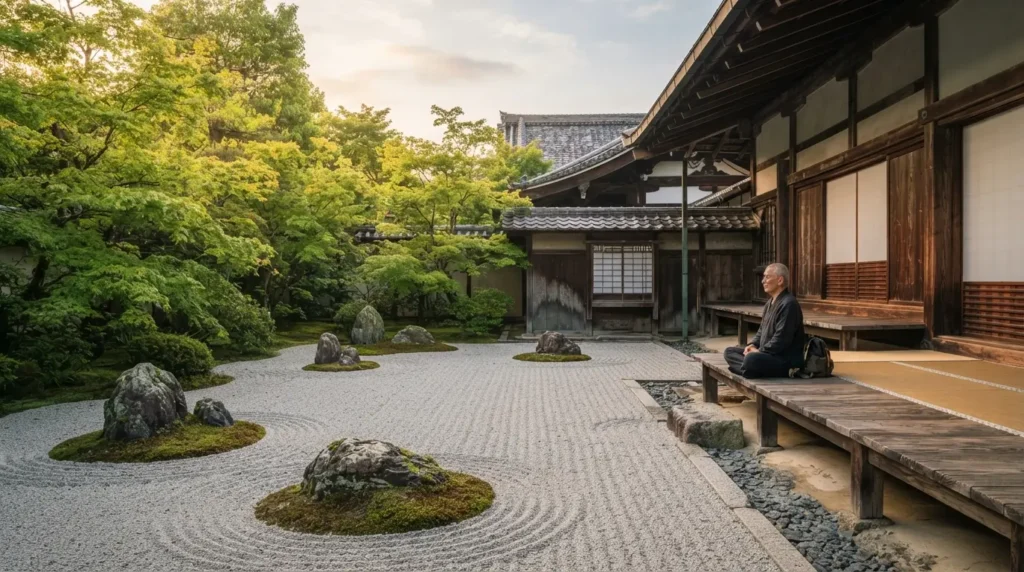
5. San Diego, California: Accessible Sunshine and Flat Coastal Beauty
San Diego is the most naturally accessible major city I have spent extended time in, partly because the flat coastal geography works in every mobility-impaired traveler’s favor and partly because California’s accessibility legislation and culture has pushed the tourism industry toward genuine compliance rather than minimum checkbox effort.
The waterfront: San Diego’s Embarcadero waterfront along the bay is flat, wide, smooth, and spectacular. The USS Midway Museum aircraft carrier has elevator access throughout the ship with accessible routes covering the majority of the extensive exhibit. The Maritime Museum has accessible boarding on several of its historic vessels. The Seaport Village shopping area is accessible throughout.
Balboa Park: One of the greatest urban parks in the United States and genuinely accessible across its main promenades and museum corridor. The Balboa Park free tram circulates between major attractions and is wheelchair accessible. The San Diego Museum of Art, Natural History Museum, and the Spanish Village Art Center are all fully accessible. The Japanese Friendship Garden has accessible paths through its main sections.
San Diego Zoo: Widely regarded as one of the most accessible major zoos in the world. The Kangaroo Bus hop-on hop-off service is wheelchair accessible and covers the main zoo loop. Accessible drop-off points sit near every major exhibit. Mobility equipment rental including electric scooters and wheelchairs is available near the main entrance.
Mission Beach and Pacific Beach boardwalk: A flat, smooth concrete boardwalk running several miles along the Pacific Ocean, fully accessible for all mobility aid types. Beach wheelchair rentals are available through the San Diego Beach Wheelchair Program at no cost with advance reservation.
Getting around: San Diego’s MTS bus and trolley system has accessible vehicles throughout. Uber and Lyft have accessible vehicle options bookable through their respective apps. Parking with disability placards is widely available near major attractions.
6. Edinburgh, Scotland: Honest Challenges and Hidden Accessible Gems
Edinburgh requires the same honest conversation that Lisbon does. The city is beautiful, historically extraordinary, and genuinely challenging in specific areas that most accessibility guides downplay. The Royal Mile between Edinburgh Castle and the Palace of Holyroodhouse involves steep gradients and uneven historic cobblestones that are among the most difficult surfaces for wheelchair users in any European capital.
The accessible version of Edinburgh is real and rich. It just requires routing around the most challenging historic areas and finding the alternatives that most visitors never discover.
Edinburgh Castle: The main approach up the Royal Mile and Castle Esplanade is steep and cobbled. The castle itself has a free accessible shuttle from the esplanade to the upper castle area, removing the internal gradient problem. The Crown Jewels and Scottish National War Memorial are fully accessible. The Great Hall is accessible. Book the shuttle in advance through the Historic Environment Scotland website.
The Scottish National Museum: One of the most accessible museums in Scotland with lift access throughout, accessible toilets on every floor, and a genuinely well-designed layout that allows wheelchair users to navigate the complete collection without missing any significant sections. Entry is free and the building is warm, making it an excellent base for a full day regardless of weather.
Scottish National Gallery: Fully accessible with lift access, accessible entrance from the Playfair Building side, and wheelchairs available for loan. The Impressionist and Scottish art collections are extraordinary and the gallery’s accessible route covers every major room.
Holyrood Park and Arthur’s Seat: The volcanic rock of Arthur’s Seat is not accessible by wheelchair for the summit climb. The lower accessible paths around Dunsapine Loch and the flatter eastern sections of the park provide genuine outdoor nature access without requiring the steep ascent. The Queen’s Drive road that circles the park is smooth and accessible for all mobility types.
Accommodation: The New Town area of Edinburgh has more modern hotel infrastructure with better accessibility than the historic Old Town. The Balmoral and Waldorf Astoria Edinburgh both have fully accessible rooms with roll-in showers and confirmed accessible infrastructure. Mid-range options in the New Town should be booked with direct phone confirmation of accessible room specifics.
7. New Zealand’s South Island: Nature Accessibility Done Exceptionally Well
New Zealand has invested in accessible nature experiences in a way that few countries have matched, partly driven by a disability-inclusive national culture and partly by the practical reality that extraordinary landscapes should be available to everyone. The South Island specifically has developed a network of accessible tracks, viewpoints, and natural experiences that deliver genuinely dramatic scenery without requiring full physical mobility.
Accessible Great Walks: The Department of Conservation has developed accessible routes alongside several of New Zealand’s famous Great Walks. The first section of the Milford Track from Te Anau Downs to Clinton Hut is accessible via a specially designed track surface for wheelchair users and those with limited mobility. The Routeburn Track has specific accessible sections near the Queenstown end.
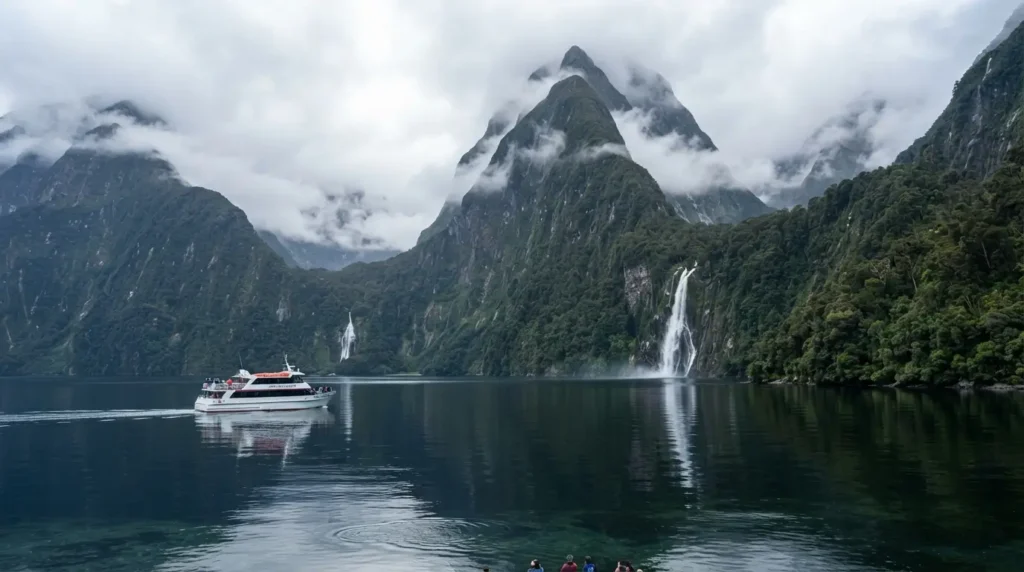
Milford Sound cruises: Every major cruise operator on Milford Sound runs accessible vessels with boarding ramps, accessible toilets, and deck space for wheelchair users. The fiord’s dramatic scenery, waterfalls dropping directly into the water, and regular dolphin sightings are fully experienceable from the accessible deck. This is one of the most extraordinary nature experiences available to any traveler regardless of mobility level.
Christchurch: The most accessible major city on the South Island with a flat central grid layout rebuilt with modern accessibility standards following the 2011 earthquake. The Christchurch Botanic Gardens are fully accessible with smooth paths throughout. The Canterbury Museum has full wheelchair access. The Riverside Market food hall is accessible and excellent.
Lake Tekapo: The Church of the Good Shepherd on the lakeshore is accessible from the car park. The Mackenzie Basin viewpoints accessible by car provide some of the most dramatic alpine lake scenery available in New Zealand without requiring any walking. Dark Sky Project stargazing tours at Tekapo are accessible and operate in all weather through their observatory facilities.
Queenstown: The main lakefront promenade is fully accessible. Gondola rides up Bob’s Peak have accessible cable car cabins with space for wheelchairs and provide panoramic views over the Remarkables mountain range. Accessible jet boat experiences on the Shotover River are available through operators with confirmed accessible boarding.
8. Washington D.C., USA: The Gold Standard for Accessible Tourism
Washington D.C. is the most consistently accessible major tourist destination I have experienced anywhere, and the reason is simple: the Smithsonian Institution, the National Mall, and the federal monument system are all funded by the federal government and governed by the Americans with Disabilities Act at its most rigorous application. Accessibility here is not an aspiration. It is the legal baseline, and the execution is genuinely exceptional.
The National Mall: A flat, wide promenade stretching nearly two miles from the Capitol to the Lincoln Memorial with smooth paved paths accessible to all mobility aid types. Every monument along the Mall, including the Lincoln Memorial, the Vietnam Veterans Memorial, the Korean War Veterans Memorial, and the Martin Luther King Jr. Memorial, is fully accessible with step-free approaches and accessible viewing positions for all key elements.
Smithsonian Museums: All nineteen Smithsonian museums and galleries are free to enter and fully accessible with lift access throughout, accessible toilets on every floor, and wheelchairs available for loan at the information desks of each building. The National Air and Space Museum, National Museum of Natural History, and National Museum of African American History and Culture are among the most visited and all maintain exemplary accessibility standards.
Metro system: The Washington Metro is fully accessible with lifts at every station. The Metro Accessibility guide available through WMATA maps every accessible entrance and confirms current lift operational status before you travel. The system connects all major tourist areas directly.
The Capitol Building: Free guided tours include accessible routes through the main visitor center, the Crypt, the Rotunda, and Statuary Hall. Book through your congressional representative’s office in advance for the best tour availability. Accessible parking is available in the Capitol Visitor Center garage.
Accommodation: The neighborhoods of Capitol Hill, Penn Quarter, and Foggy Bottom all have strong accessible hotel infrastructure. The Marriott, Hilton, and Hyatt chains maintain consistently reliable accessible room standards across their D.C. properties.
How to Research and Book Accessible Travel Routes
The research process for limited mobility travel requires more layers than standard travel planning, but the tools available have improved significantly in recent years.
A structured approach that consistently works:
- Accessible Go and Wheel the World are the two most comprehensive accessible accommodation and experience booking platforms currently operating. Both require accommodations and experience operators to complete detailed accessibility questionnaires rather than self-reporting vague claims.
- Enable Holidays specializes in fully accessible package travel with pre-vetted accommodation and transport for wheelchair users and mobility-impaired travelers.
- Contact airline accessibility desks directly rather than using standard booking channels for complex mobility equipment needs. Airlines handle manual wheelchairs, power chairs, and mobility scooters differently and the rules around battery types for power chairs require advance coordination.
- Disabled World travel section aggregates current accessibility reviews and destination guides updated more frequently than most mainstream travel publications.
- Facebook groups for wheelchair travel and accessible tourism carry honest, current, firsthand reviews that no commercial platform matches for practical specificity. Wheelchair Travel, Rolling Without Limits, and destination-specific accessible travel groups are all worth joining before any international trip.
Booking Accessible Accommodation Without Getting Burned
The single most important rule for accessible accommodation booking is to call the property directly and ask specific questions rather than relying on website accessibility claims.
Questions worth asking on every call:
- What is the door width of the accessible room and bathroom
- Is the shower a roll-in design or does it have a threshold
- What is the bed height and is it adjustable
- Is there a ceiling hoist or portable hoist available
- What is the distance from the accessible parking or drop-off point to the room
- Are there steps at any point between the entrance and the room
- What is the gradient of the path from the street to the entrance
Properties that answer these questions confidently and specifically are the ones worth booking. Properties that give vague reassurances or need to go away and check basic room specifications are the ones worth avoiding.
Frequently Asked Questions
What makes a travel route genuinely beginner-friendly for limited mobility travelers?
A beginner-friendly route combines flat or gently graded terrain, reliable public transport with confirmed accessibility, accommodation with verified roll-in shower and step-free access, and major attractions with documented wheelchair access that has been confirmed recently rather than historically noted. The combination of all four removes the most common sources of surprise and stress for first-time accessible travelers.
How do I fly with a wheelchair or mobility scooter internationally?
Contact the airline accessibility desk at least 48 hours before departure, though earlier is better. Manual wheelchairs are checked at the gate and delivered at the aircraft door at most major airports. Power wheelchairs and scooters require battery type confirmation, lithium batteries have specific airline regulations, and oversized equipment may need specific aircraft configuration. Always carry a photograph and measurement record of your equipment in case of damage claims.
Are travel insurance policies for limited mobility travelers different from standard policies?
Yes, and the difference matters significantly. Standard travel insurance often excludes pre-existing conditions including the underlying causes of mobility limitations. Specialist accessible travel insurance through providers like Free Spirit, AllClear, or Staysure covers pre-existing conditions with full medical emergency and repatriation coverage. Declare every relevant medical condition accurately because non-disclosure invalidates claims.
How do I find genuinely honest accessibility reviews rather than marketing claims?
Firsthand reviews in disability-specific Facebook groups, the Wheel the World platform which requires operators to complete verified accessibility audits, and the AccessAble database for UK destinations are the most reliable current sources. TripAdvisor accessibility reviews filtered to show only reviewers who identified as mobility-impaired provide useful supplementary information. Always prioritize reviews from the past twelve months because accessibility conditions change.
What destinations should limited mobility travelers genuinely avoid for a first trip?
Destinations with predominantly uneven historic surfaces, limited accessible public transport, and low cultural familiarity with mobility equipment needs present the steepest learning curve for first-time accessible travelers. This does not mean permanently avoiding them, but saving them for after you have developed confidence and a toolkit through more accessible-friendly first trips is a genuinely sensible approach.
Can limited mobility travelers do adventure tourism?
Absolutely, and the options are expanding rapidly. Adaptive surfing programs operate in Hawaii, Australia, and California. Adaptive skiing programs run at major resorts across the U.S., Canada, and Europe. Accessible wildlife safaris in South Africa and Kenya use purpose-built accessible vehicles. Accessible sailing experiences exist in the UK, New Zealand, and the Mediterranean. The Disabled Sports USA and Disability Snowsport UK organizations both maintain directories of adaptive adventure programs by region and activity type.
Conclusion
Limited mobility does not limit where your life can take you. It changes the research process, the booking conversations, and occasionally the specific route through a destination, but it does not change what is possible when the planning is done honestly and specifically. Every route on this list has delivered real experiences to real travelers managing real mobility challenges. Which destination feels like the right starting point for your first accessible trip?