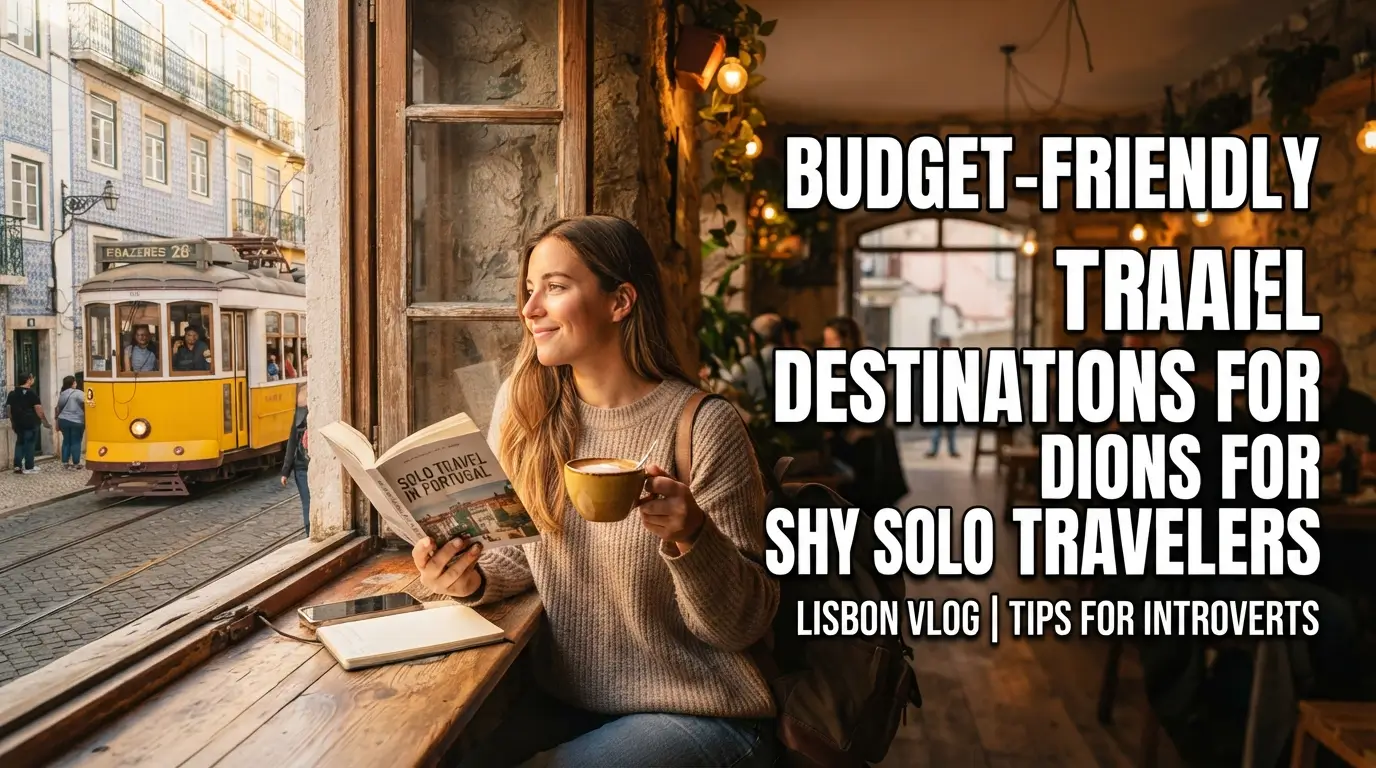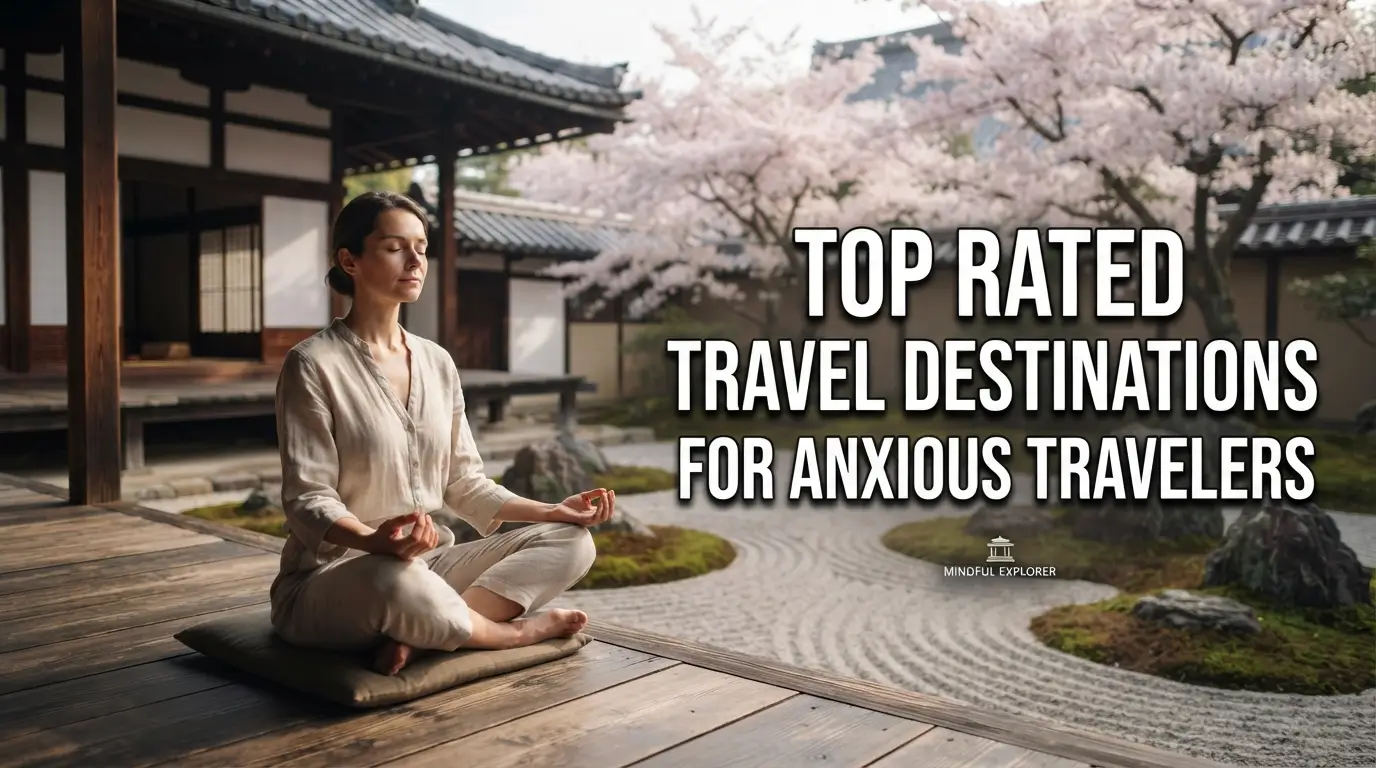
Finding genuinely helpful top rated travel destinations for anxious travelers requires more honesty than most travel content delivers. Anxiety about travel is not a personality flaw or a lack of adventurousness. It is a real, physiological response to uncertainty, unfamiliarity, and the loss of the routines and environments that normally help regulate your nervous system. I have traveled with anxiety for most of my adult life, and the destinations that worked for me share specific qualities that have nothing to do with how beautiful or culturally rich they are. They are places where I felt held rather than overwhelmed. Safe rather than vigilant. Curious rather than braced for something to go wrong. These are those places.
1. Japan
Japan is the single most anxiety-friendly travel destination in the world, and I say that with complete confidence after traveling there twice with an anxiety disorder that makes unfamiliar environments genuinely difficult. The country operates on principles of order, cleanliness, predictability, and deep respect for personal space that create an environment where anxious travelers can exhale in a way that most destinations don’t allow.
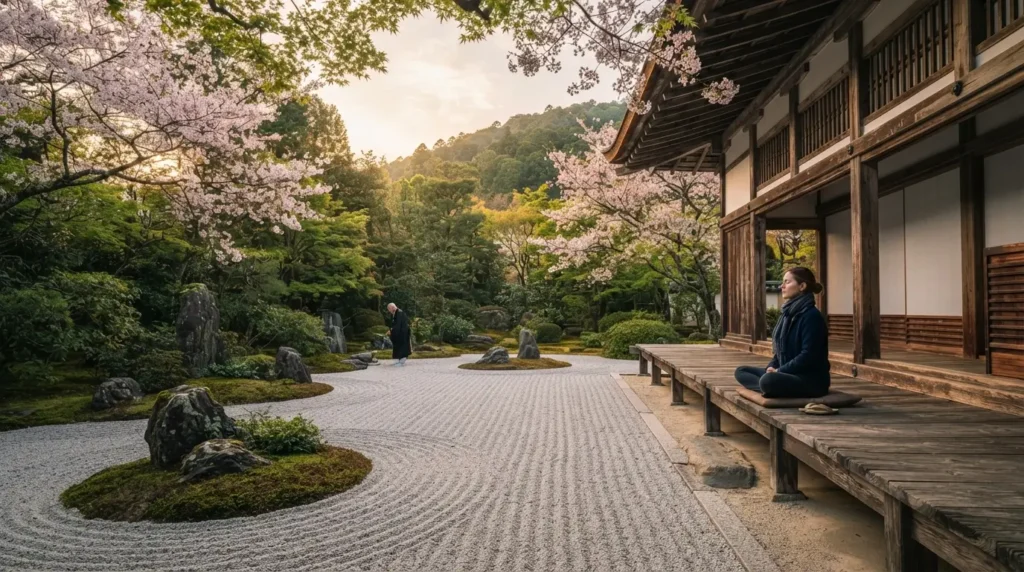
Every element of the Japanese travel experience seems designed to reduce decision fatigue and ambient uncertainty. Train schedules are accurate to the minute. Station signage appears in English, Japanese, Korean, and Chinese simultaneously. Convenience stores provide extraordinary food, clean bathrooms, and familiar retail comfort at every corner. People don’t approach you uninvited. Nobody haggles or hustles. The streets are quiet in a way that major cities in most countries are not. Kyoto specifically is the Japanese destination that anxious travelers describe most consistently as transformative, because its combination of ancient temples, zen gardens, and a cultural pace that prizes stillness creates an environment where slowing down feels not just permitted but structurally encouraged. Arriving at Ryoanji temple before 8 AM to sit in front of its famous rock garden with almost no one else present is the kind of experience that genuinely quiets something in you that travel usually agitates.
2. Portugal
Portugal earns its place on every top rated travel destinations for anxious travelers list because it combines genuine safety, easy navigation, and a relaxed cultural pace with enough beauty and interest to make the trip feel worthwhile rather than merely manageable. Anxious travelers often fall into the trap of choosing destinations that are safe but dull, which produces a different kind of misery. Portugal solves both sides of that problem.
Lisbon’s layout is straightforward enough to navigate independently without constant map consultation, which matters for anxious travelers because getting visibly lost in an unfamiliar city is one of the most reliable anxiety triggers that travel produces. The Baixa district is flat, walkable, and safe at any hour. The people are famously warm without being pushy. English is widely spoken without the slight cultural condescension that occasionally accompanies English-speaking culture in France or Italy. Porto is even gentler in pace and energy than Lisbon, with a slightly melancholic quality that anxious travelers often find oddly soothing rather than depressing. Daily costs of $60 to $90 keep financial stress low, which removes one of the most common background anxiety sources that travel generates.
3. New Zealand
New Zealand is the destination for anxious travelers who need both safety and space. Physical space specifically. The country has a population of five million people spread across two islands roughly the size of the United Kingdom, which means you can drive for an hour in almost any direction and find yourself in a landscape with almost nobody else in it. For anxious travelers whose anxiety is specifically triggered by crowds, noise, and social density, this quality is genuinely therapeutic rather than just pleasant.
The practical anxiety-reduction factors are equally strong. English is the primary language, removing the communication uncertainty that triggers anxiety in many travelers. The infrastructure is excellent and predictable. Healthcare meets international standards. The crime rate is low enough that personal safety is a background consideration rather than a foreground one. Queenstown provides activity and social energy for anxious travelers who find total isolation more distressing than stimulation. Te Anau, the gateway to Milford Sound, provides extraordinary natural beauty with a small town pace and population that feels genuinely manageable. The Otago Peninsula outside Dunedin offers wildlife, coastal scenery, and an almost complete absence of the tourist density that makes other beautiful places feel overwhelming.
4. Iceland
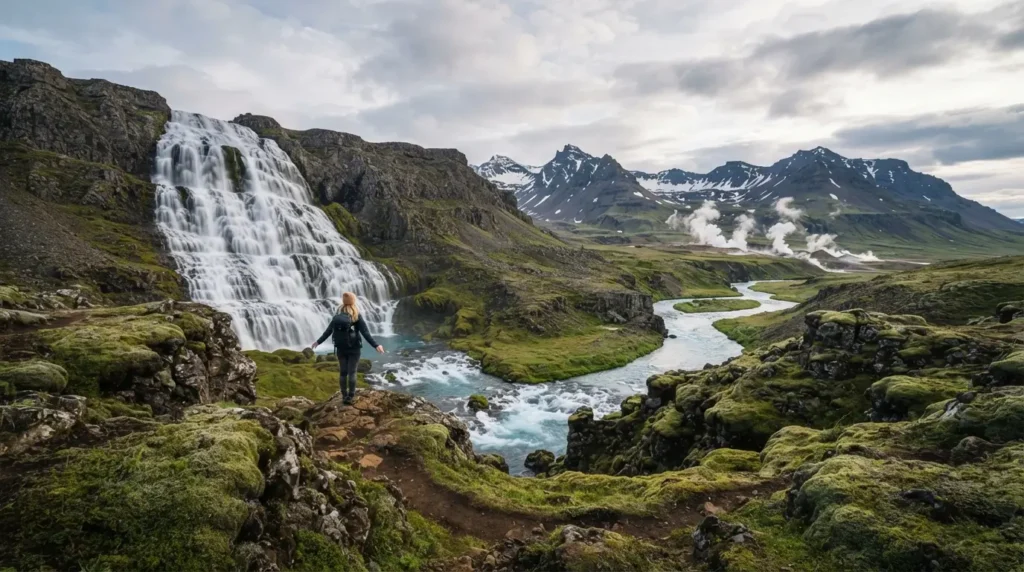
Iceland functions as a natural anxiety reset button for reasons that are partly environmental and partly structural. The country is extraordinarily safe, ranking consistently among the top three safest countries in the world by every major index. The population is small and the culture is reserved in a way that suits anxious travelers who find unsolicited social interaction draining rather than energizing. And the landscape, with its vast open spaces, dramatic waterfalls, geothermal steam rising from empty hillsides, and aurora-lit winter skies, provides the kind of visual and experiential novelty that travel promises without the overwhelming sensory density that makes many destinations anxiety-inducing.
Reykjavik is the most manageable capital city for anxious travelers in Europe. It is small enough to walk across entirely, safe enough to walk alone at any hour, and laid-back enough that the social pressure to perform enthusiasm or engage constantly simply doesn’t exist. Day trips to the Golden Circle, the Snæfellsnes Peninsula, and the South Coast are straightforward self-drive routes on well-maintained roads with clear signage. Budget airlines like PLAY and Icelandair offer affordable transatlantic fares that make Iceland genuinely accessible. The one genuine anxiety trigger Iceland presents is driving in winter conditions, which can be addressed by traveling in summer or by booking organized day tours rather than self-driving.
5. Ireland
Ireland is the destination that anxious travelers consistently describe as feeling immediately welcoming in a way that requires no adjustment period. The combination of English as the primary language, a cultural warmth that is genuine rather than performative, a landscape of extraordinary green beauty, and a pace of daily life that never feels rushed creates an environment where anxiety has fewer surfaces to attach to than in most travel destinations.
Galway on the west coast is the Irish destination that works best for anxious travelers specifically because it is small, walkable, and has enough cultural richness, music, food, and the nearby Connemara landscape, to fill a week without requiring constant decision-making about where to go next. The Wild Atlantic Way, Ireland’s coastal driving route, is one of the great self-guided road trip experiences in Europe for anxious travelers because it provides structure without rigidity. You follow the route. You stop when something looks interesting. You move on when you’re ready. The decision architecture is simple and the scenery rewards every stop. Dublin suits anxious travelers who want city energy with English-speaking comfort and an extraordinary literary and pub culture that creates easy, low-stakes social environments.
6. Costa Rica
Costa Rica is the anxiety-friendly international destination for travelers who are specifically anxious about the logistics and safety concerns of international travel rather than about travel itself. The country is stable, democratic, and has a tourism infrastructure so well-developed for English-speaking visitors that navigating it feels significantly less foreign than most international destinations despite being genuinely abroad.
Arenal in the north is the region that works best for anxious first-time Costa Rica visitors because its hot springs, volcano views, and accessible jungle walks create an experience that feels adventurous without feeling risky. The Monteverde Cloud Forest Reserve has well-maintained trails with clear signage and ranger presence that makes independent exploration feel supported rather than exposed. Beach towns like Manuel Antonio combine National Park wildlife encounters with gentle Pacific swimming beaches and enough small restaurant and accommodation infrastructure that you never feel isolated from help if you need it. Daily costs of $70 to $100 for two people keep financial anxiety manageable without requiring the strict budgeting that lower-cost destinations demand.
7. Canada
Canada is the international destination that barely feels international for U.S. travelers, and that quality is specifically valuable for anxious people taking their first steps toward travel beyond their home country. The currency is different but familiar enough to calculate mentally. The language is English in most regions. The cultural references, television, food chains, social norms, overlap substantially with American experience. The healthcare system is accessible and excellent. And within this familiar framework, Canada offers genuinely extraordinary travel experiences that feel like real travel rather than a domestic trip with a border crossing.
Quebec City is the destination within Canada that delivers the most complete international experience for anxious travelers because its French language and European architecture create the feeling of being abroad without the genuine foreignness that triggers anxiety. Victoria, British Columbia is the gentlest soft landing for anxious travelers, with its English culture, extraordinary gardens, whale watching, and a pace of life so unhurried it feels almost theatrical. Banff and Jasper in Alberta offer mountain scenery of a quality that rivals anywhere in the world at costs and logistics that remain entirely manageable for independent travel. The Banff Gondola and Icefields Parkway deliver extraordinary alpine experiences without requiring the technical preparation or physical capability that serious mountain destinations demand.
8. Singapore
Singapore is the destination that anxious travelers who are drawn to Asia but intimidated by Southeast Asian complexity consistently describe as the perfect entry point. The city-state is extraordinarily clean, safe, organized, and English-speaking in a way that removes almost every practical anxiety source that other Asian destinations generate. Signs are in English. Food safety standards are among the highest in the world. The public transit system is one of the most efficient and legible in existence. And despite all this administrative predictability, Singapore is genuinely fascinating rather than merely safe.
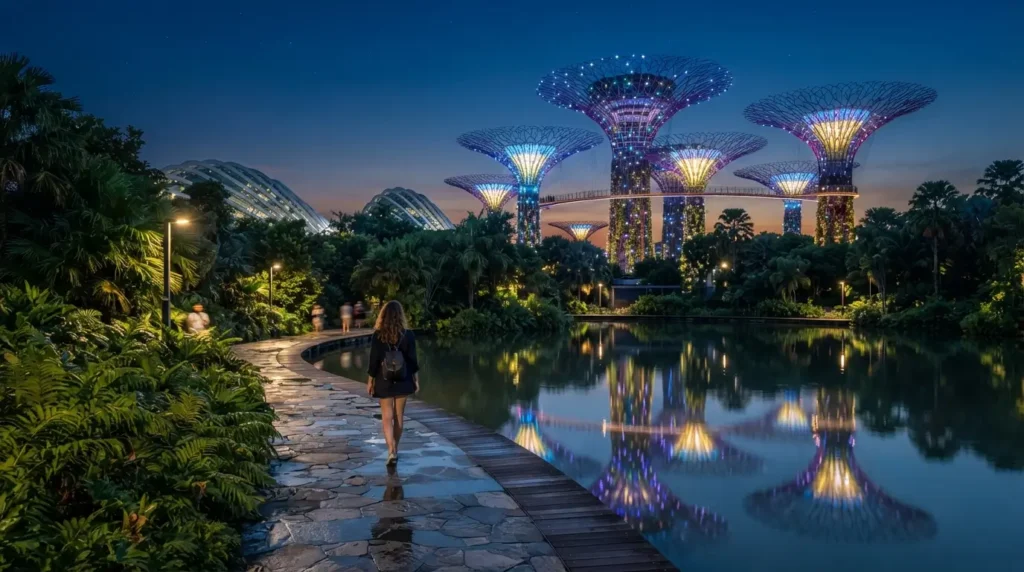
Hawker centres are the anxiety-friendly food culture highlight, open-air food courts where dozens of stalls serve Singapore’s extraordinary multicultural cuisine at prices of $3 to $6 per dish with the food safety standards of a restaurant and the accessibility of a food court. No language barrier. No uncertain hygiene. Just extraordinary food at low prices in a social environment that requires minimal navigation. Gardens by the Bay is one of the most spectacular designed landscapes in the world and entirely free to walk through the outdoor areas. The Botanic Gardens offer a UNESCO-listed green space in the middle of the city that functions as a genuine anxiety reset. Singapore is expensive by Southeast Asian standards at $100 to $150 a day but represents extraordinary value for anxious travelers who factor in the mental energy saved by not constantly navigating uncertainty.
9. Slovenia
Slovenia is the anxiety-friendly European destination that most anxious travelers have never seriously considered, which is a significant oversight. The country is tiny, safe, extraordinarily beautiful, and operates with the organizational efficiency of its Central European neighbors while maintaining a warmth and accessibility that those neighbors don’t always offer. Ljubljana, the capital, is small enough to walk across in twenty minutes, making it one of the least overwhelming capital cities in Europe for travelers who find large urban environments triggering.
Lake Bled is the destination within Slovenia that functions as a natural anxiety antidote. The lake is circular, surrounded by mountains, and has a medieval castle rising from a cliff above it and a small island with a church in its center. It is extraordinarily beautiful in a contained, legible way that doesn’t overwhelm. You can walk around the entire lake in two hours. Everything you need is within easy reach. Day trips to the Soča Valley and Triglav National Park offer river swimming and mountain scenery on well-maintained roads with minimal traffic. Daily costs of $60 to $80 keep the financial dimension comfortable. Slovenia is the European discovery that anxious travelers who visit consistently wish they had found sooner.
10. Taiwan
Taiwan is the destination that anxious travelers who want to experience East Asian culture without Japan’s price point or Thailand’s chaotic energy consistently discover and immediately love. The country is extraordinarily safe, consistently ranking among the safest in Asia by every available metric. The people are famously hospitable toward foreign visitors in a way that feels genuine rather than transactional. The food culture is extraordinary and accessible through night markets that operate in a social environment that is lively without being overwhelming.
Taipei is the starting point for most visitors and an excellent one for anxious travelers because its metro system is one of the cleanest, most efficient, and most legible in Asia with full English signage throughout. The Jiufen Old Street day trip delivers one of the most visually beautiful experiences in East Asia through narrow, lantern-lit alleyways on a hillside overlooking the ocean. Sun Moon Lake in central Taiwan is a genuinely peaceful destination with lakeside cycling paths, temple visits, and accommodation that ranges from budget guesthouses to excellent boutique hotels at prices significantly lower than equivalent Japanese destinations. Daily costs of $40 to $60 make Taiwan one of the best value anxiety-friendly destinations in Asia.
Strategies for Managing Travel Anxiety Before and During Your Trip
Destination choice reduces anxiety significantly. Preparation eliminates most of what destination choice can’t address.
Build a Detailed but Flexible Plan
Anxious travelers exist on a spectrum between those whose anxiety is triggered by too little structure and those whose anxiety is triggered by the pressure of an over-scheduled itinerary. Finding your specific position on that spectrum and planning accordingly matters more than following generic advice. If uncertainty about what comes next is your primary trigger, plan each day in advance with specific restaurants, activities, and transport options confirmed. If the pressure of a packed schedule is your primary trigger, plan arrival logistics, accommodation, and one or two key experiences, then leave everything else genuinely open. The plan serves your nervous system. Your nervous system doesn’t serve the plan.
Identify Your Specific Triggers Before You Choose a Destination
Travel anxiety is not monolithic. Some people are specifically anxious about language barriers. Others about getting lost. Others about food safety. Others about being alone in an emergency. Others about the flight itself. Identifying your specific triggers, not anxiety in general but the particular situations that activate your nervous system, lets you choose destinations and plan trips that minimize exactly those elements rather than vaguely trying to choose somewhere “safe.”
Someone whose anxiety is specifically about language barriers does well in Japan, Portugal, Ireland, New Zealand, and Singapore where English infrastructure is strong. Someone whose anxiety is specifically about crowds does well in Iceland, Slovenia, New Zealand, and rural Canada where population density is low. Someone whose anxiety is specifically about getting lost does well in Singapore, Tokyo, and Lisbon where navigation infrastructure is exceptional. Matching your specific trigger to a destination’s specific strength is more effective than any general reassurance that travel will probably be fine.
Create a Comfort Kit That Travels Everywhere
Anxious travelers benefit from having a small collection of sensory and practical comfort items that provide familiar grounding in unfamiliar environments. The specific contents vary by individual but the principle is consistent: familiar sensory input, something that smells like home, music that regulates your nervous system, a physical object that grounds you, reduces the ambient novelty load of travel in ways that make the actual experiences of the destination more accessible.
A noise-cancelling headphone like the Sony WH-1000XM5 reduces the sensory overwhelm of airports, train stations, and crowded streets to a manageable level. A small bottle of a familiar scent, hand lotion, an essential oil, provides olfactory grounding when every other sensory input is unfamiliar. A journal functions as both an anxiety management tool and a travel record. A downloaded playlist of music that specifically helps regulate your nervous system gives you reliable access to a mood state that travel environments sometimes make difficult to reach.
Frequently Asked Questions
What makes a destination genuinely anxiety-friendly rather than just safe?
Safety is necessary but not sufficient for anxiety-friendly travel. The additional qualities that matter are navigational legibility, meaning clear signage and logical layout. Low ambient social pressure, meaning you don’t feel constantly watched, approached, or required to engage. Predictable infrastructure, meaning transit runs on schedule and services work as described. And enough English language presence to remove communication uncertainty from the equation. Japan, Singapore, New Zealand, and Portugal score highest on all four dimensions simultaneously.
How do anxious travelers handle the flight itself?
The flight is often the highest anxiety point of any trip and deserves specific preparation. Downloading entertainment before departure removes the dependency on airline Wi-Fi that often fails. Noise-cancelling headphones reduce the sensory intensity of the cabin environment significantly. An aisle seat provides the psychological comfort of easy exit access that window and middle seats don’t offer. Informing the flight crew that you experience flight anxiety is not embarrassing and often results in extra check-ins that help. SOAR is a specifically developed flight anxiety app with audio tools for managing turbulence anxiety that many anxious travelers find genuinely helpful.
Should anxious travelers travel solo or with a companion?
Both work for different anxiety profiles. Solo travel removes the social negotiation and compromise that can exhaust anxious travelers who are already managing significant internal noise, and many anxious people report that solo travel is actually less anxiety-inducing than traveling with companions because every decision is their own. Traveling with a calm, patient companion who understands your anxiety provides grounding when anxiety spikes and shared decision-making that reduces cognitive load. The wrong companion, someone impatient, dismissive, or with a fundamentally different risk tolerance, makes everything harder. Choose based on the specific person and their specific compatibility with your anxiety style.
What should anxious travelers do if they experience a panic attack while abroad?
Having a specific, pre-decided response plan removes the additional anxiety of not knowing what to do if it happens. Move to a quieter, less crowded space. Sit down. Use whatever grounding technique your therapist or experience has shown works for you, whether that is the 5-4-3-2-1 sensory technique, box breathing, or cold water on your wrists. Tell one person nearby what is happening in simple terms. Most panic attacks resolve within ten to twenty minutes with grounding techniques. Having this plan written down and accessible on your phone means you have it available in exactly the moment your memory of it becomes hardest to access.
Can therapy help with travel anxiety specifically?
Significantly yes. Cognitive Behavioral Therapy specifically addresses the thought patterns that generate travel anxiety. Exposure therapy works gradually through a hierarchy of travel-related situations from planning a trip to taking short local trips to longer international ones. Many therapists now offer video sessions that continue during travel, providing consistent support across time zones. Discussing travel plans with your therapist before departure, including specific anticipated triggers and specific planned responses, transforms the trip from something that happens to you into something you have actively prepared for.
Conclusion
Travel anxiety does not disqualify you from the experiences that travel makes possible. It requires slightly more preparation, slightly more self-knowledge, and slightly more deliberate destination choice than travel without anxiety requires. Every person on every solo trip who felt dread before departure and something completely different on arrival started exactly where you are right now. Where do you think you might be ready to go?